Visitors sometimes picture a continuous uphill climb, but the reality is more varied. A trek may include vehicle transfers, an initial briefing, walking through cultivated edges or forest, and a final approach through vegetation. The location of a gorilla family changes, so nobody can honestly promise a fixed walking time, gradient or level of physical effort.
This guide explains how to think about gorilla trekking with back pain without treating a travel article as medical clearance. It covers terrain, downhill movement, porters, walking aids, packing, booking choices and questions to ask before paying for permits. It also explains why pain that affects walking or balance deserves more attention than the label of a diagnosis alone.
If you are arranging a trip through PrideMark Safaris, describe what you can comfortably do rather than simply saying you have a bad back. Details such as how long you can walk, whether you use a support device and what triggers symptoms are useful when discussing practical arrangements. Your treating clinician remains the right person to advise on individual medical risk.
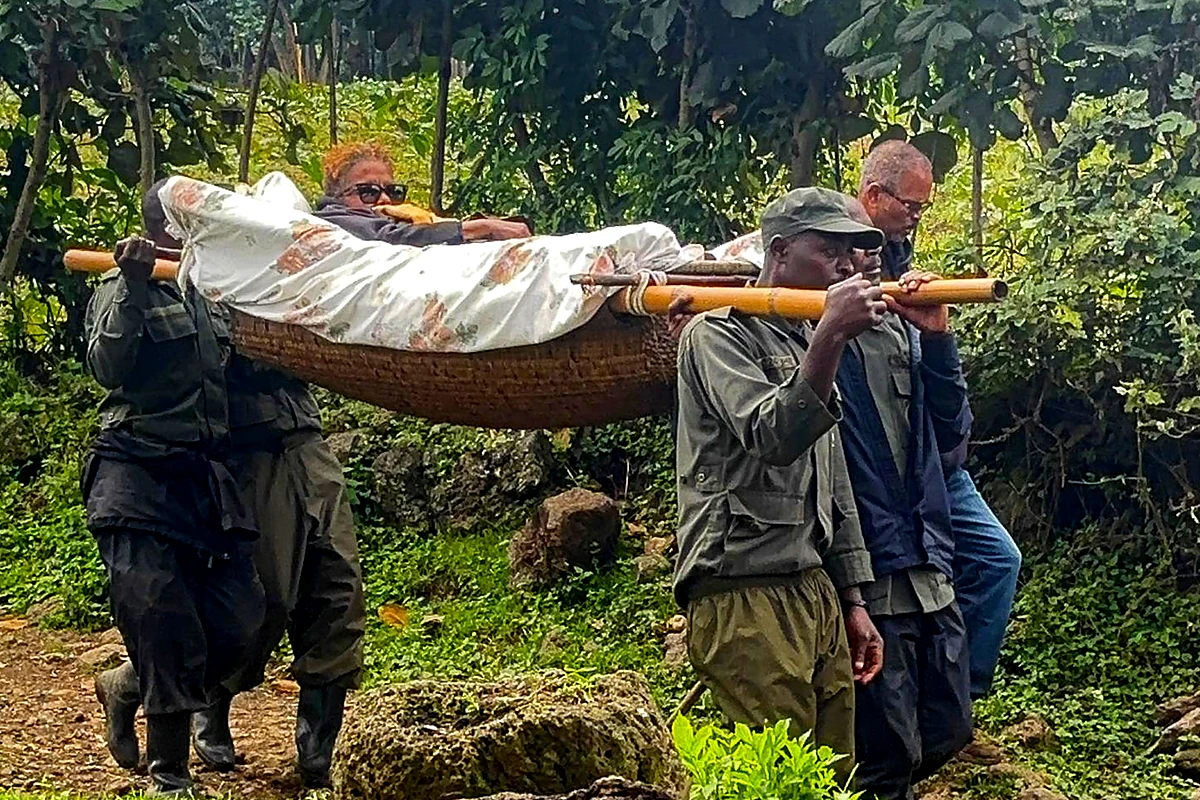
A team of porters carries a visitor through forest terrain using a woven sedan chair supported by poles.
Can You Go Gorilla Trekking With Back Pain?
Start with function, not a diagnosis
A history of back pain does not automatically exclude a visitor from gorilla trekking. What matters is whether the person can safely manage unpredictable terrain and respond to ranger instructions. Two people with similar diagnoses may have very different walking tolerance, balance and recovery needs. That is why a functional assessment is more helpful than relying on a medical label.
Know when to seek medical advice
Discuss the trip with a qualified clinician if pain is persistent, worsening or associated with a previous spinal injury or surgery. New weakness, numbness around the groin, loss of bladder or bowel control, or severe unexplained pain require urgent medical evaluation rather than travel planning. A safari operator cannot diagnose symptoms or certify that trekking is medically safe.
Think beyond the gorilla viewing hour
The most memorable part of the outing may be the time observing gorillas, but the physical demands begin well before that. Travelers must consider vehicle access, waiting during briefings, forest walking and the return journey. Gorilla trekking with back pain is therefore about tolerating the whole day, including unexpected delays, not merely standing near the animals.
Build a realistic personal baseline
Before making a booking, note how you respond to a walk on uneven ground, a gentle incline and a longer period on your feet. Avoid using one unusually good day as your benchmark. Your regular activity level, recent flare-ups and ability to recover after exertion all provide useful context for a clinician and for discussing logistics with a tour organizer.
How Demanding Are Bwindi Forest Trails on Your Back?
Terrain is not standardized
The terrain around Bwindi Impenetrable National Park includes steep slopes, narrow footpaths, forest roots, damp ground and thick vegetation. Some approaches feel manageable, while others involve prolonged climbing or descending. Trekking difficulty depends partly on where the assigned gorilla family is found that day, and this cannot be fixed in advance.
The ground underfoot matters
Back discomfort may be aggravated by repeated adjustments in posture as you step over roots, cross uneven patches or avoid slippery soil. These movements are different from walking on a paved road. Sturdy footwear with reliable traction is important, but shoes do not eliminate the need to balance carefully or follow the route chosen by the ranger.
Weather changes the experience
Rain can make slopes muddy and vegetation wet, while a dry day does not guarantee easy footing. Travelers who experience back stiffness should consider how they manage changing conditions, pauses and damp clothing. A lightweight waterproof layer and appropriate footwear may improve comfort, although no clothing choice can make a challenging route completely predictable.
Ask about sectors, not guarantees
Bwindi has different trekking sectors, but it is misleading to declare one sector universally easy for everyone with back pain. Gorilla groups move and daily conditions change. Ask the operator about transfer times, accommodation location and the briefing point, then treat any discussion of relative difficulty as guidance rather than a guaranteed assignment.
How different trail conditions may affect comfort
| Trail condition | Possible challenge | Planning response |
|---|---|---|
| Steep ascent | Sustained effort and changes in posture | Pace yourself and communicate with the guide |
| Downhill sections | Repeated braking steps and fatigue | Use controlled steps and suitable footwear |
| Wet roots and mud | Unpredictable footing | Use traction and follow ranger directions |
| Dense vegetation | Stepping over obstacles or ducking | Move deliberately; avoid rushing |
Why Downhill Walking and Uneven Ground Can Matter
Descending requires control
Many travelers focus on uphill effort and overlook the return descent. Going downhill can require repeated braking steps, trunk stabilization and careful foot placement. For someone with back pain, the combination of fatigue and uneven ground may feel more demanding later in the trek. A comfortable pace and deliberate steps can be more useful than trying to keep up with faster walkers.
Fatigue can change posture
As the day progresses, visitors may lean forward, grip a walking aid too tightly or rush over obstacles. Such habits can affect comfort and balance. Rather than forcing an ideal posture, focus on controlled movement, regular communication with your guide and avoiding unnecessary loads. Stop to report symptoms that make it difficult to walk safely.
Short pauses are useful but limited
Brief stops may help some visitors manage discomfort, especially on longer approaches. However, the trekking group operates under ranger supervision, and pauses must be coordinated with the guide. Do not assume the group can always stop indefinitely or split into separate unsupervised parties. Discuss your pace and limitations at the briefing before entering the forest.
Returning is part of the calculation
A traveler who can reach the gorillas but cannot comfortably return still faces a serious logistical problem. Plan around a full round trip and be candid about previous episodes of pain after exertion. Gorilla trekking with back pain requires enough reserve for the return journey, not just the motivation to reach the viewing area.
Back Pain, Sciatica and Previous Spinal Surgery
Different symptoms mean different questions
Lower-back stiffness, radiating leg pain and symptoms following spinal surgery are not interchangeable. Some travelers experience discomfort without functional limitation; others have weakness, altered sensation or difficulty with balance. The safest planning starts with an individualized assessment of what the symptoms mean, what activities are restricted and whether a strenuous forest hike is appropriate.
Avoid generic recovery timelines
A previous operation does not establish a universal date when gorilla trekking becomes safe. Recovery depends on the procedure, healing, rehabilitation progress and current neurological findings. Ask your surgeon or rehabilitation clinician about uneven terrain, sustained walking, carrying a pack and the consequences of a fall. Do not rely on a safari itinerary as a substitute for postoperative guidance.
Consider access to care
Forest trekking takes place away from immediate specialist medical services. If you have a condition that can deteriorate suddenly, discuss the travel setting with your clinician and review your travel insurance carefully. Confirm coverage terms, exclusions and emergency assistance arrangements before departure. An evacuation plan can reduce uncertainty, but it cannot remove the physical demands of the trek.
Medication plans should be personal
Bring medications only as advised by your own clinician, in appropriate packaging and quantities for the trip. Do not try a new painkiller or sedating medicine for the first time on the morning of a trek. Some medicines can affect alertness, balance or hydration, which matters on slippery forest trails. Ask a clinician or pharmacist about your specific regimen.
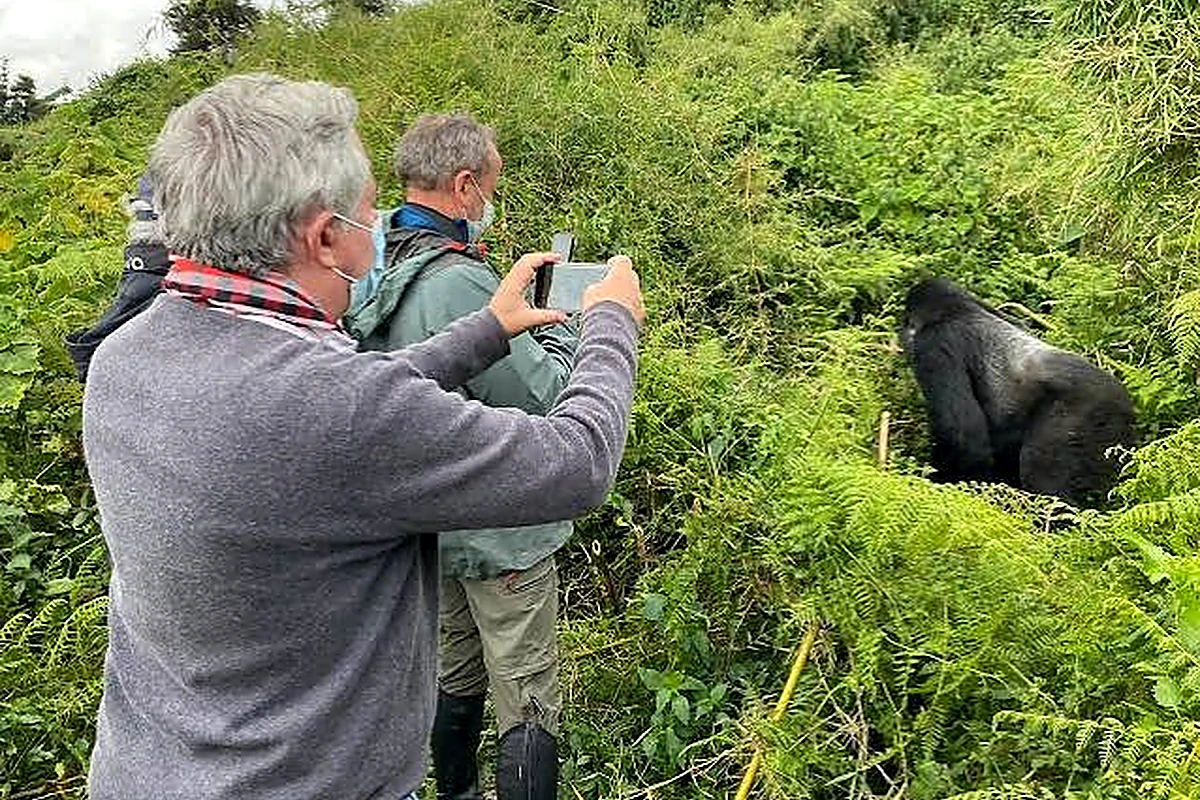
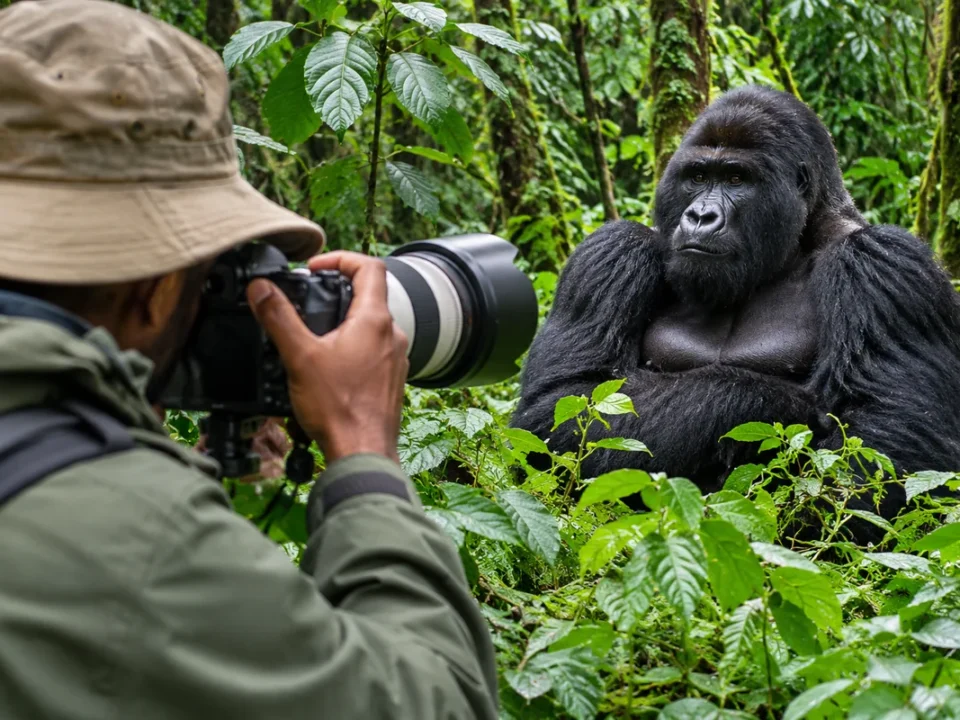
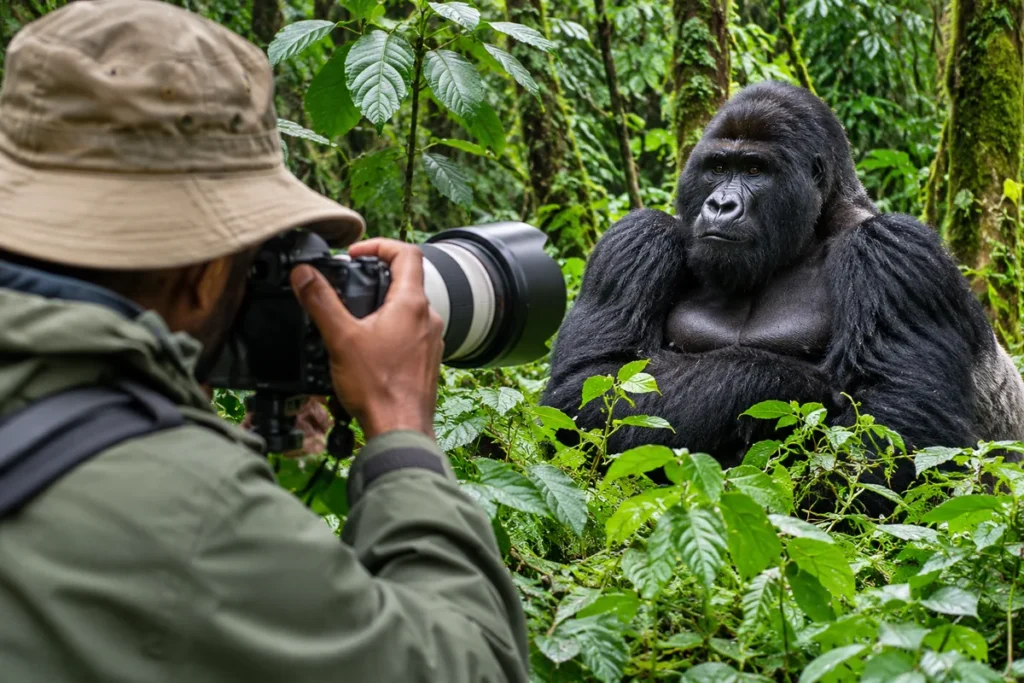
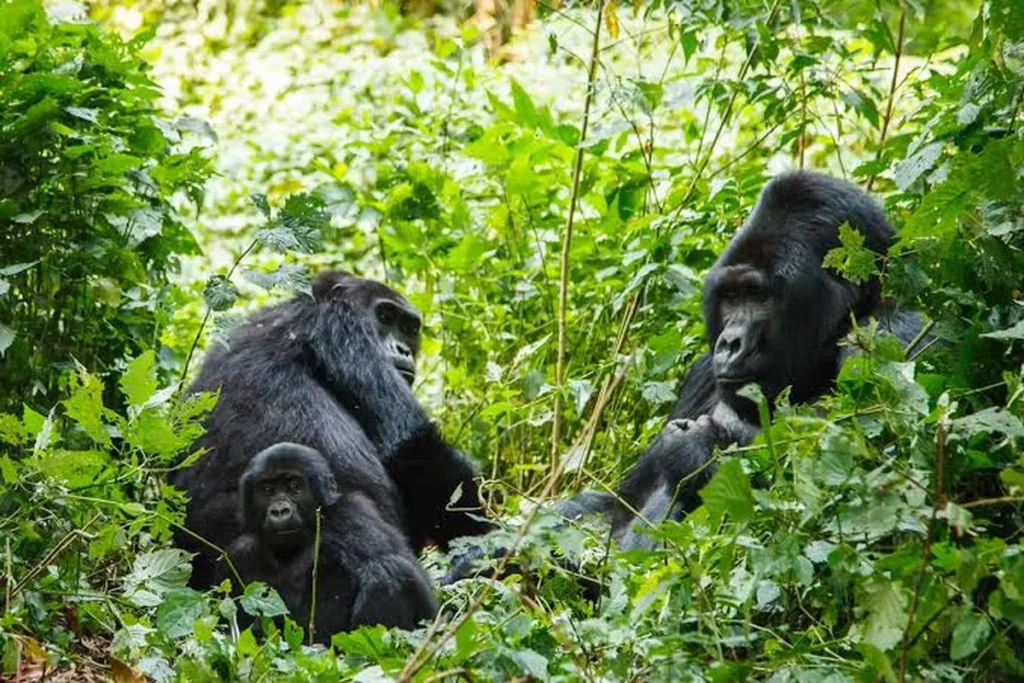
Visitors observe and photograph a mountain gorilla surrounded by lush forest vegetation.
How Porters Can Help Reduce Physical Strain
A porter can carry supplies
Hiring a local porter may allow a visitor to avoid carrying water, snacks, a rain layer and photography equipment for much of the walk. Reducing unnecessary weight can make the day more manageable for someone who is sensitive to load. A porter may also offer practical assistance on uneven sections, subject to safety instructions and local arrangements.
Support is not a medical guarantee
A porter cannot make an unsafe hike safe for every traveler, and assistance is not equivalent to professional medical care. If your back condition limits walking or balance substantially, discuss this before booking rather than assuming someone can simply carry you. Availability, costs and suitability of specialized assistance should be confirmed directly with the operator and park authorities.
Arrange support in advance
Tell PrideMark Safaris whether you would like porter support and whether you have specific concerns about carrying a bag or negotiating steep sections. Ask what services are typically arranged at your trekking sector and what costs are separate from the permit. Confirm practical details in writing so expectations are clear before the morning briefing.
Keep essential items accessible
Even when a porter carries your main daypack, you may want immediate access to water, any prescribed rescue medication, tissues and a small rain layer. Keep the essentials light and easy to reach without repeated twisting. A simple packing system reduces the temptation to carry a heavy shoulder bag throughout the forest.
Walking Sticks, Trekking Poles and Backpack Choices
Choose support you already understand
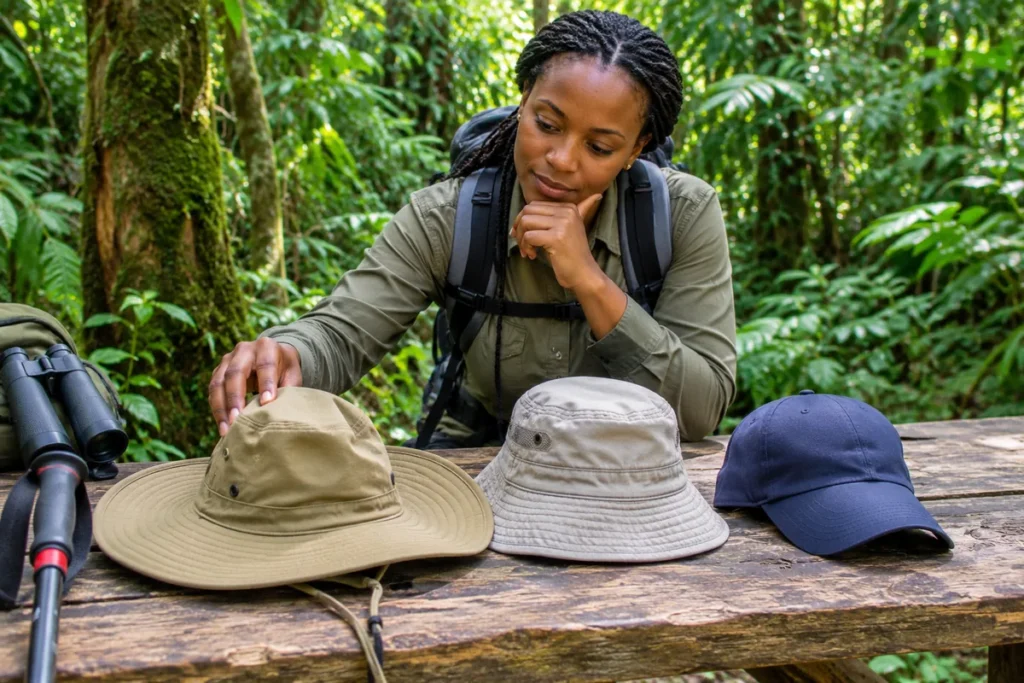
A walking stick or trekking pole can provide an additional point of contact on slippery ground. The best choice depends on your coordination, familiarity and any advice from a clinician or physiotherapist. Do not assume a pole automatically reduces spinal loading or prevents falls. Practice using the equipment on ordinary walks before the safari.
Use equipment under ranger guidance
Forest guides may advise when and how to use walking aids, especially during the final approach to gorillas. Equipment should never be waved toward animals or used to clear vegetation without permission. Follow ranger instructions about keeping distance and remaining calm. The purpose of the aid is to support walking, not to interact with wildlife.
A lighter bag is usually simpler
Choose a small, well-fitted daypack rather than carrying multiple loose bags. Heavy camera equipment, large water bottles and poorly balanced loads can make stepping over roots more awkward. Ask your porter to carry nonessential items when practical. Comfort also depends on how the bag sits on your body, so test the fit before traveling.
Do not introduce unfamiliar braces
Some visitors already use prescribed braces or supports for particular conditions. Continue to follow professional advice rather than buying a new brace solely because an online packing list recommends it. An unfamiliar support can rub, restrict movement or create false confidence. Gorilla trekking with back pain benefits from tested routines more than last-minute equipment experiments.
Comparing practical support options
| Option | Potential benefit | Important limitation |
|---|---|---|
| Local porter | Carries gear and may offer practical help | Does not replace medical clearance |
| Wooden walking stick | Additional point of contact | Requires safe handling near gorillas |
| Trekking poles | Familiar support for some hikers | Not suitable or necessary for everyone |
| Light daypack | Reduces unnecessary carried weight | Still needs a comfortable fit |
Can You Request a Less Demanding Gorilla Trek?
Explain your needs at briefing
Visitors may communicate mobility concerns to the trekking staff, and guides can take that information into account where operationally possible. However, gorilla family locations and group assignments change, so no operator should promise a short or flat trek. State your walking limitations honestly and ask what practical accommodations may be available that day.
Understand what is outside an operator’s control
The Uganda Wildlife Authority manages park operations and trekking rules. Safari companies can help with planning, transport and communication, but they do not control where gorillas move. If you need a guaranteed maximum walking distance, standard gorilla trekking may not offer that certainty. Consider this before committing to nonrefundable travel costs.
Plan flexibility around the trek
A relaxed itinerary can avoid rushing between long road transfers and a physically demanding trek. Consider arriving near the park with time to settle, sleeping adequately and keeping the following day flexible. Such planning does not change the forest terrain, but it can make the overall journey less tiring and provide space to recover after the activity.
Ask about alternatives early
If your clinician advises against strenuous walking, ask about other wildlife and cultural activities that may better fit your abilities. Choosing an alternative is not a failure; it is a realistic travel decision. Avoid paying for a permit based on an assumption that an easy route or special transport will necessarily be available on the day.
Preparing for Gorilla Trekking With Chronic Back Pain
Build gradual conditioning
If a clinician considers walking appropriate, prepare gradually with regular activity that resembles the demands of the trip, including controlled inclines and uneven surfaces where safe. Increase difficulty progressively rather than attempting a strenuous practice hike immediately before departure. A qualified physiotherapist can help tailor movement and strengthening to your condition and current capacity.
Practice your full walking setup
Try your boots, socks, daypack, rain jacket and walking aid together before traveling. Notice whether a pack strap, camera position or stiff boot changes the way you move. Practice stopping, drinking water and restarting without rushing. Familiar equipment reduces avoidable surprises, although it cannot predict exactly how you will feel on a forest trail.
Prepare a simple symptom plan
Know what symptoms mean you should slow down, stop or seek medical attention, based on advice from your clinician. Share relevant limitations with a trusted travel companion and guide. Do not push through new weakness, significant neurological symptoms or pain that prevents safe walking. Wildlife viewing is never worth ignoring a potentially serious medical problem.
Think about the whole itinerary
Long drives, luggage handling and unfamiliar beds can be as relevant as the trek itself for some people with back pain. Discuss transfer duration and rest stops with your operator. Choose accommodation and travel arrangements based on practical comfort, not only price or luxury labels. Gorilla trekking with back pain is easier to plan when the surrounding days are considered too.
Pre-trek preparation checklist
| When | What to check | Why it matters |
|---|---|---|
| Before booking | Medical advice and realistic walking tolerance | Avoid unsuitable commitments |
| Several weeks before | Practice boots, pack and walking aid | Identify discomfort early |
| Before travel | Insurance, prescriptions and itinerary | Reduce logistical surprises |
| Trek morning | Symptoms, water, guide communication | Make an informed go/no-go decision |
Choosing the Right Uganda Gorilla Trekking Safari
Compare the logistics, not just the headline
A short safari can be appealing, but the transfer schedule may feel demanding for someone who needs frequent breaks. Compare how much driving is involved, when you arrive near the park and whether the itinerary leaves time to rest. A longer trip may offer a gentler schedule, although it does not guarantee easier trekking terrain.
Consider a flying itinerary carefully
The 3-day gorilla flying luxury safari may appeal to travelers seeking to reduce some road travel, subject to the actual routing and flight schedule. Flights do not eliminate vehicle transfers, walking or park conditions. Check baggage allowances, aircraft access and the final ground journey before assuming a fly-in option suits your back.
Compare focused and combined safaris
The 3-day Uganda gorilla trekking safari concentrates on the gorilla experience, while the 5-day gorilla and game safari adds other wildlife activities. Ask for the day-by-day travel times and physical demands of each option. A package should fit your comfort needs rather than simply include the greatest number of activities.
Make an informed booking decision
Before paying, confirm permit arrangements, cancellation terms, porter options, accommodation access and travel insurance. Ask PrideMark Safaris to explain which elements are flexible and which are controlled by park operations. If medical advice or your functional ability makes trekking uncertain, resolve that uncertainty first. A carefully chosen itinerary protects both the experience and your wellbeing.
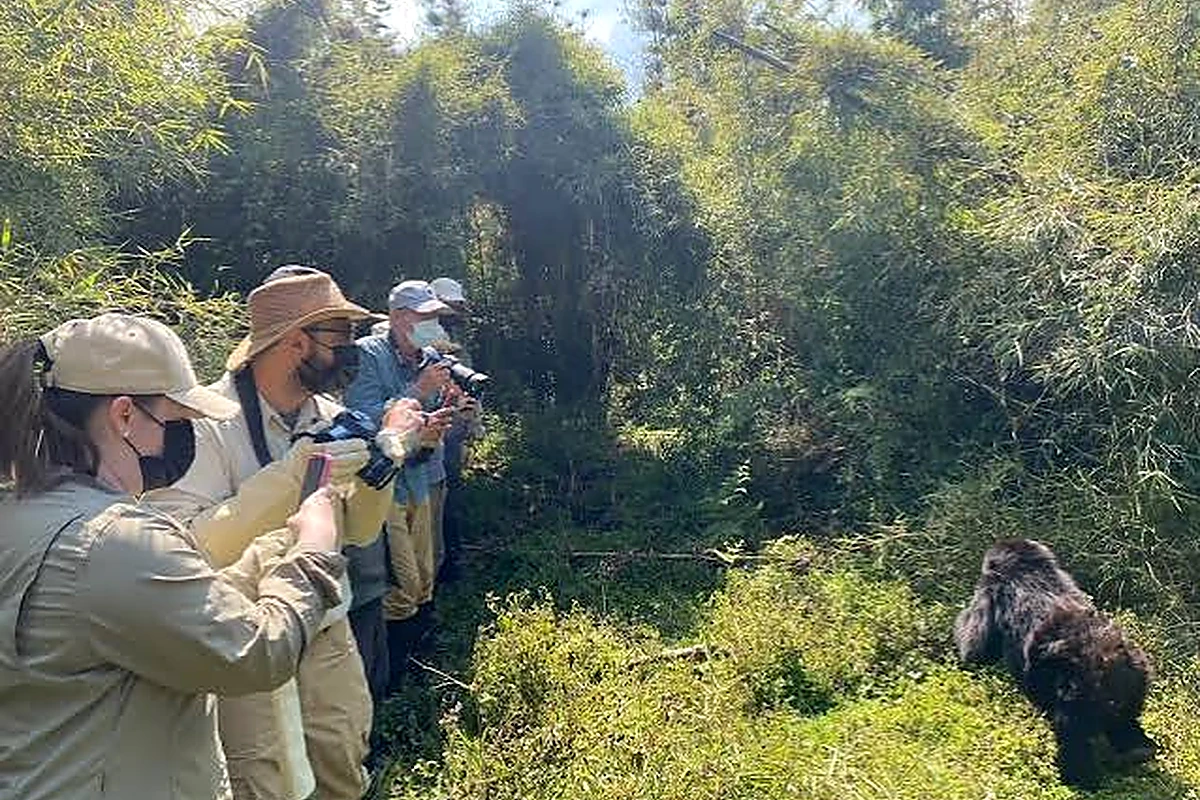
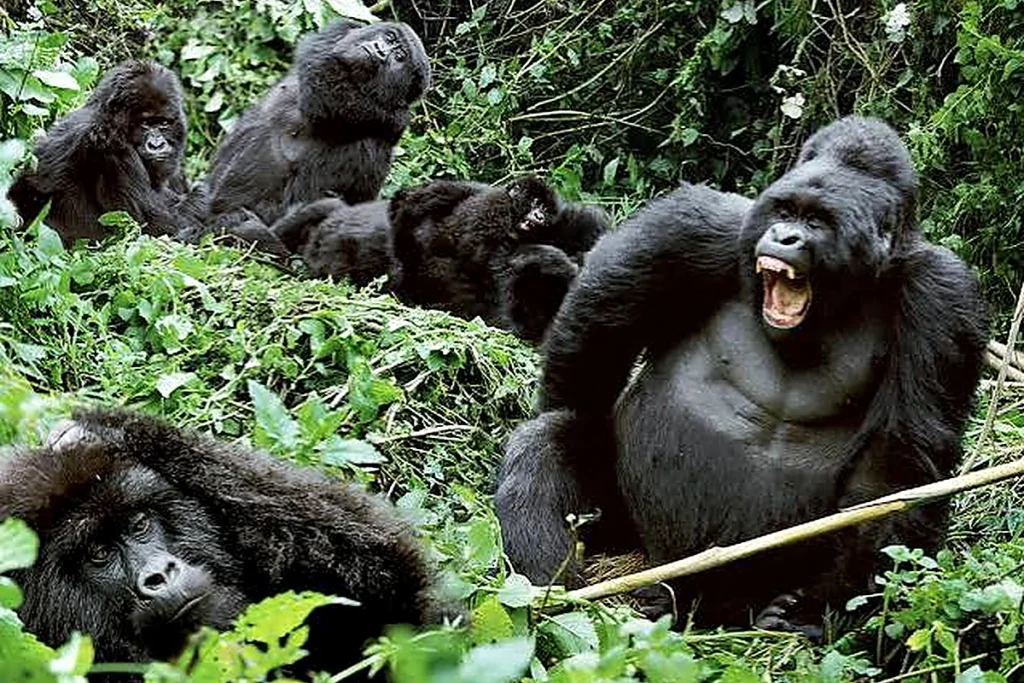
Visitors photograph a gorilla standing among lush green vegetation during a forest wildlife encounter.
Practical Questions to Ask Before Paying for a Permit
Ask whether your chosen package includes the gorilla permit, ground transport, park transfers and any porter arrangements. Price comparisons can be misleading when these components differ. Request a written itinerary showing overnight locations and estimated driving times. If back pain makes long sitting uncomfortable, the time spent in a vehicle may be just as important as the trek itself.
Ask who you should contact if symptoms worsen before travel, and what the cancellation or rescheduling terms actually say. Do not assume that illness automatically qualifies for a full permit refund. Policies can depend on the circumstances and the relevant authority’s rules. Clarify the distinction between the operator’s service charges, accommodation terms and any permit-related decision.
Ask whether accommodation involves many steps, steep paths or long walks between rooms and dining areas. A lodge can be beautiful yet inconvenient for a guest who struggles with stairs. Tell your organizer about practical access needs early enough to explore options. Accommodation accessibility should be confirmed with the property rather than inferred from promotional photographs.
Ask how the guide team communicates with guests during the trek and what happens if someone needs to turn back. Procedures are subject to park management and conditions on the day. Understanding that process in advance can reduce pressure to continue when symptoms become concerning. It also helps companions appreciate that safety decisions may affect the group’s schedule.
What a Comfortable Trekking Pace Really Means
Comfortable does not necessarily mean slow from beginning to end. On uneven terrain, a steady rhythm with careful steps may feel better than repeated bursts of speed followed by abrupt stops. Listen to the ranger’s instructions and keep enough attention on the ground to avoid preventable slips. A pace that feels manageable early may become difficult as fatigue builds.
Visitors sometimes worry that requesting help will inconvenience the group. In practice, explaining your limitations before departure gives staff more useful information than remaining silent until you are struggling. Be specific: say whether slopes, standing still, carrying weight or twisting movements trigger symptoms. Clear communication is more helpful than trying to appear fitter than you feel.
If you are traveling with a partner, discuss expectations before the trip. One person may want to move quickly or photograph every moment, while the other needs to conserve energy. Agree that safety takes priority over finishing the experience at any cost. The best memories usually come from a day that was managed realistically rather than one spent ignoring warning signs.
Weather, trail congestion and the gorillas’ movements may alter the group’s progress. Avoid setting a rigid expectation about the number of steps or minutes required. Instead, plan around uncertainty and ask your clinician whether that uncertainty is acceptable for your condition. Gorilla trekking with back pain requires flexibility as much as enthusiasm for wildlife.
What to Pack Without Overloading Your Back
Pack a waterproof outer layer, appropriate footwear, water, a small snack if permitted, and essential personal items. Avoid bringing equipment simply because it appears on a generic safari checklist. Every unnecessary item adds weight or complexity. If photography is important, consider whether one manageable camera setup is preferable to several heavy lenses and accessories.
Keep frequently used items in reachable pockets so you do not repeatedly remove a pack on slippery ground. A small waterproof pouch can protect documents and electronics. Ask a porter to carry bulkier items where this service is available. The goal is not to eliminate every gram, but to avoid loads and movements that make your particular symptoms harder to manage.
Dress in layers that allow movement without excessive bulk. Clothing that catches on branches or restricts your stride can make uneven ground more awkward. Gloves may be useful when touching vegetation or using a walking aid, depending on the route and guide’s advice. Choose items you have already worn comfortably rather than experimenting on the trek morning.
Carry prescribed medication and any medically recommended supplies in accordance with your clinician’s instructions. Keep important medicines accessible rather than buried in luggage traveling separately. A written medication list can be useful during travel. Remember that carrying medication is not a reason to continue if new or severe symptoms make walking unsafe.
Understanding the Gorilla Encounter Itself
After the group reaches the gorillas, visitors must follow ranger instructions on positioning, movement, noise and viewing distance. The encounter takes place in a natural habitat rather than a viewing platform with guaranteed seating. You may need to stand or adjust your position on uneven ground. Ask the guide before moving, especially if your balance is limited.
Photography should not distract from safe footing or wildlife rules. Avoid stepping backward without checking the ground, and do not lean on vegetation or move closer to a gorilla for a better angle. If a camera is heavy or awkward, a simpler setup may be easier to manage. The experience is worthwhile even when you take fewer photographs.
Wildlife encounters are unpredictable. Gorillas may be resting, feeding or moving through vegetation, and guides respond to their behavior. Visitors must remain calm and follow instructions rather than repositioning independently. Someone with back pain should consider whether they can respond safely to those directions, including when the ground is uneven or the group needs to move.
The purpose of preparation is to make informed decisions, not to promise a pain-free encounter. Some visitors with stable symptoms may complete a trek comfortably; others may find the terrain unsuitable. Both outcomes deserve respect. A safari should be planned around your actual abilities and the welfare of the animals, not a rigid expectation of what every traveler ought to achieve.
How to Discuss Your Needs With PrideMark Safaris
When contacting PrideMark Safaris, explain your expected travel dates, preferred level of accommodation, whether you want a focused gorilla trip or a broader safari, and any practical mobility requirements. You do not need to share every medical detail. Instead, communicate the information relevant to transport, pace, stairs, luggage and assistance so that appropriate questions can be asked.
Request links to the exact safari package you are considering and review the inclusions carefully. The 3-day Uganda gorilla trekking safari and the 5-day gorilla and game safari serve different itinerary preferences. Ask about transfer lengths and rest opportunities rather than assuming the longer package is always physically easier.
If road transfers are a major concern, discuss the 3-day gorilla flying luxury safari and compare its complete journey with road-based options. Confirm where flights land, how long onward transfers take and whether any aircraft access requirements matter to you. A flying package changes travel logistics but does not remove the demands of forest walking.
Ask for a written summary of any agreed support arrangements and the terms that apply if you cannot trek. Be cautious about verbal promises of an easy gorilla family or guaranteed special assistance. The responsible approach is to distinguish what the operator can arrange from what park staff decide on the day. That transparency makes a booking more useful and trustworthy.
Frequently Asked Questions About Gorilla Trekking With Back Pain
Can I trek if I have occasional lower-back pain?
Possibly, but suitability depends on your symptoms, walking ability and medical advice. The forest route may involve steep and slippery sections, and no easy trek can be guaranteed. Discuss limitations before booking. Ask for current park and booking information rather than assuming arrangements are guaranteed.
Is Bwindi too steep for someone with back pain?
Bwindi includes steep and uneven terrain, but difficulty varies with the gorilla family’s location and conditions. There is no universal difficulty rating that guarantees a suitable route for a particular visitor. Ask for current park and booking information rather than assuming arrangements are guaranteed.
Is Mgahinga automatically easier than Bwindi?
No. Mgahinga also involves mountain terrain, and conditions can be demanding. The best choice depends on actual logistics and your mobility, not a blanket claim that one park is easy. Ask for current park and booking information rather than assuming arrangements are guaranteed.
Can a porter carry my backpack?
Porters can commonly help carry supplies, subject to arrangements and availability. Ask your operator about costs and what assistance is possible. A porter does not replace medical advice or guarantee a safe trek. Ask for current park and booking information rather than assuming arrangements are guaranteed.
Will a walking stick prevent back pain?
Not necessarily. A walking stick may assist balance, but its usefulness depends on your needs and how you use it. Practice beforehand and follow any professional guidance relevant to your condition. Ask for current park and booking information rather than assuming arrangements are guaranteed.
Can I request a shorter gorilla trek?
You can explain mobility concerns at the briefing, but assignments and gorilla locations cannot be guaranteed. Ask your operator what is possible and avoid relying on a fixed maximum walking time. Ask for current park and booking information rather than assuming arrangements are guaranteed.
Should I trek after spinal surgery?
Only after individualized guidance from your treating surgeon or rehabilitation clinician. The type of surgery, recovery and current symptoms matter, and a travel operator cannot provide medical clearance. Ask for current park and booking information rather than assuming arrangements are guaranteed.
What if pain becomes severe during the trek?
Tell the guide immediately and follow their instructions. Do not continue through pain that compromises safe movement. New weakness, loss of bladder or bowel control, or saddle numbness require urgent medical evaluation. Ask for current park and booking information rather than assuming arrangements are guaranteed.
Is a fly-in safari better for back pain?
It may reduce some road travel, depending on the route, but still involves transfers and forest walking. Compare complete itineraries and check aircraft access and baggage arrangements. Ask for current park and booking information rather than assuming arrangements are guaranteed.
Can I sit down while viewing gorillas?
Do not assume seating is available. Viewing takes place in natural habitat and positioning depends on ranger instructions and terrain. Explain any limitations to the guide before the encounter. Ask for current park and booking information rather than assuming arrangements are guaranteed.
Will travel insurance cover a back condition?
Coverage varies by policy and may depend on disclosure of pre-existing conditions. Read the policy, check exclusions and confirm emergency assistance terms with the insurer before paying. Ask for current park and booking information rather than assuming arrangements are guaranteed.
Who can help me plan suitable logistics?
A knowledgeable safari operator can discuss transfers, porter arrangements and accommodation options. PrideMark Safaris can help with trip planning, while your own clinician should advise on whether the physical activity is appropriate. Ask for current park and booking information rather than assuming arrangements are guaranteed.
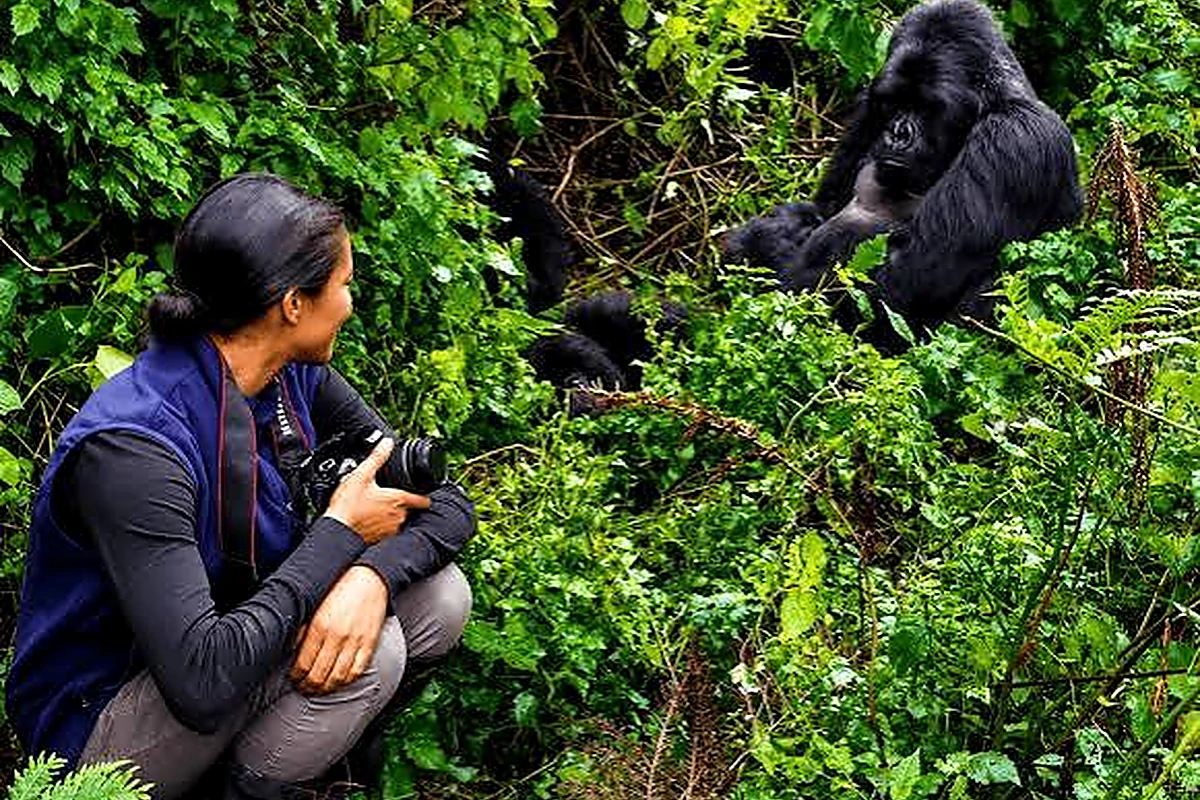
A visitor holding a camera watches a mountain gorilla resting among lush forest vegetation.
Final Thoughts: Plan for the Full Journey
Gorilla trekking with back pain can be possible for some visitors, but it is never a one-size-fits-all decision. Assess the full day, including transport, forest terrain, the return walk and the need to follow ranger instructions. Good footwear, a manageable bag and porter support may help with practical comfort, but none substitutes for individualized medical advice.
If you want help comparing routes and safari packages, contact PrideMark Safaris with your travel dates and practical mobility needs. Ask for realistic transfer details, support options and permit terms before committing. The right trip is one that respects your abilities, Uganda’s park rules and the mountain gorillas’ natural habitat.
Additional Planning Details That Make a Difference
When comparing accommodation, check the actual route between your room, dining area and vehicle pickup point. Hillside lodges sometimes have beautiful views but also steps and sloping paths. Ask about room access and luggage assistance before confirming a reservation. These small details can make a significant difference after a physically demanding forest day.
If you travel with camera equipment, plan how you will handle it when the trail becomes slippery. A camera hanging from one shoulder may swing while you step over roots. A compact setup carried securely is often easier to manage. Ask your guide about appropriate photography behavior and avoid compromising balance for a photograph.
Gorilla trekking with back pain may require a more conservative approach to itinerary timing. Avoid scheduling an exhausting transfer immediately before the trek when alternatives exist. Arriving with time to eat, hydrate and settle into accommodation can help you prepare. The schedule should also allow flexibility after trekking rather than assuming you will feel energetic.
If you are considering a multi-day safari, compare activities beyond the gorilla trek. Game drives can involve long periods sitting on uneven roads, and boat trips may have different boarding requirements. Explain what tends to aggravate your symptoms when asking about alternatives. A varied itinerary should still be evaluated as a whole rather than activity by activity.
For travelers who have previously used walking aids, the forest environment deserves special consideration. A device that works well on pavement may behave differently in mud or on narrow paths. Discuss safe use with a rehabilitation professional if appropriate. Never assume that using two poles or a brace automatically makes a steep forest route suitable.
The ranger briefing is the right moment to raise questions about walking pace, group instructions and what happens if you cannot continue. Listen carefully even if you have trekked before, because conditions and procedures can change. Follow directions about gorilla viewing distance, food, noise and movement; these rules protect both visitors and wildlife.
When packing for Uganda, remember that waterproofing is about keeping essential items dry, not carrying an oversized bag. Lightweight rain protection, dry storage for medication and appropriate footwear can be useful. Test clothing for freedom of movement before departure. A bulky jacket that restricts bending or turning may be uncomfortable on forest trails.
If you are traveling from overseas, think about the effect of long flights and airport transfers on your usual symptoms. Plan manageable luggage and request appropriate assistance from carriers where needed. Build recovery time into the itinerary. A traveler who is already exhausted before arriving at the park may find an unpredictable trek harder to manage.
When evaluating packages, review the 3-day Uganda gorilla trekking safari alongside the 3-day gorilla flying luxury safari. Ask for exact transfer details rather than judging by package names alone. Your decision should reflect how you tolerate sitting, walking, luggage handling and changes in schedule.
Finally, remember that there is no obligation to continue if you feel unsafe. Tell your guide promptly about worsening symptoms or difficulty maintaining balance. Making a responsible decision may mean changing plans, even after significant travel effort. Protecting your health and respecting park instructions are more important than completing a particular itinerary.