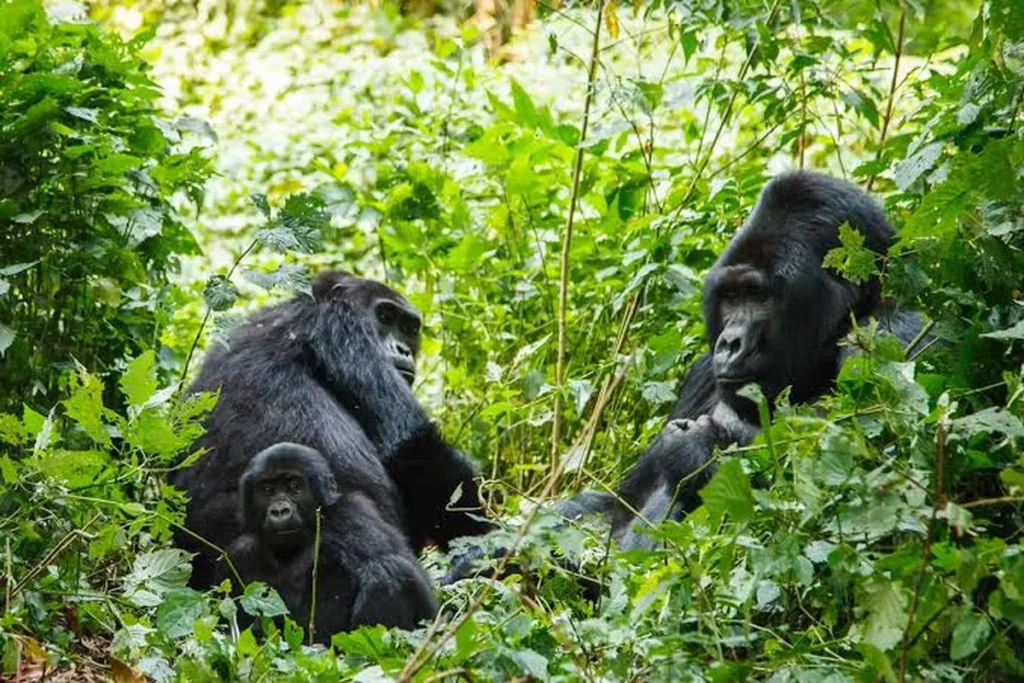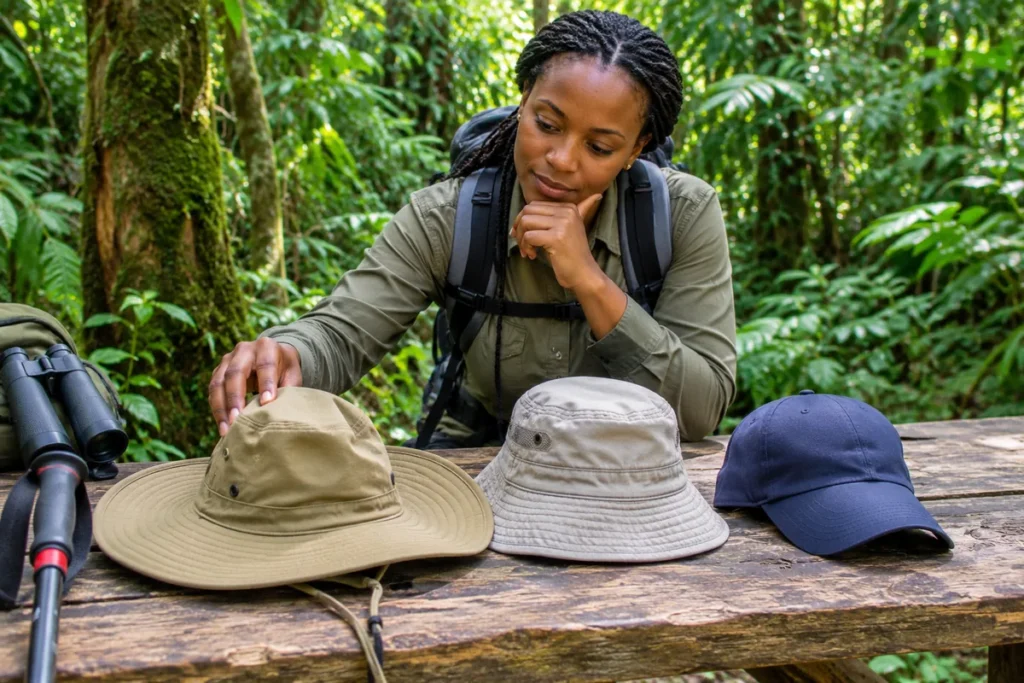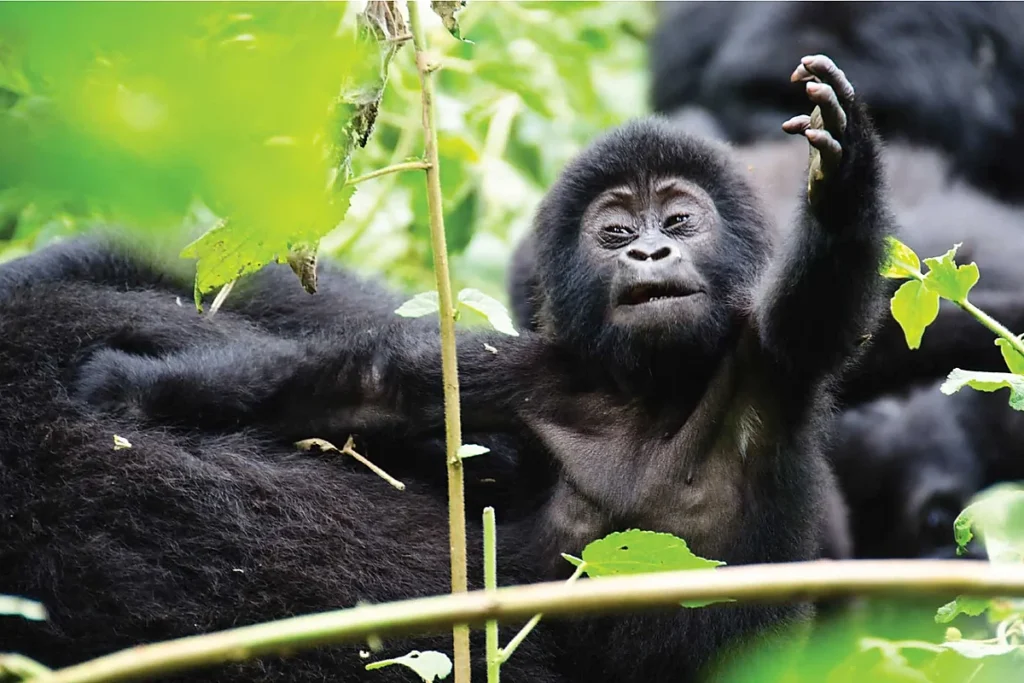
At PrideMark Safaris, the planning conversation should begin with what you can comfortably do rather than a simple yes-or-no question about knee pain. The right safari itinerary may reduce road fatigue and improve access to practical assistance, but no tour company controls where gorillas move. Park rangers manage the trekking experience, and a healthcare professional should assess medical suitability.
Can You Go Gorilla Trekking With Knee Problems?
Suitability is individual
Knee pain describes many different circumstances. Someone with occasional discomfort on stairs may manage a guided forest walk, while another person with swelling, instability, or limited bending may find the same route unsafe. There is no reliable answer based on a diagnosis label alone. Think about what your knee can actually do on uneven ground, not simply how far you walk on level pavement.
No guaranteed easy trail
Gorilla trekking routes are not fixed sightseeing paths. Rangers locate habituated gorilla families in natural habitat, and the distance or slope can change from day to day. A request for a shorter or gentler route may be considered where operationally possible, but it is not a promise. Plan for uncertainty rather than assuming a particular group assignment will solve a mobility problem.
Discuss symptoms early
Before paying for permits and accommodation, explain whether your knee locks, gives way, becomes painful downhill, or requires a brace. These details are more helpful than saying you have a bad knee. Share realistic walking limits and whether you need frequent stops. Your operator can discuss practical arrangements, while medical suitability is a question for your clinician.
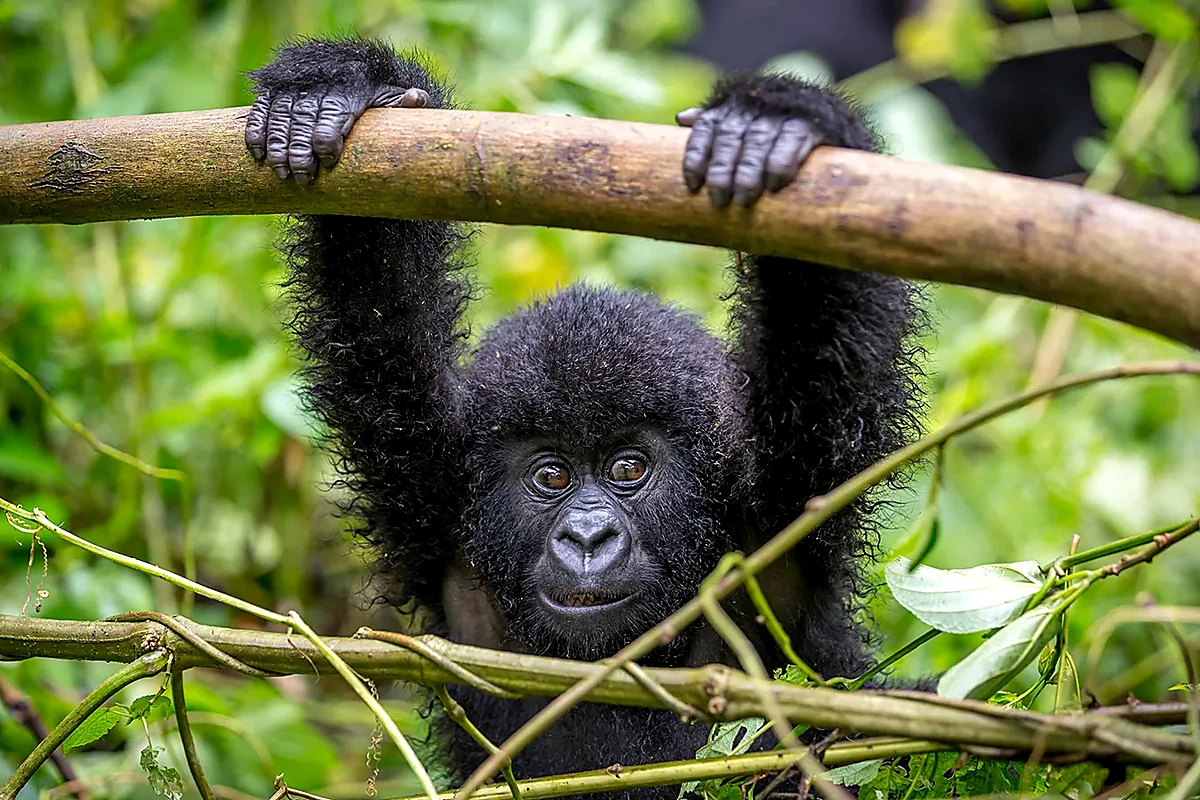
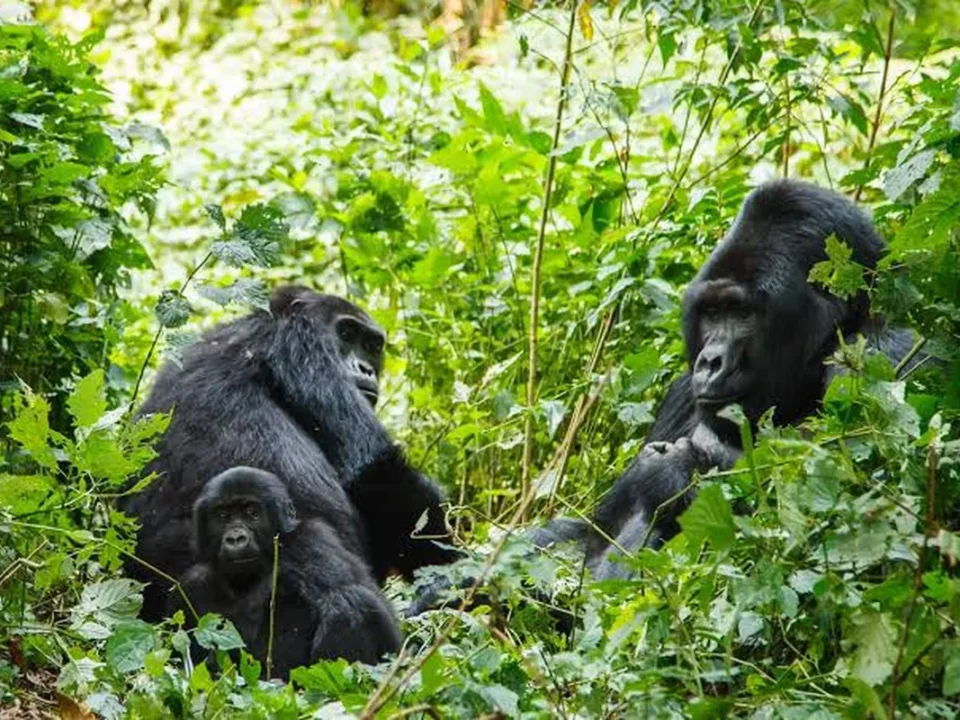
A young mountain gorilla grips a tree branch with both hands while looking toward the camera.
Consider the full day
The trek includes more than the period spent walking toward gorillas. Visitors may stand for a briefing, travel by road to the starting point, walk through forest, spend time observing gorillas, and then return over difficult terrain. A knee that feels comfortable at the beginning may become sore later. Judge the entire outing, including the return walk.
Prepare for variable conditions
Bwindi and Mgahinga have steep, uneven, and sometimes slippery ground. Rain, exposed roots, loose soil, and dense vegetation can make ordinary walking habits less effective. A person who manages a gentle neighborhood walk may still struggle with sustained descents. Practice on comparable terrain before travel, using footwear and support equipment you already know how to handle.
Ask about alternatives
If trekking on foot is likely to be unsafe, ask about current arrangements for visitors with limited mobility, including any locally organized carrying assistance where available. Such services depend on location, availability, and operational conditions and should never be assumed. Confirm details and costs in writing. Do not purchase a permit on the belief that an accessible route is guaranteed.
Make a clear decision
A successful safari is not measured by pushing through severe pain. If your knee cannot bear weight reliably or you have been advised against strenuous hiking, postponing or choosing another activity may be wiser. A clinician can assess your personal circumstances. Park staff make the final operational decisions about participation and movement within protected areas.
Booking conversation
When you contact PrideMark Safaris, describe your walking capacity and any support you anticipate needing. Ask for the exact trekking sector, accommodation location, transfer arrangements, and what assistance can be requested. A good itinerary makes room for honest expectations instead of promising a pain-free trek. This preparation matters more than the wording of a package title.
Understanding Bwindi Trails and Knee Strain
Four trekking sectors
Bwindi trekking operates from different sectors, commonly including Buhoma, Ruhija, Rushaga, and Nkuringo. They are not interchangeable departure points, and driving between them can take substantial time. A lodge near one sector is not automatically convenient for another. Confirm the sector attached to your permit before selecting accommodation, particularly if long road journeys worsen stiffness.
Downhill loading
Descending steep ground can be harder on painful knees than climbing because each step requires controlled lowering of body weight. On muddy slopes, the knee must also respond to small slips and changes in footing. Take short deliberate steps and use appropriate support if recommended. Avoid assuming that reaching the gorillas means the physically demanding part is finished.
Roots and uneven steps
Forest roots, stones, and irregular earthen steps require frequent changes in stride length. This can be difficult for someone who has reduced knee flexion or poor balance. Watch several steps ahead rather than only at your feet. Ask the guide for time to navigate obstacles, and avoid twisting sharply around a planted leg when the trail changes direction.
Mud and rain
Rain can change a manageable path into a slippery one, especially where many boots have disturbed the soil. Waterproof boots with reliable traction may help, but no sole prevents every slip. Test your footwear before travel. A trekking pole or walking stick can provide another point of contact, although it cannot remove the strain from every descent.
Distance uncertainty
A trekking duration quoted by another traveler is not a dependable forecast for your outing. Gorilla groups move, tracking conditions vary, and the starting point may differ. Ask for a realistic range rather than a fixed walking time. If you require a strict maximum distance, communicate that clearly and understand that staff may be unable to guarantee it.
Rest stops and pacing
Brief pauses can help manage fatigue, but the group’s movement also depends on terrain, weather, and ranger instructions. Explain your preferred pace before setting off. Do not quietly fall behind or leave the trail to find an easier line. Tell the guide when you need assistance, especially before attempting a difficult slope or crossing.
Accommodation logistics
The drive from a lodge to the briefing point may involve winding or rough roads. Consider how long sitting affects your knee and whether you can enter and exit the safari vehicle comfortably. Ask about vehicle step height and luggage handling if those are concerns. Good planning begins the evening before the trek, not at the trailhead.
Local knowledge
PrideMark Safaris can help coordinate a Bwindi itinerary, but the park authorities control trekking operations. Discuss terrain concerns with the operator and repeat them to the ranger team during briefing. A guide who knows the forest can offer practical instructions, yet cannot make a mountain trail level or guarantee a specific encounter location.
Trail Conditions and Knee Considerations
| Trail feature | Why it matters | Practical preparation |
|---|---|---|
| Steep descent | Repeated lowering can aggravate some knee conditions | Practice controlled short steps and discuss limitations |
| Muddy sections | Footing may be unpredictable after rain | Wear tested boots and ask for support |
| Roots and stones | Uneven surfaces require careful placement | Slow down and avoid twisting |
| Long return walk | Fatigue may increase after viewing | Plan for the entire outing, not just the approach |
Why Descents Can Be Harder Than Climbs
Controlled lowering
When descending, your leg muscles must slow your body as gravity pulls you downhill. That repeated braking action can aggravate some knee complaints, particularly when the slope is steep or the footing is uncertain. The exact effect depends on the condition. Practice gentle descents with professional advice if needed, rather than assuming uphill fitness covers the return journey.
Short steps
Smaller steps often make it easier to keep your center of gravity controlled. Avoid rushing to match a faster walker and do not jump from one earthen ledge to another. Place each foot securely before transferring weight. If you cannot control a step without significant pain or instability, ask for help rather than forcing the movement.
Avoid sudden twists
A muddy foot can stick while the upper body turns, creating an awkward twisting movement. Face the direction you intend to travel and reposition your feet in several small steps. Use a walking stick for balance only where its tip has firm purchase. The safest technique can vary with the slope and your personal mobility limitations.
Poles and balance
Some walkers find that one or two trekking poles improve confidence on descents. Correct pole length and placement matter, and an unfamiliar technique may be distracting. Try equipment on hills before the trip. A wooden walking stick offered locally may be simpler, but neither option should be treated as a medical substitute for a brace or mobility device.
Footwear traction
Boots should fit securely at the heel and allow comfortable movement without rubbing. Deep tread may help on soft soil, but wet roots and smooth stones remain slippery. Wear the same socks and footwear during practice walks. Brand-new boots on trekking morning can create blisters and alter your gait, adding strain elsewhere.
Return fatigue
Fatigue can reduce balance and attention late in the outing. Carry water and suitable snacks for permitted eating areas, and follow the ranger’s instructions about when and where to stop. Keep your day after the trek flexible rather than scheduling demanding activities immediately afterward. A comfortable return is as important as the gorilla viewing itself.
Recognize warning signs
Pain that suddenly becomes severe, a knee that buckles, new swelling, or inability to bear weight warrants prompt attention. Do not conceal symptoms because you fear disappointing your group. Inform the ranger and seek appropriate medical advice. General hiking tips cannot determine whether an acute problem is safe to continue through.
Planning with operator
If downhill walking is your principal concern, say so when arranging gorilla trekking with knee problems. PrideMark Safaris can discuss transport and possible assistance requests, but no operator can guarantee the gradient of a route on a given day. The most responsible plan allows for changing conditions and a decision not to proceed if necessary.
Walking Sticks, Trekking Poles, and Knee Supports
Wooden sticks
Wooden walking sticks are commonly associated with gorilla trekking and may be available around briefing points. They can help a visitor test the ground and steady a step. Check that a stick is comfortable to hold and does not have a damaged shaft. Availability and any charges should be confirmed locally rather than assumed for every departure.
Adjustable poles
Adjustable trekking poles can be convenient for people accustomed to them. They allow changes in length and can be packed for travel, although tips and straps must be used responsibly. Learn the technique before arriving in Uganda. Ask park staff about any restrictions on equipment near gorillas, and follow instructions on where to hold or place a pole.
One versus two
One stick leaves a hand free and may feel natural on narrow trails. Two poles can offer a more symmetrical rhythm for some hikers but require coordination and may be cumbersome in dense vegetation. The better choice depends on experience, balance, and the trail. Test both options in safe conditions rather than making a last-minute decision.
Knee braces
A knee brace may provide support for certain conditions, but the right design and fit depend on the individual. A poorly fitted brace can rub or restrict movement during a long walk. Ask your clinician or physiotherapist whether a brace is appropriate, and practice wearing it before travel. Do not buy a brace solely because another traveler recommends one.
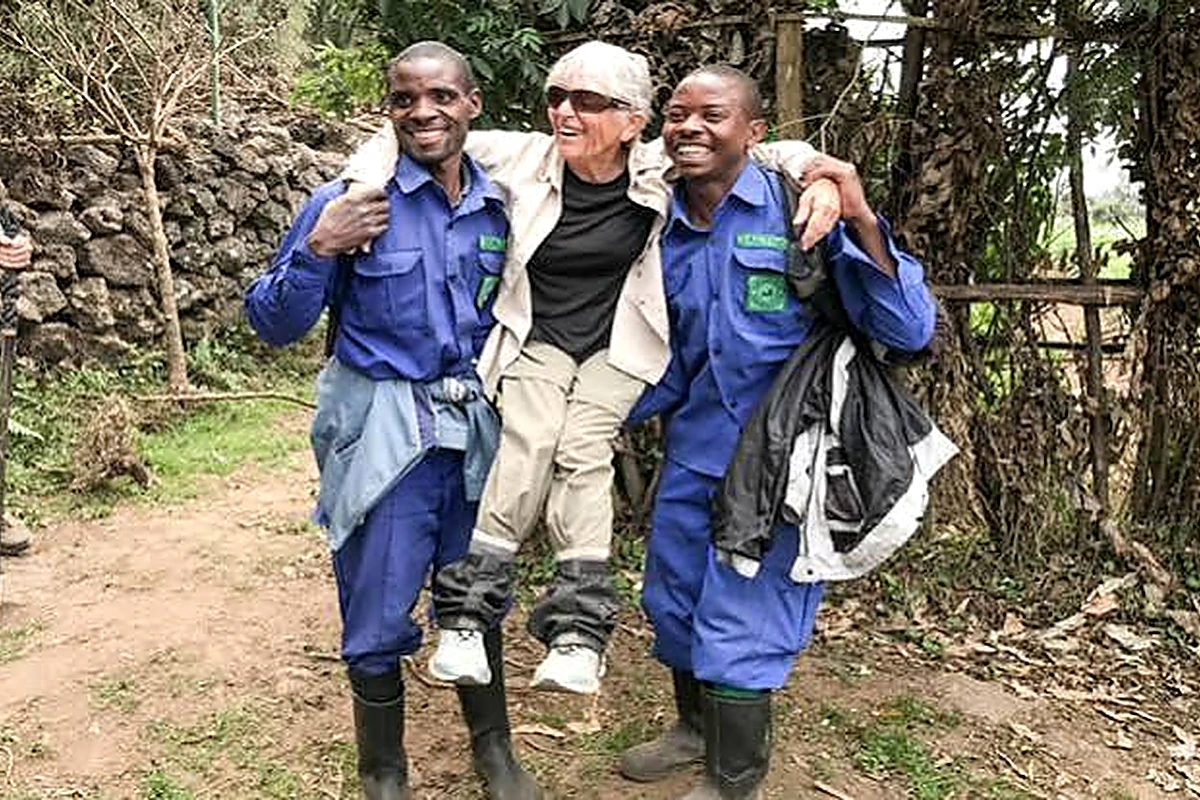
Two trekking support staff assist a smiling visitor along a path after a forest excursion.
Comfort and grip
Wet hands and long walking hours can make a hard handle uncomfortable. Gloves may improve grip, but they should not interfere with dexterity. Avoid gripping a pole so tightly that your shoulders and forearms become exhausted. Adjust the equipment while stopped on stable ground, never while stepping across roots or a slippery incline.
Weight bearing limits
A trekking pole is not designed to carry the same load as every prescribed mobility aid. If you need substantial weight-bearing support, ask a healthcare professional about suitable equipment and discuss access arrangements with the park in advance. A casual walking stick should not be relied on to compensate for a knee that repeatedly gives way.
Packing smart
Pack any medically recommended support equipment in a way that keeps it accessible during travel. Bring a spare strap or replacement tip if your own pole requires one. Avoid attaching loose items that may snag vegetation. Keep your daypack light enough to walk naturally, and consider porter assistance for carrying additional personal belongings.
Safe wildlife viewing
Once gorillas are located, the ranger may ask visitors to stand or move in particular ways. Keep sticks and poles controlled, never point them toward an animal, and do not use them to move vegetation near gorillas. Follow park instructions about distance and behavior. Equipment that helps on the trail must not become a disturbance during viewing.
Comparing Walking Support Options
| Option | Potential benefit | Important limitation |
|---|---|---|
| Wooden walking stick | Additional point of balance | Does not replace medical support |
| Adjustable trekking poles | Familiar rhythm for experienced users | Requires technique and coordination |
| Knee brace | May support certain conditions if prescribed | Fit and suitability vary |
| Porter assistance | May reduce pack weight and help on terrain | Not a guarantee of an easy trek |
How Porters and Other Assistance May Help
What porters do
Porters may help carry a visitor’s daypack and offer practical assistance over challenging ground, depending on local arrangements. This can reduce the weight a traveler carries and free attention for footing. A porter cannot guarantee that every slope will be manageable. Discuss what help you actually need and whether it can be arranged before the trekking day.
Support versus rescue
Ordinary porter assistance is not the same as emergency evacuation or a medically suitable carrying service. Do not assume one service includes another. If you have substantial mobility limitations, ask specific questions about the availability, price, safety, and operating conditions of any special assistance. Get confirmation rather than relying on photographs or stories from other travelers.
Communication
Tell your porter and ranger which movements are difficult: long descents, high steps, uneven ground, or repeated stops. Clear communication is more useful than vague requests to make the trek easy. Agree on a comfortable pace where possible, and follow ranger directions if the group must stop or change course. Do not allow anyone to pull you abruptly by the arm.
Carrying the bag
A lighter bag may help you maintain balance, especially if knee pain alters your stride. Carry only what you need during the walk, while ensuring water, rain protection, and essential personal items remain accessible. Ask how porter arrangements work and what happens to your belongings during the gorilla viewing period. Label important equipment and avoid overpacking.
Cost transparency
Porter fees and special assistance charges may be separate from the gorilla permit and safari package price. Confirm the current amount, payment method, and any customary gratuity expectations directly with the operator or local provider. Avoid publishing a fixed price without verification. Transparent costs allow visitors to make decisions before reaching the park gate.
Dignity and respect
Porters are skilled local service providers who deserve respectful treatment and clear expectations. Ask for assistance without treating someone as a personal medical attendant. If your mobility needs exceed the service available, it is better to discuss alternatives than to place unsafe demands on another person. Good communication protects both visitors and the people helping them.
Plan early
Availability may be affected by the trekking sector, season, and the type of assistance required. A last-minute request may not be possible to fulfill. Contact PrideMark Safaris well before travel and ask what can be arranged, what remains subject to park approval, and what is not guaranteed. Keep written details with your booking documents.
Ranger authority
Even when you hire a porter, rangers retain authority over trekking movement and wildlife viewing. They may change instructions because of terrain, gorilla behavior, or conservation rules. Follow their directions rather than relying solely on a helper’s judgment. The goal is a safe and responsible encounter, not simply completing a route at any cost.
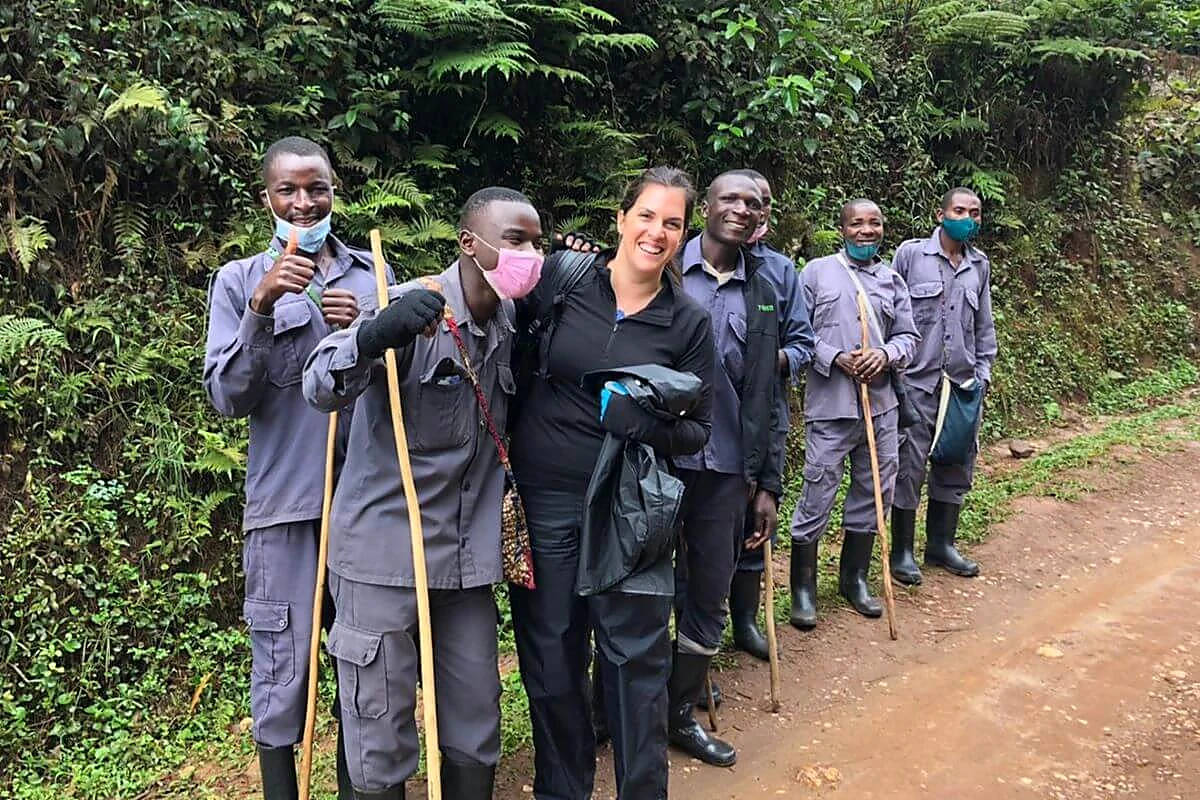
A gorilla trekking visitor poses with guides and porters carrying walking sticks beside a forest trail.
Can You Request an Easier Trek?
Requests are not guarantees
Visitors sometimes ask to be placed in a group expected to have a shorter walk. Staff may consider visitor circumstances when organizing groups, but gorillas move freely and assignments depend on operational factors. No tour operator can promise a flat, short, or painless route. Treat any suggestion of an easier trek as a request rather than a confirmed entitlement.
Describe function
Explain your limits in practical terms: how long you can walk, whether you can descend stairs, how you handle muddy ground, and whether you need frequent breaks. A medical label alone may not communicate the challenge. Accurate information gives the operator and park staff a better basis for discussing what is feasible and what remains uncertain.
Sector selection
Different Bwindi sectors have different access roads and trekking landscapes, but difficulty varies within each sector and from day to day. Choosing a sector solely from an online claim that it is easiest may create false expectations. Ask about the specific permit location and current logistics. A comfortable lodge location is useful even when the trek itself cannot be predicted.
Timing and weather
Drier periods may reduce some mud, but rain can occur at any time in mountain forest. The location of the gorillas also matters more than a simple seasonal label. Avoid booking solely on the promise of dry, level walking. Prepare for wet conditions and keep flexibility in the rest of your itinerary where possible.
Briefing day
Arrive early enough to speak to the briefing team without delaying others. Repeat your knee concerns calmly and ask which support options are available. Follow the allocation process and do not pressure staff to disregard conservation or safety considerations. A clear conversation is more useful than presenting an unverified promise made by a third party.
No fixed encounter
Even if a gorilla family is expected to be nearby, it may move before trackers and visitors reach it. The return journey may follow a different route or take longer than anticipated. Prepare for variability in distance and elevation. If your knee requires strict limits, discuss whether the activity is appropriate before you commit.
Consider alternatives
If the demands exceed your ability, Uganda offers other wildlife and cultural activities that may suit your circumstances better. A game drive or scenic lodge stay can still be rewarding, although vehicle access and walking requirements should be checked. Choosing an alternative is not a failure. It is a practical way to enjoy the trip safely.
Honest booking
PrideMark Safaris can help explain available itineraries and communicate requests, but the Uganda Wildlife Authority and ranger teams govern the trekking experience. Ask the operator to identify which services it directly controls. Written clarity about permits, transfers, assistance, and cancellation terms is more valuable than an unsupported guarantee of an easy trail.
Bwindi Versus Mgahinga for Visitors With Knee Concerns
Different landscapes
Bwindi is a dense mountain forest with multiple trekking sectors, while Mgahinga lies in a volcanic mountain landscape. Neither park can be described as universally easy for sore knees. Trail steepness, vegetation, weather, and gorilla movement all influence the outing. Compare access logistics and the actual demands rather than relying on a simple ranking of the parks.
Permit availability
Gorilla trekking permits are tied to park arrangements and availability. Confirm the park and departure details before paying for accommodation. A traveler with mobility concerns may need more planning time, particularly if seeking a specific service or support arrangement. Never assume a permit can be transferred freely between parks or dates without applicable rules and approval.
Bwindi sector logistics
Bwindi’s different sectors can affect road transfer times, lodging choices, and where you attend the morning briefing. A short drive from your lodge can reduce fatigue before the trek, even though it does not guarantee an easier forest route. Ask for a sector-matched itinerary and review the actual driving plan, including arrival and departure days.
Mgahinga terrain
Mgahinga’s volcanic setting includes slopes that may be challenging for anyone with knee pain. The impression of more open vegetation in some places should not be mistaken for accessible walking. Ask for current guidance about the trekking experience and remember that gorilla location changes. There is no reliable way to promise an easy day in advance.
Transfers matter
Travel to either park may involve long road journeys, depending on your arrival point and itinerary. Sitting for extended periods can increase stiffness for some people. Consider a suitable rest stop plan and discuss comfortable vehicle access. A flying safari may reduce some road time but does not change the physical demands of the trek itself.
Accommodation design
Lodges vary in the number of stairs, slope of paths, and distance between rooms and common areas. Ask about room access, bathrooms, handrails, and how close vehicles can approach the entrance. These details may matter as much as the park choice for someone managing knee pain. Request specifics rather than relying on a general description of luxury.
Compare realistic options
When comparing a 3-day Uganda gorilla trekking safari with a 3-day gorilla flying luxury safari, focus on transport, lodge location, and included services. A more comfortable transfer can improve the overall trip, but it cannot guarantee easier trekking terrain. Choose the itinerary that fits your needs without confusing travel convenience with physical accessibility.
Ask before committing
Contact PrideMark Safaris with your travel dates and a clear description of your knee limitations. Ask about available permit sectors, practical support, and accommodation access. Also consult official park information for current rules. A good comparison identifies the uncertainties rather than presenting Bwindi or Mgahinga as an automatically safe choice for every visitor.
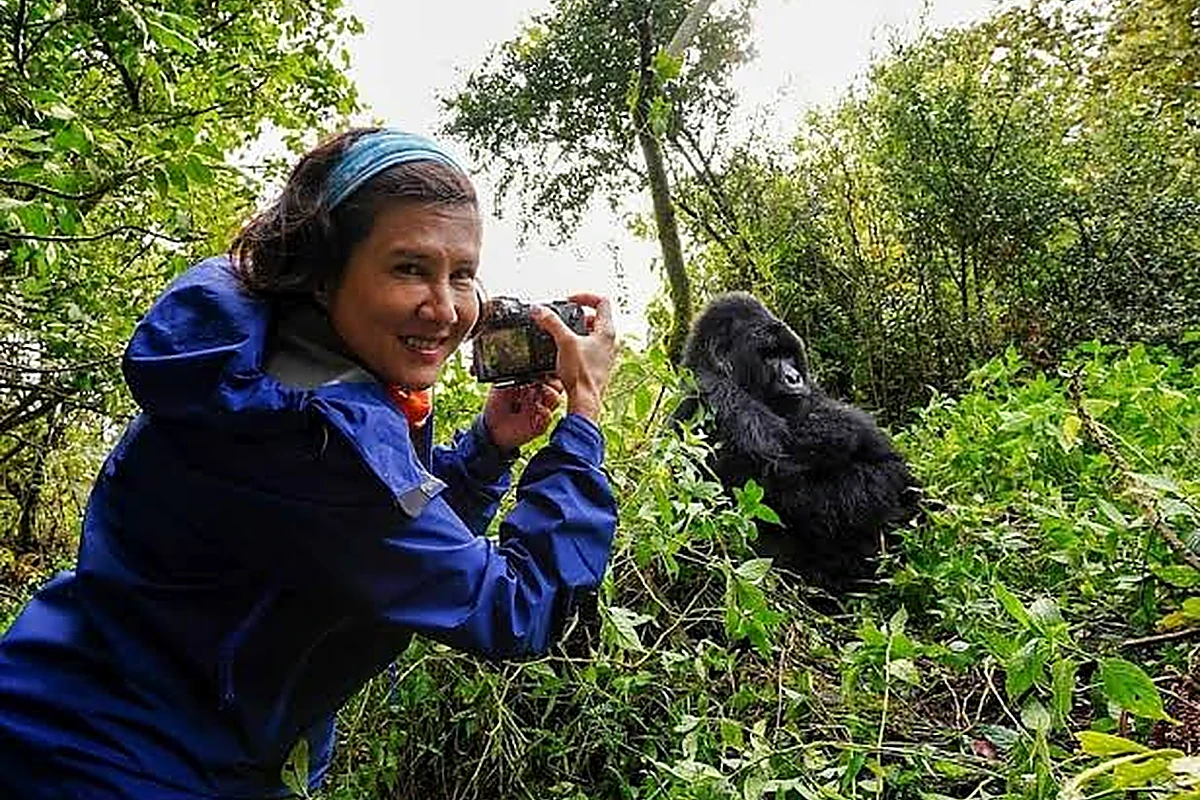
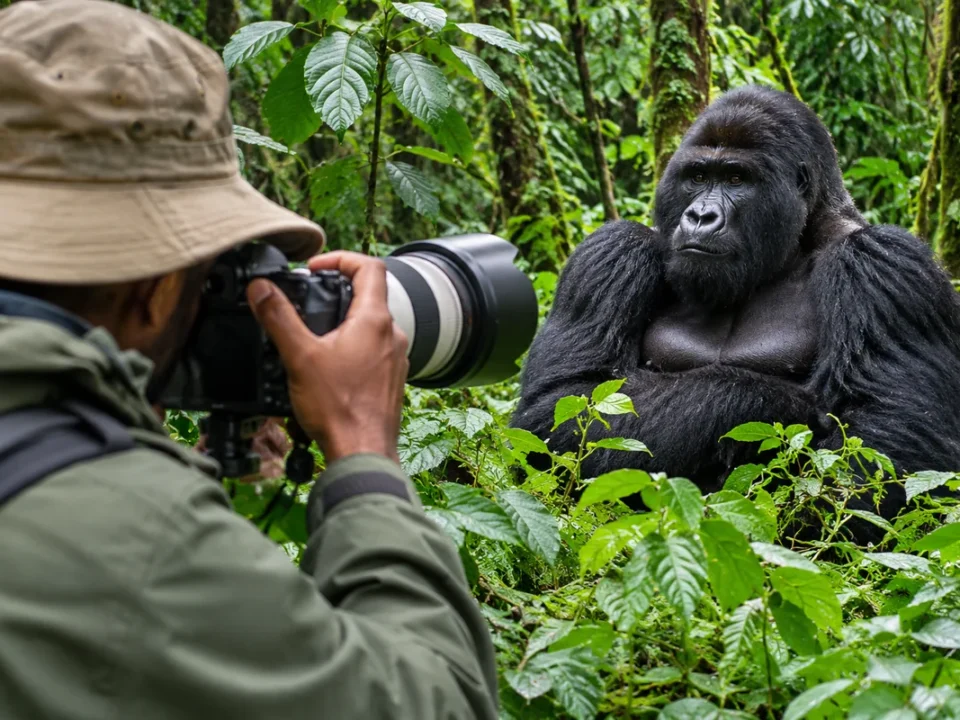
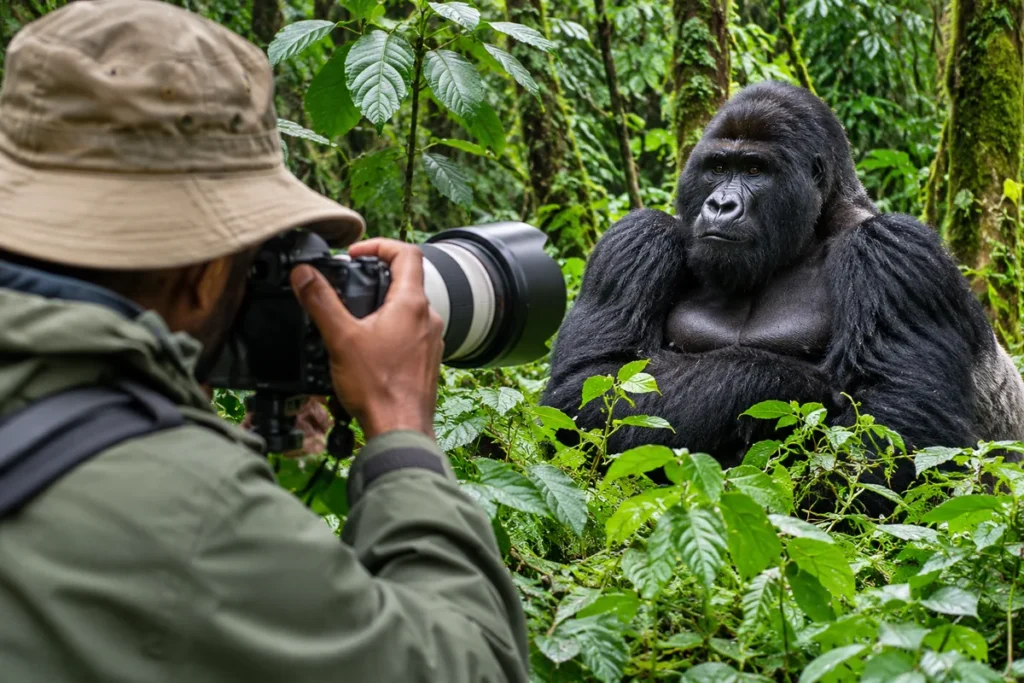
A safari visitor photographs a mountain gorilla surrounded by lush green forest vegetation.
Preparing After Knee Injury or Surgery
Medical clearance
If you have had knee surgery, a recent injury, or ongoing instability, seek advice from the clinician managing your recovery before planning strenuous hiking. Ask specifically about steep descents, muddy ground, prolonged walking, and carrying a pack. A general statement that you can walk normally may not cover the demands of mountain forest terrain.
Recovery timelines
Recovery varies by procedure, injury severity, rehabilitation progress, and personal health. An online itinerary cannot establish when your knee is ready for trekking. Avoid booking around a generic recovery estimate. Discuss your actual function and any restrictions with a qualified professional, then allow flexibility if rehabilitation does not progress as expected.
Practice terrain
When medically appropriate, build experience on uneven ground and modest hills rather than only walking on a treadmill or flat pavement. Gradually test your boots, poles, and pack under safe conditions. Pay attention to how your knee feels later that day and the following morning. Practice should build confidence, not provoke worsening symptoms.
Strength and balance
A physiotherapist may recommend exercises targeting leg strength, balance, and movement control, depending on your condition. Do not adopt a generic exercise program if you have restrictions after surgery. The goal is to understand your capability on irregular terrain and identify problems early. A stronger leg does not eliminate every hazard of wet forest paths.
Travel discomfort
Long flights and road transfers may leave a knee stiff or swollen. Discuss appropriate travel precautions with your healthcare professional, particularly after recent surgery or if you have clotting concerns. Plan reasonable breaks where feasible and avoid arriving exhausted the night before trekking. Recovery time between travel and hiking can be useful.
Medication planning
Carry prescribed medication in its original packaging and keep essential items accessible. Do not rely on painkillers to hide symptoms that would otherwise tell you to stop. Ask your clinician about medication timing, side effects, and what warning signs require attention. Remote trekking areas are not the place to experiment with unfamiliar treatments.
Know when to stop
Sudden severe pain, inability to bear weight, repeated buckling, or significant new swelling should not be ignored. Tell the ranger promptly and seek medical evaluation as appropriate. Your health comes before completing the trek or using the full value of a permit. Understand the booking and refund rules before travel rather than making assumptions under pressure.
Plan contingency
When booking gorilla trekking with knee problems after an injury, ask PrideMark Safaris about cancellation terms, transport options, and alternative activities. Consider suitable travel insurance and read its exclusions carefully. Neither a permit nor insurance automatically guarantees reimbursement if you cannot trek. A contingency plan makes the trip less stressful if your condition changes.
Knee-Conscious Trekking Preparation Checklist
| Before travel | What to confirm | Why it matters |
|---|---|---|
| Medical review | Suitability for uneven uphill and downhill walking | Individual safety |
| Permit and sector | Correct park, briefing location, current terms | Avoid logistical surprises |
| Accommodation | Stairs, access and distance from briefing | Reduce unnecessary strain |
| Support arrangements | Porter or other assistance availability and cost | Avoid assuming services |
| Equipment | Tested boots, poles and any recommended brace | Comfort and familiarity |
| Travel insurance | Coverage, exclusions and cancellation conditions | Financial planning |
Booking a Knee-Conscious Gorilla Safari in Uganda
Choose the itinerary
Start by comparing what each safari package includes: gorilla permit arrangements, accommodation, transfers, and any additional wildlife activities. A short itinerary can minimize time away from home but may involve demanding road travel. A longer itinerary can offer rest days, although it does not change the forest terrain. Select based on realistic needs.
Road or air
A flying safari can reduce certain long road transfers and may appeal to travelers who become stiff during extended drives. However, flights have their own boarding and baggage arrangements, and the ground transfer from an airstrip still matters. Ask about each segment. Air travel should never be marketed as a way to avoid hiking during the gorilla encounter.
Add a recovery day
If your schedule allows, consider a relaxed day after trekking rather than immediately starting another strenuous activity. The amount of rest needed varies by individual, and some travelers will feel fine while others may be sore. A flexible itinerary can make the experience more comfortable without promising medical benefits. Discuss your preferences during planning.
Package comparison
The 5-day gorilla and game safari combines different wildlife experiences and may be appealing if you want variety. Check the sequence of activities, road distances, and lodging access before deciding. A game drive may require less walking than gorilla trekking, but individual mobility needs still matter. The best package is the one whose logistics you understand.
Questions to send
Ask which park and sector are planned, where the lodge sits relative to briefing, whether a porter can be arranged, and what equipment is normally available. Also ask about current permit terms, payment deadlines, and what happens if you are unable to participate. Written answers help prevent confusion after arrival in Uganda.
Avoid absolute promises
Be cautious of claims that a particular trekking group is always nearby or that a ranger can guarantee a gentle route. Gorilla families move in wild habitat, and weather changes. A trustworthy operator explains uncertainty while helping with arrangements it can actually control. The same principle applies to claims that a walking stick will prevent knee pain.
Link to official guidance
Check official Uganda Wildlife Authority information for current permit procedures, park rules, and conservation requirements. Safari websites can explain planning, but official rules should take precedence if details conflict. For medical questions, consult your own healthcare professional. Combining these sources is more reliable than relying on one article or a traveler’s anecdote.
Contact and next steps
PrideMark Safaris can discuss the 3-day Uganda gorilla trekking safari, the 3-day gorilla flying luxury safari, or a longer 5-day gorilla and game safari. Explain your knee limitations before requesting a quote so the team can identify suitable logistics and clarify what remains subject to park operations. A carefully planned safari starts with accurate expectations.
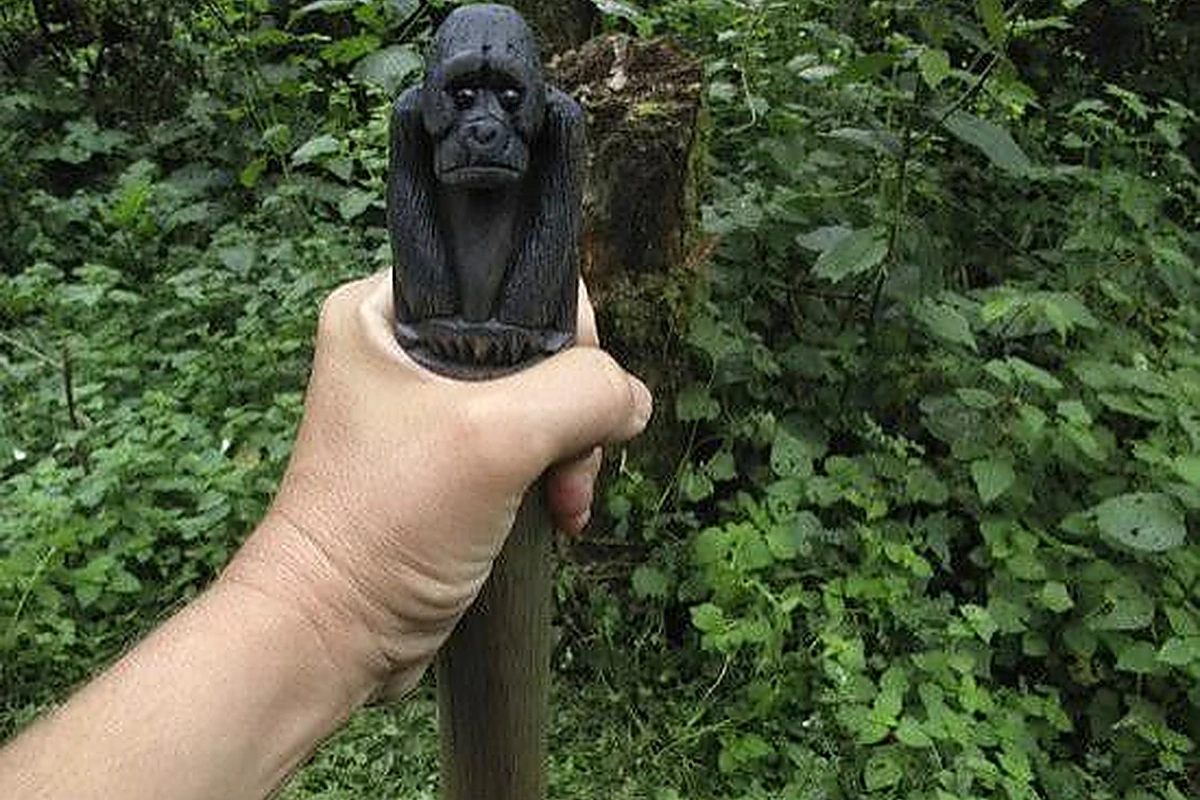
A wooden walking stick featuring a carved gorilla handle, photographed against lush forest vegetation.
Frequently Asked Questions About Gorilla Trekking With Knee Problems
Can you trek with arthritis in your knee?
Some people with knee arthritis may manage trekking, while others may find steep and uneven trails unsuitable. Severity, stability, pain, and functional capacity differ. Ask your treating clinician about your individual circumstances and describe the actual demands of gorilla trekking. Do not assume that a diagnosis alone determines eligibility or that a ranger can guarantee a short walk.
Is gorilla trekking with knee problems safe?
Safety depends on the specific knee condition, the route, weather, and the assistance available. There is no universal safety guarantee. Explain your limitations before booking and during the park briefing, wear suitable footwear, and follow ranger directions. If your knee gives way or you cannot safely bear weight, seek medical advice before attempting a demanding forest trek.
Can I ask for a shorter gorilla trek?
You can explain your mobility concerns and ask whether a less demanding assignment is possible. However, gorillas move freely, and allocation depends on park operations. No tour company can guarantee a short or flat route. Plan for uncertainty and confirm any assistance separately. A request should not be treated as a promise that the trek will suit your knee.
Is downhill trekking worse for sore knees?
Descending can place substantial demands on the muscles controlling the knee and may be uncomfortable for certain conditions. The effect is individual, and uphill walking can also be difficult. Practice controlled movement on gentle slopes when medically appropriate. Use short steps and ask for assistance if footing becomes uncertain. Do not push through severe or sudden pain.
Are walking sticks provided in Bwindi?
Wooden walking sticks are often available around gorilla trekking briefing points, but arrangements may vary. Confirm availability with your operator or local park team before travel. A walking stick can assist balance, yet it cannot guarantee protection from falls or replace prescribed mobility support. Test the handle and shaft before relying on one during a demanding forest walk.
Can I hire a porter for knee problems?
Porters may be available to carry a bag and offer practical help on difficult ground, subject to local arrangements. Confirm services, fees, and limitations in advance. A porter is not automatically a medical attendant or an emergency carrying service. If you need substantial mobility assistance, discuss that specifically with park authorities and your operator before purchasing a permit.
Is Bwindi easier than Mgahinga for knee pain?
Neither park is universally easier. Bwindi has multiple sectors, while Mgahinga has volcanic mountain terrain, and difficulty can vary with weather and gorilla movement. Compare access roads, lodge logistics, and current park guidance rather than relying on an absolute ranking. Medical suitability should be assessed individually, because a comfortable transfer does not make a steep trail accessible.
Can I go gorilla trekking after knee replacement surgery?
Only your treating clinician can advise when strenuous hiking might be appropriate after knee replacement surgery. Recovery varies, and gorilla trekking can involve slippery slopes and long descents. Ask specifically about uneven ground, balance, and repeated stepping. Do not rely on a generic recovery timeline or book nonrefundable arrangements before discussing your functional readiness and possible restrictions.
Should I wear a knee brace while trekking?
A brace may help some people, but the correct type and fit depend on the condition. Consult a qualified clinician or physiotherapist if you are considering one. Test it on longer walks before traveling to Uganda. A poorly fitting brace can cause discomfort, and a brace does not eliminate the risks of steep, muddy, or uneven terrain.
Can a flying safari make trekking easier?
A flying safari can reduce certain long road journeys, which may be useful if sitting for hours causes stiffness. However, flights do not remove the forest walk or guarantee a gentler trekking route. Check airport transfers, vehicle access, lodge location, and baggage arrangements. Choose an itinerary based on the whole journey rather than assuming that flying makes the trek physically easy.
What happens if knee pain stops me during the trek?
Tell your ranger immediately if pain, swelling, or instability prevents safe movement. The team will respond according to local conditions and available procedures, but you should not assume that rescue or refunds are automatic. Review permit and insurance terms before travel. Seek medical assessment for sudden severe pain or inability to bear weight rather than attempting to continue.
How do I book gorilla trekking with knee problems?
Start by describing your functional limits, travel dates, and support needs to PrideMark Safaris. Ask about the park sector, lodge access, transfers, porters, and current permit conditions. Consult your healthcare professional about suitability and read cancellation terms carefully. A responsible booking process clarifies what can be arranged and what remains uncertain until the actual trekking day.
Plan Your Gorilla Safari With Clear Expectations
Gorilla trekking with knee problems is a planning question, not a promise of an easy walk. Assess your own walking ability with appropriate medical advice, prepare for steep and muddy terrain, and communicate clearly with the ranger team. Walking sticks, porter assistance, and thoughtful transport arrangements may help some travelers, but none removes the uncertainty of tracking wild gorillas in mountainous habitat.
Explore the 3-day Uganda gorilla trekking safari, the 3-day gorilla flying luxury safari, or the 5-day gorilla and game safari. For an itinerary discussion, contact PrideMark Safaris and explain your knee concerns before booking. Consult the Uganda Wildlife Authority for current park rules and permit information. For gorilla trekking with knee problems, this distinction is important because trail conditions cannot be fully predicted before the morning briefing.