Uganda vs Rwanda Mid-Range Gorilla Trekking
Comparing Uganda and Rwanda for a comfortable mid-range gorilla trekking safari? Discover the real differences in permit cost, trekking destinations, accommodation, access, terrain, safari combinations and overall value before you book.
Uganda vs Rwanda Gorilla Trekking: Which Is Better for a Mid-Range Safari?
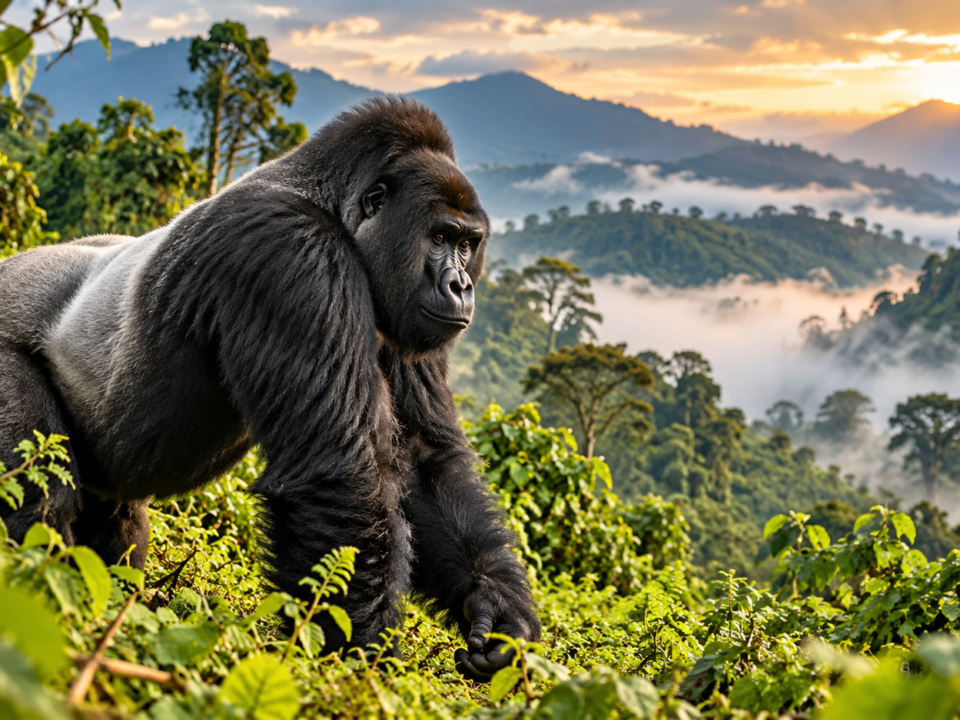
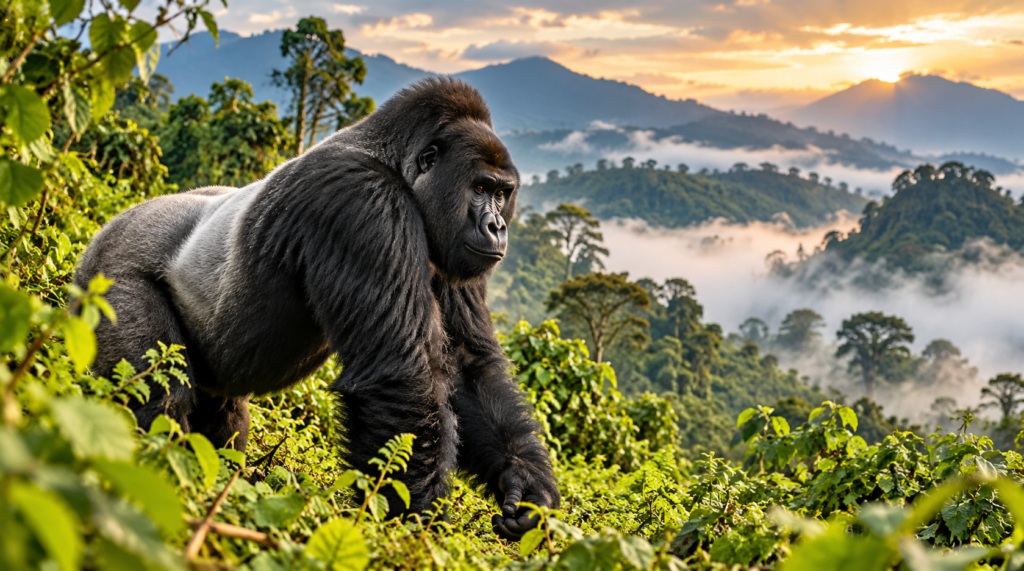
Uganda vs Rwanda gorilla trekking is one of the most important decisions for travelers planning a mountain gorilla safari in East Africa. Both countries offer genuine encounters with habituated mountain gorillas in protected montane forests, but the two destinations can feel very different when you look at the complete trip rather than the gorilla encounter alone.
For a mid-range gorilla trekking safari, the question is rarely just “Which country has better gorillas?” The more useful questions are: How much is the permit? How easy is it to reach the trekking area? What type of lodge can you get for your budget? How difficult is the trek? Can you add chimpanzees or classic game drives? And does the route make sense for the number of days you have available?
Uganda’s main gorilla destinations are Bwindi Impenetrable National Park and Mgahinga Gorilla National Park, while Rwanda’s gorilla trekking takes place in Volcanoes National Park. UWA states that Uganda treks may last around 2–7 hours and provide one hour of observation with a habituated gorilla family. Rwanda’s tourism authority lists the standard international gorilla permit at US$1,500.
Uganda vs Rwanda Gorilla Trekking at a Glance
At first glance, Uganda and Rwanda can appear almost identical because both are part of the wider mountain gorilla landscape of the Albertine Rift and Virunga region. The practical difference for a traveler is how the gorilla experience fits into the rest of the trip.
| Consideration | Uganda | Rwanda |
|---|---|---|
| Main gorilla destination | Bwindi Impenetrable National Park and Mgahinga Gorilla National Park | Volcanoes National Park |
| International gorilla permit | US$800 under UWA’s July 2024–June 2026 tariff for foreign non-residents | US$1,500 for international visitors according to Visit Rwanda |
| Best starting city | Entebbe/Kampala for many Uganda safaris; Kigali can also work for southwestern routes | Kigali |
| Mid-range strength | Strong value when combined with a longer Uganda safari | Convenient for a focused Rwanda gorilla trip |
| Landscape | Dense Bwindi forest or Virunga volcanoes at Mgahinga | Virunga volcanic landscape and montane forest |
| Other primate options | Chimpanzees and golden monkeys can be added depending on route | Golden monkeys and other primate experiences |
| Classic wildlife combinations | Excellent options including Queen Elizabeth, Lake Mburo and other parks | Akagera and Nyungwe can be combined on longer Rwanda journeys |

Gorilla Trekking in Uganda: What Makes It Different?
Uganda offers gorilla trekking in Bwindi Impenetrable National Park and Mgahinga Gorilla National Park. UWA identifies four main Bwindi trekking sectors: Buhoma, Ruhija, Rushaga and Nkuringo. This matters when planning a mid-range trip because your accommodation should be selected around the confirmed trekking sector rather than simply choosing a lodge described as being “near Bwindi.”
Bwindi is especially attractive to travelers who want their gorilla experience to form one part of a broader Uganda safari. The park’s forest setting can be paired with Queen Elizabeth National Park, Kibale National Park, Lake Bunyonyi, Lake Mburo and other destinations depending on the number of days available.
Mgahinga provides a different atmosphere, with the Virunga volcanic landscape and opportunities to combine gorilla trekking with golden monkey tracking. UWA notes that Mgahinga is an alternative to Bwindi’s denser jungle environment.
Gorilla Trekking in Rwanda: What Makes It Different?
Rwanda’s gorilla trekking experience is centered on Volcanoes National Park in the country’s northwest. Visit Rwanda describes the park as protecting the Rwandan sector of the Virunga Mountains, with montane ecosystems including evergreen and bamboo forest, grassland, swamp and heath.
One of Rwanda’s biggest advantages for a short gorilla trip is the straightforward connection between Kigali and Volcanoes National Park. Visit Rwanda’s published itineraries commonly use a roughly three-hour road transfer between Kigali and the Volcanoes region. For travelers arriving in Kigali and wanting a compact gorilla holiday, this can make the logistics very appealing.
Rwanda also works well for travelers who want to add golden monkey tracking, volcano hiking, cultural experiences or a longer national-park itinerary. The Virunga setting gives the Rwanda experience a particularly dramatic mountain backdrop.

Uganda vs Rwanda Gorilla Permit Cost
For international travelers, the permit price is one of the clearest differences between Uganda and Rwanda. UWA’s official conservation tariff covering July 2024 to June 2026 lists a gorilla permit at US$800 for foreign non-residents, US$700 for foreign residents and US$500 for the rest of Africa.
Visit Rwanda currently lists the standard gorilla tracking permit at US$1,500 per person per day for international visitors, with separate special rates available to eligible Rwandan and East African Community residents and other categories.
Uganda
US$800*
Foreign non-resident rate under the July 2024–June 2026 UWA tariff.
Rwanda
US$1,500*
Standard international rate currently published by Visit Rwanda.
What this means
Uganda has the permit advantage
The difference can create more room in a mid-range budget for accommodation, transport or extra safari activities.
*Always reconfirm official rates for the exact travel year before payment.
What Does a Mid-Range Gorilla Trekking Safari Actually Mean?
A mid-range gorilla safari sits between basic budget travel and high-end luxury. The goal is usually to have a comfortable private safari vehicle, a well-reviewed lodge with good meals and service, a properly organized gorilla trek and sensible transfers without paying premium luxury-lodge prices.
Comfortable Lodge
Expect a private room, en-suite facilities, comfortable bedding, reliable meals and a good location for the trek.
Private Transport
A private 4×4 safari vehicle and driver-guide can make a major difference, especially on multi-day Uganda routes.
Balanced Itinerary
The itinerary should leave enough time for trekking while avoiding unnecessarily expensive transfers or luxury upgrades.
Uganda vs Rwanda: Access and Travel Time
Access is where Rwanda can be particularly attractive. Kigali is Rwanda’s main international gateway, and Volcanoes National Park is relatively close to the capital. Visit Rwanda’s own itinerary examples describe the Kigali-to-Volcanoes drive as about three hours.
Uganda requires more route planning when starting from Entebbe or Kampala. The journey to Bwindi is longer by road, but that longer journey can become an advantage if your objective is a full Uganda safari rather than a single gorilla activity. You can build the route around Queen Elizabeth, Kibale, Lake Mburo and other attractions instead of treating the transfer as dead travel time.
Map: Bwindi Impenetrable National Park, Uganda.
Mid-Range Gorilla Lodges: Uganda vs Rwanda
Accommodation should be evaluated according to location as much as room quality. In Uganda, Bwindi’s four main sectors mean that a lodge can be comfortable yet still be inconvenient if it is far from your assigned trailhead. UWA identifies Buhoma, Ruhija, Rushaga and Nkuringo as the main Bwindi trekking sectors.
Rwanda’s Volcanoes National Park is more compact from a tourism-planning perspective, with accommodation concentrated around the Musanze and Kinigi area. This can simplify logistics for short trips, although premium lodge options can raise the overall price considerably.
| Mid-range consideration | Uganda | Rwanda |
|---|---|---|
| Location planning | Very important because of Bwindi’s different sectors. | Generally simpler around Volcanoes National Park. |
| Value potential | Strong, particularly when permit savings are reinvested into the safari. | Good comfort is available, but permit cost starts higher for international visitors. |
| Longer safari | Excellent range of lodge choices across multiple parks. | Good options across Rwanda’s major tourism regions. |
What Is the Gorilla Trekking Experience Like in Each Country?
In both countries, the gorilla trek begins with an early start and briefing before entering the forest with trained guides and trackers. The exact walking time is unpredictable because gorillas move naturally through their habitat. UWA says Uganda treks may last approximately 2–7 hours and include one hour of observation once the habituated family is located.
Rwanda’s official tourism itineraries similarly describe tracking that can range from a relatively short outing to most of the morning, followed by one hour with the gorillas.
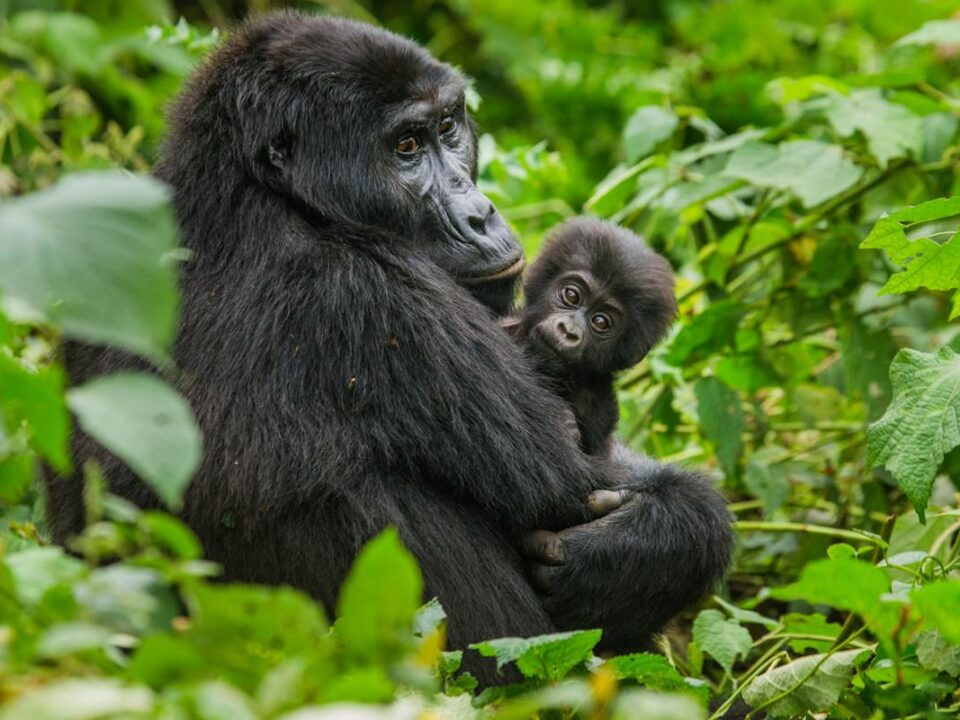
The actual quality of the encounter should therefore not be judged simply by the number of hours you spend walking. Both destinations offer the possibility of seeing gorillas feeding, resting, moving through vegetation and interacting with members of their family.
Which Is More Difficult: Uganda or Rwanda Gorilla Trekking?
Neither country should be marketed as universally easy or difficult. Mountain gorilla trekking is a physically active forest experience in both destinations, and conditions can change with rainfall, elevation, vegetation and the location of the assigned gorilla family.
Uganda
Bwindi can involve steep, muddy and densely vegetated trails. The exact sector and gorilla location influence the day.
Rwanda
Volcanoes National Park also involves mountainous terrain, with the Virunga landscape and changing forest conditions.
Porter Support
In either destination, hiring a porter can provide useful practical assistance on difficult sections and directly support local livelihoods.
Uganda vs Rwanda for Gorilla + Wildlife Safaris
If your dream is not simply to see gorillas but to experience a broader African safari, Uganda deserves particularly close attention. A mid-range Uganda itinerary can combine gorilla trekking with chimpanzee trekking, savannah game drives, boat safaris, birding and scenic destinations.
Uganda Combinations
- Gorillas + Queen Elizabeth National Park
- Gorillas + Kibale chimpanzee trekking
- Gorillas + Lake Bunyonyi
- Gorillas + Lake Mburo
- Gorillas + golden monkeys in Mgahinga
Rwanda Combinations
- Gorillas + Akagera National Park
- Gorillas + Nyungwe Forest
- Gorillas + golden monkey tracking
- Gorillas + Kigali cultural experiences
- Gorillas + Lake Kivu experiences
Which Offers Better Value for a Mid-Range Gorilla Safari?
For many international travelers, Uganda offers better overall value at the mid-range level. The lower gorilla permit price can leave more of the budget available for a good lodge, private transport, additional wildlife activities or a longer itinerary. UWA’s published 2024–2026 tariff puts the foreign non-resident permit at US$800, compared with Rwanda’s currently published US$1,500 standard international permit.
However, Rwanda can represent excellent value for a traveler whose priority is a short and logistically simple gorilla trip from Kigali. Spending less time on long transfers can be valuable when vacation days are limited.
Uganda or Rwanda: Which Should You Choose?
Choose Uganda If…
- You want a lower international gorilla permit cost.
- You want a broader Uganda wildlife safari.
- You want to combine gorillas with chimpanzees.
- You have 4–10+ days available.
- You want several Bwindi sector and route possibilities.
- You are looking for strong mid-range safari value.
Choose Rwanda If…
- You are already flying into Kigali.
- You want a shorter route to the gorilla region.
- You have limited time for your safari.
- You want the Volcanoes National Park experience.
- You want to combine gorillas with Rwanda’s other attractions.
- The higher permit price fits your budget.
Not Sure Whether Uganda or Rwanda Is Right for You?
Tell Pride Mark Safaris your arrival airport, travel dates, number of travelers, preferred safari length and accommodation level. We can compare the two destinations around your actual route and budget rather than giving you a generic recommendation.
Sample Mid-Range Gorilla Trekking Itineraries
3-Day Uganda Gorilla Safari
A focused itinerary for travelers whose priority is mountain gorilla trekking, with comfortable mid-range accommodation and private road transfers.
3-Day Rwanda Gorilla Safari
A compact Kigali-to-Volcanoes route designed around gorilla trekking, comfortable accommodation and efficient transfers.
6–7 Day Uganda Gorilla & Wildlife Safari
Combine gorilla trekking with chimpanzees, game drives and other Uganda safari experiences for a fuller East African journey.
What to Pack for a Mid-Range Gorilla Trek
Essential Gear
- Strong hiking shoes or boots
- Long trousers and long sleeves
- Lightweight waterproof jacket
- Gardening or trekking gloves
- Small daypack
- Refillable water bottle
- Insect repellent
Useful Extras
- Camera and spare batteries
- Waterproof protection for electronics
- Sun protection
- Personal medication
- Binoculars for wider safari activities
- Cash for porter services and small local purchases
Responsible Gorilla Trekking in Uganda and Rwanda
Gorilla trekking is a conservation-based tourism activity, so responsible behavior matters in both countries. Follow the instructions of guides and park authorities, respect the required viewing rules, avoid touching gorillas, do not litter, keep noise controlled and follow all applicable health and wildlife regulations.
Tourism revenue contributes to the protection of gorilla habitat and surrounding communities. Visit Rwanda notes that gorilla tourism revenue supports conservation and communities around Volcanoes National Park, while UWA manages gorilla tourism and conservation in Uganda.
Frequently Asked Questions About Uganda vs Rwanda Mid-Range Gorilla Trekking
Is Uganda or Rwanda cheaper for mid-range gorilla trekking?
For international visitors, Uganda generally has the lower gorilla permit price. UWA’s July 2024–June 2026 tariff lists US$800 for foreign non-residents, while Visit Rwanda currently lists US$1,500 for the standard international permit. Total safari cost still depends on accommodation, transport and itinerary length.
Is gorilla trekking better in Uganda or Rwanda?
Neither destination is automatically better. Uganda is particularly attractive for value and broader safari combinations, while Rwanda is especially attractive for travelers who want a compact route from Kigali to Volcanoes National Park.
Which country is better for a 3-day gorilla safari?
Rwanda can be very convenient for a short trip because Kigali provides relatively straightforward access to Volcanoes National Park. Uganda can also work for three days, particularly when the route and trekking sector are selected carefully.
Which country is better for a longer 7-day safari?
Uganda is an excellent choice for travelers wanting to combine gorillas with chimpanzees and classic wildlife destinations such as Queen Elizabeth National Park. Rwanda can also support longer journeys through Akagera, Nyungwe and other destinations.
Are the gorillas different in Uganda and Rwanda?
Both countries protect mountain gorillas within the wider regional conservation landscape. The main difference for visitors is the destination, habitat setting, route and trekking logistics rather than the quality of the animals.
Is gorilla trekking guaranteed?
No responsible safari operator should promise a guaranteed wildlife sighting. Guides and trackers work to locate habituated families, but gorillas remain wild animals moving through their natural habitat.
Can I do Uganda gorilla trekking from Kigali?
Yes. Kigali can be used as an entry point for southwestern Uganda itineraries when border, immigration and trekking arrangements are properly organized. The exact route should be planned around the confirmed trekking sector and permit.
Can I combine Uganda gorillas with chimpanzee trekking?
Yes. Uganda is especially strong for combining mountain gorilla trekking with chimpanzee trekking, making it an excellent option for travelers who want a primate-focused safari.
Do I need a porter?
A porter can provide practical assistance on steep or slippery forest sections and directly support local livelihoods. It is worth considering in either country.
How far in advance should I plan a mid-range gorilla safari?
Early planning is advisable because gorilla trekking spaces are limited and the best-value accommodation can sell out around popular travel periods. Confirm the permit and trekking sector before committing to non-refundable travel components.
Book Your Mid-Range Gorilla Trekking Safari With Pride Mark Safaris
Whether you choose the value of Uganda’s Bwindi and Mgahinga gorilla experiences or the compact Volcanoes National Park route in Rwanda, Pride Mark Safaris can help build the itinerary around your actual budget, travel dates and interests.
Send us your travel dates, number of travelers, arrival airport and preferred number of safari days to receive a tailored recommendation.
Sources & Further Reading
For current permit rules and official destination information, consult the Uganda Wildlife Authority gorilla tracking information, the UWA Conservation Tariff, and Visit Rwanda’s gorilla tracking information.
Replace the Wikimedia image URLs with your own Pride Mark Safaris photographs before final publication whenever possible.