Bwindi Mountain Gorillas: 9 Amazing Reasons to Protect Them
Discover the remarkable biodiversity, ancient rainforest, mountain gorilla families and conservation efforts that make Bwindi Impenetrable National Park one of Uganda’s most valuable natural treasures.
Why is Bwindi so important to mountain gorillas? Deep in southwestern Uganda, where mist drifts across steep green hills and ancient trees shelter an extraordinary range of wildlife, Bwindi Impenetrable National Park provides one of the most significant remaining habitats for endangered mountain gorillas. Bwindi mountain gorillas rely on this forest for natural food, shelter and space. Its importance extends far beyond gorilla trekking: the forest protects a complex ecosystem, supports countless plant and animal species, contributes to scientific research and connects wildlife conservation with the lives of neighbouring communities.
Understanding the needs of Bwindi mountain gorillas means looking at the entire forest environment that makes their survival possible. The forest supplies natural food, shelter and space for family groups. Its varied elevations create different habitats, while years of conservation work have helped protect gorillas from threats such as poaching, habitat loss and disease transmission.
For travellers planning a wildlife adventure with PrideMark Safaris, Bwindi offers something exceptional: the opportunity to observe mountain gorillas in their natural home while learning why protecting this remarkable forest matters to the future of wildlife in Uganda and around the world.

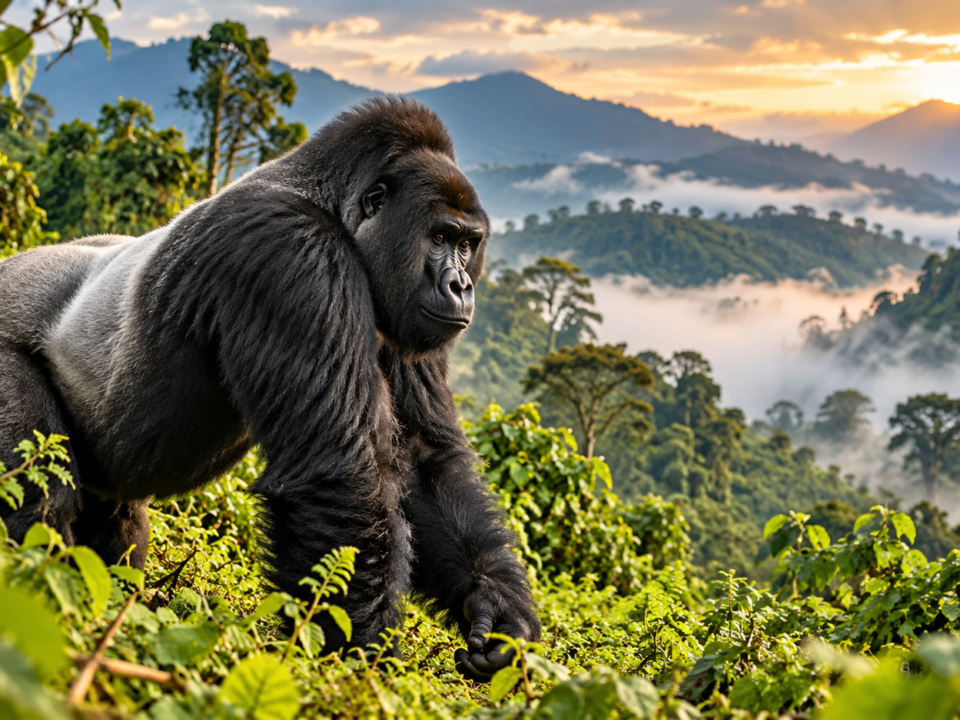
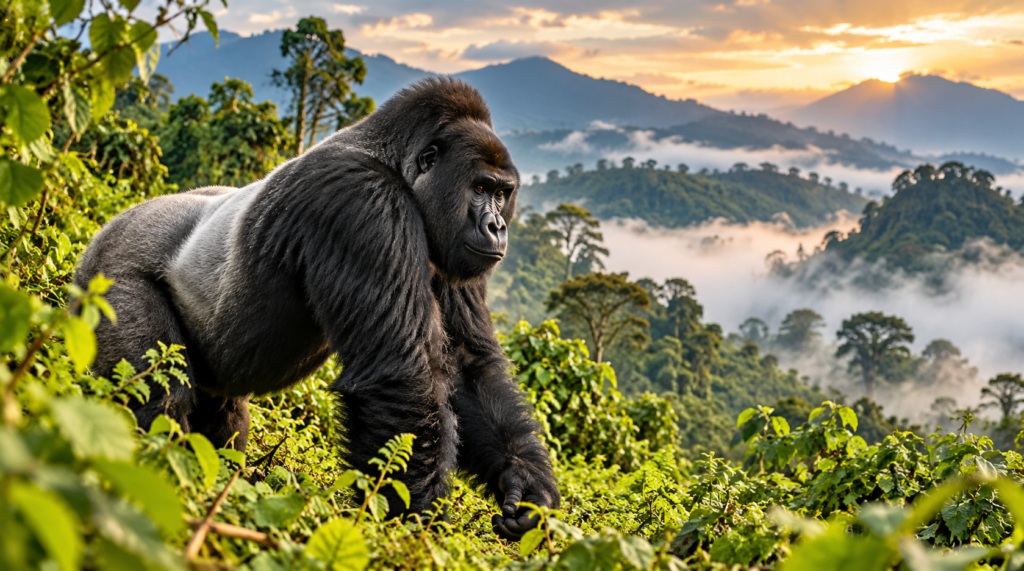
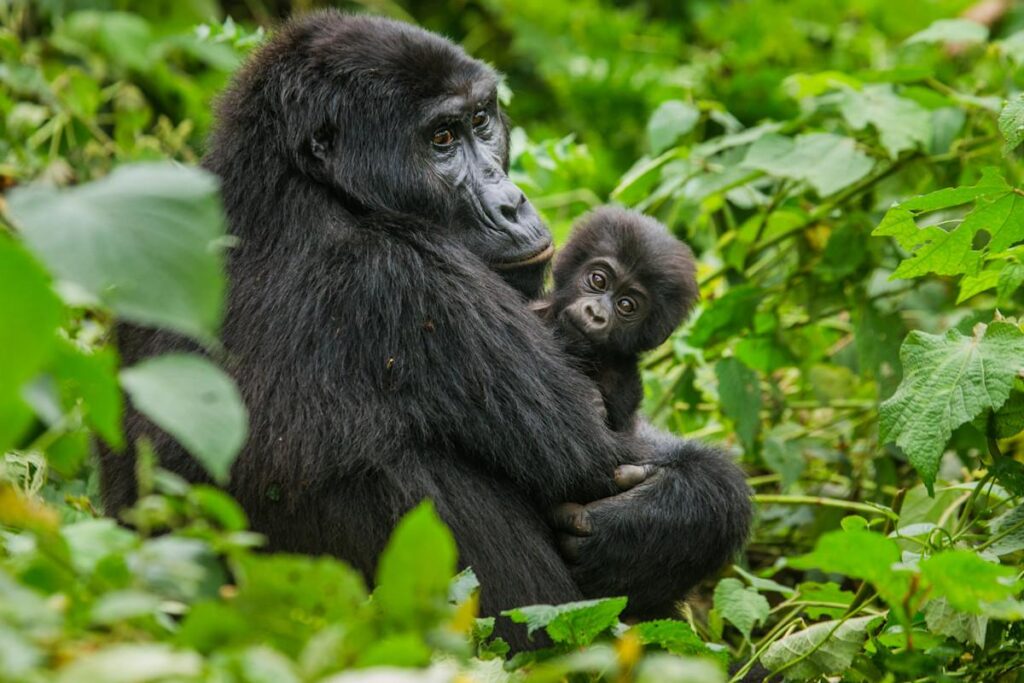
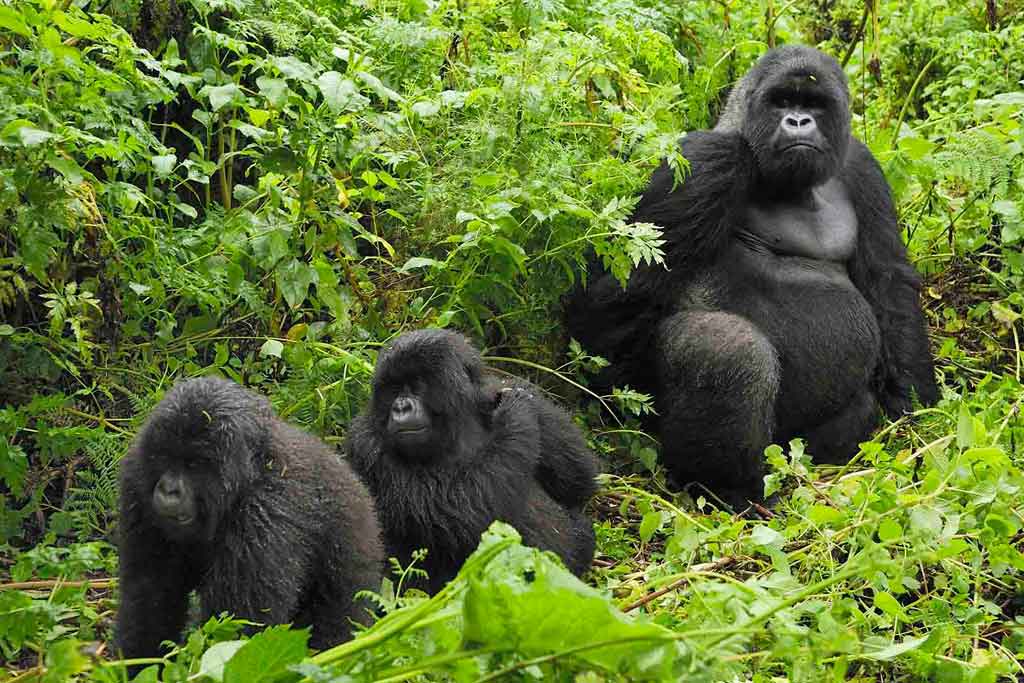
Mountain gorillas depend on Bwindi’s dense vegetation, natural food sources and protected forest habitat.
Bwindi Impenetrable National Park: Quick Facts
32,092 hectares
Approximate area of the UNESCO-listed property.
1994
Year Bwindi was inscribed on the UNESCO World Heritage List.
1,160–2,607 metres
Approximate elevation range documented in Uganda Wildlife Authority park information.
Mountain gorillas
One of the most important protected populations of this endangered great ape.
Bwindi lies in southwestern Uganda, within the biologically rich Albertine Rift region. UNESCO recognises the park for its exceptional natural value, including its unusual forest diversity and threatened wildlife. Its conservation importance makes it much more than a destination for wildlife photography: it is a globally significant natural heritage site.
1. Bwindi Protects a Major Mountain Gorilla Population
One of the strongest reasons to protect Bwindi mountain gorillas is the size and significance of the population that depends on this forest. Mountain gorillas are found in only two main areas: the Bwindi–Sarambwe forest landscape and the Virunga Massif, which spans parts of Uganda, Rwanda and the Democratic Republic of Congo.
According to Uganda Wildlife Authority, the 2018 Bwindi census recorded 459 mountain gorillas. That figure is an important historical benchmark, not a current population count. In September 2026, UWA reported that genetic analysis from the 2025–2026 census was still awaited. The result will provide an updated picture of the population.
The significance of Bwindi is therefore not simply that visitors can see gorillas there. The forest is an essential refuge for a species with a naturally restricted range. Damage to this habitat could affect gorillas that have few alternative places to live.
Protecting Bwindi helps preserve feeding grounds, nesting areas, movement routes and the wider ecological conditions that allow gorilla families to survive. When the forest remains healthy, it supports the daily needs of animals at every stage of life, from infants dependent on their mothers to mature silverbacks leading family groups.
2. An Ancient Forest with Exceptional Biodiversity
Another reason Bwindi matters so much to mountain gorillas is the forest’s extraordinary age and biological richness. The forest is widely recognised as an ancient ecosystem that survived past climatic changes and retained a remarkable mixture of lowland and montane forest vegetation.
UNESCO describes Bwindi as an important biodiversity hotspot on the eastern edge of the Albertine Rift. Its varied habitats support a large number of plant species, including trees and ferns, as well as birds, butterflies, mammals and other wildlife. This diversity makes the park valuable not only for gorillas but also for conservation science and the protection of African tropical forests.
An ancient forest is more than a collection of trees. Over long periods, plants, fungi, insects, birds and mammals develop ecological relationships. Different plants provide food and shelter, insects contribute to pollination and decomposition, and animals help maintain natural processes across the landscape.
Mountain gorillas depend on this interconnected system. They eat vegetation from numerous plant species and move through different parts of the forest as their feeding needs change. Protecting Bwindi therefore means protecting the biological relationships that make the gorillas’ habitat functional.
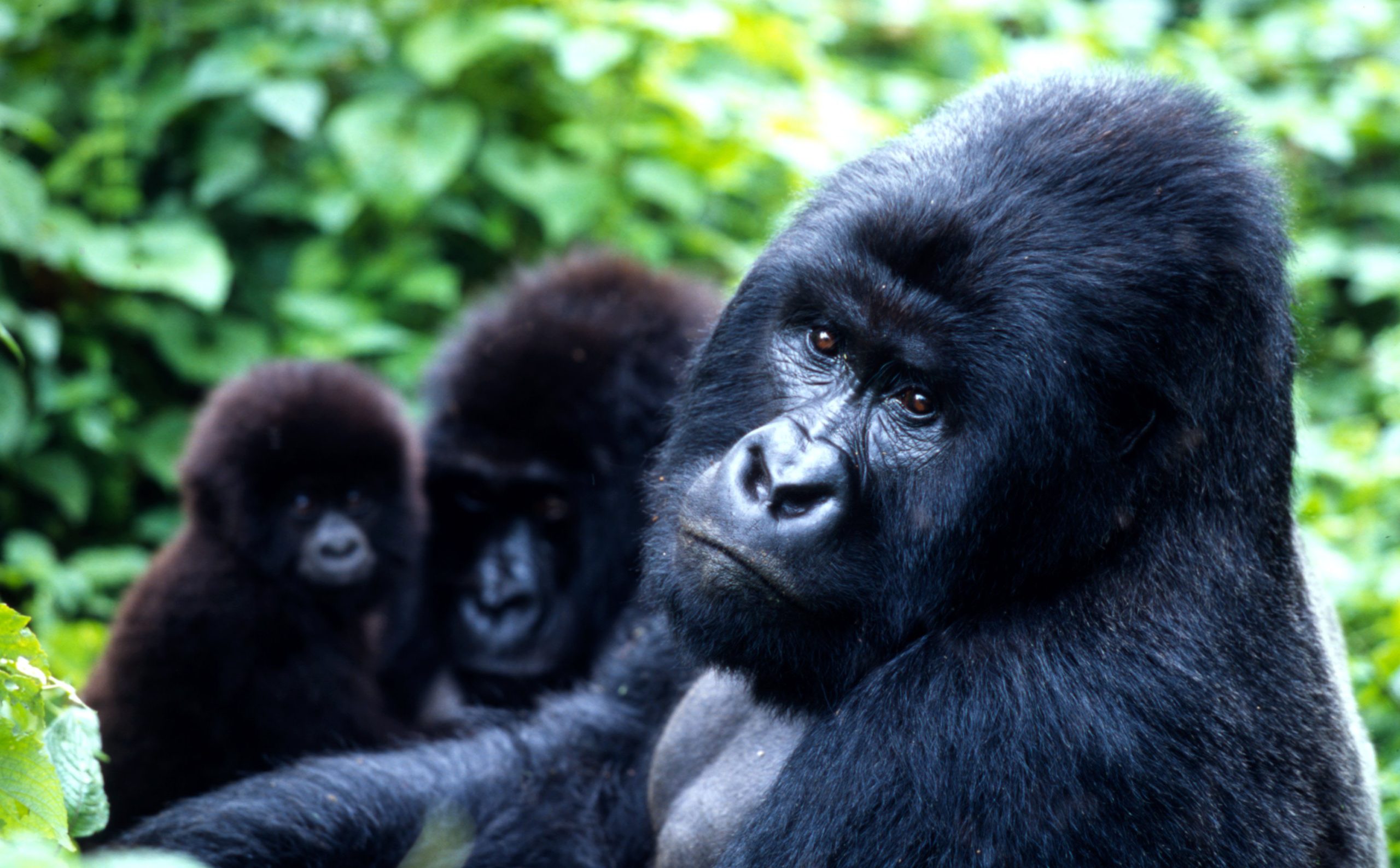
Gorilla gorilla beringei
Mountain gorilla
Family at play
Virunga National Park, Democratic Republic of Congo
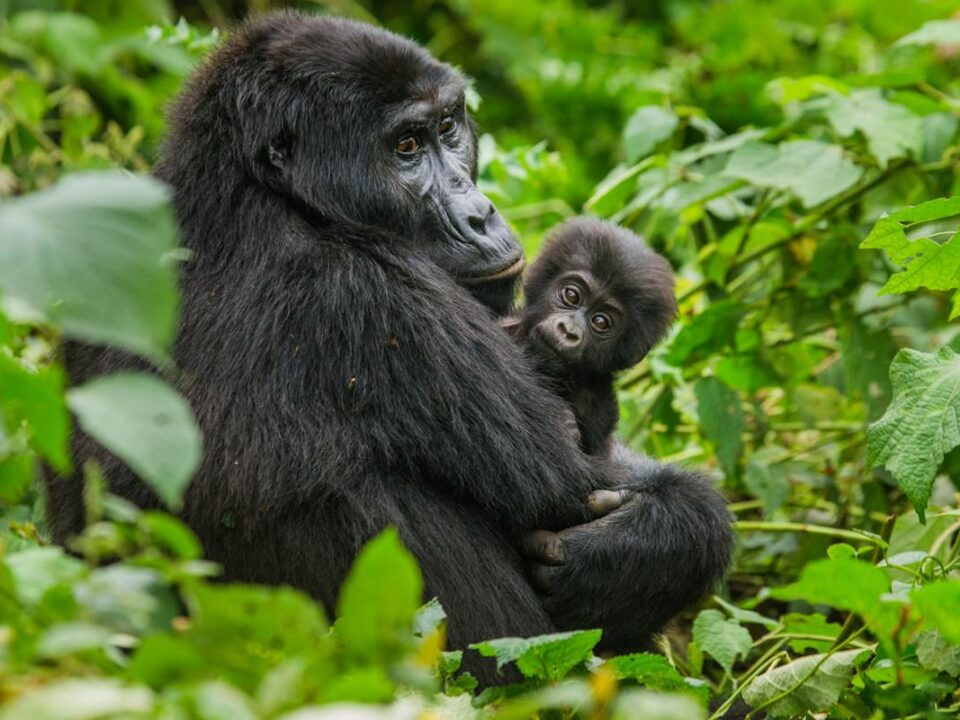
Natural vegetation is central to mountain gorilla survival in Bwindi’s rich forest ecosystem.
3. Bwindi Provides Essential Food, Shelter and Space
Mountain gorillas require a habitat that offers food throughout the year, safe places to rest and nest, and enough space for family groups to move naturally. Bwindi’s steep slopes, dense undergrowth, mature trees and varied vegetation provide many of these essential conditions. The survival of Bwindi mountain gorillas is closely connected to keeping these habitats healthy and intact.
Gorillas feed on a range of natural plant materials, including leaves, stems, shoots, pith and fruit when available. The plants they use can vary with location, season and availability. Bwindi’s elevation range creates a variety of forest conditions, allowing different vegetation communities to occur within the same protected area.
This diversity matters because gorillas do not remain in one spot. A family may travel through the forest while feeding, rest during the day and construct sleeping nests in the evening. Their movements respond to food availability, social needs and the surrounding environment.
The dense vegetation also provides cover. Unlike animals that depend on open grasslands, mountain gorillas live within a complex forest structure of trees, vines, shrubs and other plants. Protecting the structure of this habitat is therefore just as important as protecting the gorillas themselves.
When visitors go trekking in Bwindi, they enter a living ecosystem rather than a purpose-built wildlife enclosure. The forest’s natural character is precisely what makes the experience special, and keeping it intact is essential for future generations of gorillas.
4. Bwindi Supports Gorilla Families and Natural Behaviour
Mountain gorillas are highly social animals. They typically live in family groups that include a dominant silverback, females, young gorillas and, depending on the group, additional males. Relationships within these groups influence feeding, resting, movement and the care of infants.
Bwindi’s forest allows these families to carry out their daily activities in a natural setting. Mothers nurse and protect their infants, juveniles play and explore, and adults maintain social relationships through grooming and other interactions. The silverback often plays an important role in group leadership and protection.
These behaviours are a reminder that gorilla conservation must go beyond counting individuals. A viable population needs suitable habitat and the ability to reproduce, raise young, move and maintain normal social relationships.
Habituated gorilla families are accustomed to carefully managed human observation, but they remain wild animals. Visitors must follow the rules set by Uganda Wildlife Authority, keep the required distance and avoid actions that could disturb the animals or expose them to disease.
To learn more about the relationships that shape gorilla life, read PrideMark’s related guide on why mountain gorillas live in families, where you can explore the social structure of these remarkable primates.
5. Bwindi’s Conservation Importance Extends Beyond Gorillas
Although mountain gorillas are Bwindi’s most famous residents, the forest is also home to a wide variety of other species. UNESCO records more than 347 bird species in the park, alongside exceptional diversity among trees, ferns and butterflies. The forest also supports chimpanzees, other primates and numerous mammals.
This wider biodiversity is one of the clearest reasons Bwindi is essential for mountain gorillas and nature conservation more broadly. Protecting a large, complex forest can benefit many species simultaneously rather than focusing on a single animal. Conservation for Bwindi mountain gorillas also helps maintain the habitat used by birds, plants, butterflies and other wildlife.
Birds depend on trees and other vegetation for nesting, feeding and shelter. Insects rely on particular plants and microhabitats. Small mammals and primates use different forest layers, while decomposers help recycle nutrients. Every group plays a role in keeping the ecosystem functioning.
The forest’s importance is especially pronounced because it contains species associated with the Albertine Rift, a region known for its distinctive biodiversity. Preserving Bwindi helps safeguard this natural heritage, much of which cannot simply be recreated if the original habitat is destroyed.
For travellers, this means a visit to Bwindi can be about much more than a gorilla encounter. The surrounding landscape offers opportunities to appreciate forest scenery, birdlife, guided nature walks where available and the extraordinary complexity of a tropical ecosystem.
6. The Forest Helps Protect Water and the Local Environment
Forests play important roles in the water cycle. Their vegetation intercepts rainfall, their roots help stabilise soil, and the forest floor slows the movement of water across the landscape. These processes can help reduce erosion and support the functioning of streams and catchments, although outcomes also depend on slope, soil, rainfall and land use outside protected boundaries.
Bwindi’s mountainous terrain makes careful land and forest management especially important. Heavy rain can move rapidly down steep slopes, and disturbed ground may be more vulnerable to erosion. Maintaining vegetation helps protect soil structure and the habitats connected to it.
The forest also stores carbon in its vegetation and soils. Protecting mature forest helps retain this carbon and preserves the complex ecological relationships that support wildlife.
These environmental functions demonstrate why Bwindi’s importance extends beyond gorillas. Forest conservation can contribute to ecological resilience and benefit the wider landscape, including communities whose livelihoods depend on productive land and reliable environmental conditions.
However, it is important not to assume that every environmental benefit is guaranteed by forest cover alone. Effective conservation also requires careful management, monitoring, sustainable land use and cooperation with people living near the park.
7. Conservation, Research and Ranger Protection
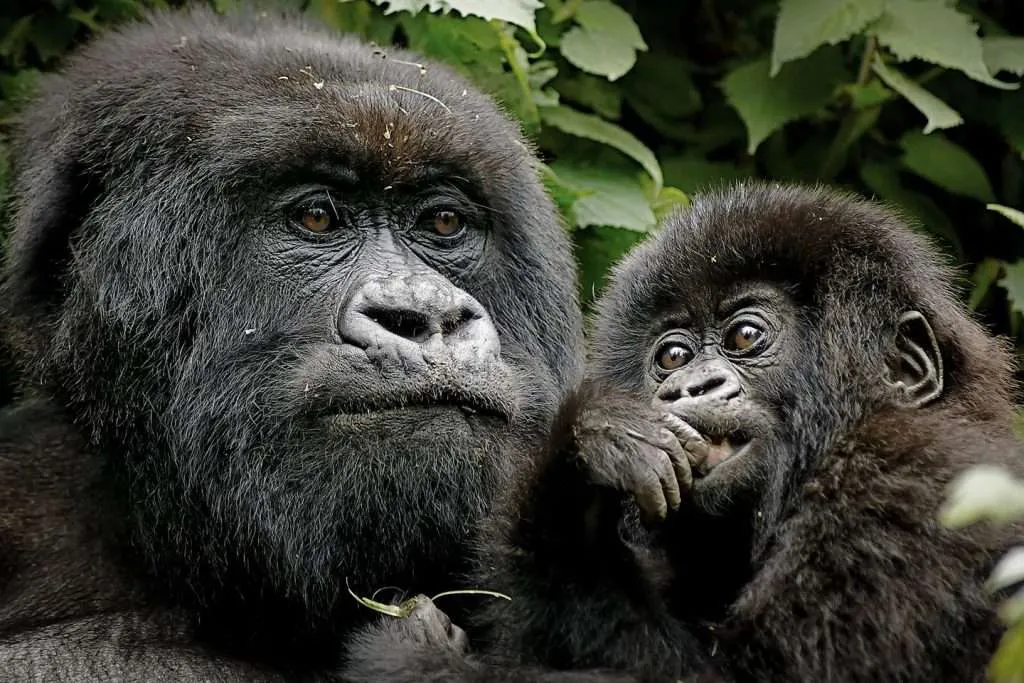
Protecting Bwindi mountain gorillas depends on long-term work to safeguard the animals and the habitat they need.
Uganda Wildlife Authority manages the national park, working alongside conservation organisations, researchers, veterinary specialists and community partners. Their work includes patrols, ecological monitoring, law enforcement, research, conservation education and responses to wildlife health concerns.
UWA’s September 2026 account of Uganda’s gorilla conservation journey highlights the importance of these combined efforts. The recovery recorded over past decades did not happen by chance. It reflects sustained conservation action and cooperation between multiple groups.
Researchers also study gorilla behaviour, population dynamics, habitat use and health. Long-term monitoring can help conservation teams understand changes in the population and identify emerging threats. This information is essential when planning protection measures and evaluating conservation outcomes.
Veterinary intervention may be needed when gorillas are injured or affected by particular health threats. Such work requires specialised expertise and careful decisions that prioritise the animals’ welfare. Routine protection, however, also depends on preventing problems before they occur.
For visitors, the presence of trained rangers and guides is an important part of responsible gorilla trekking. Their work helps manage encounters and provides opportunities to learn about the forest. A gorilla trek is therefore not only a tourism activity but also an introduction to the people and systems involved in protecting Uganda’s natural heritage.
8. Local Communities and Responsible Tourism
The relationship between Bwindi and neighbouring communities is a central part of its conservation story. People living around protected forests need opportunities to support their families, access services and build sustainable livelihoods. Conservation is more likely to succeed over the long term when local people have meaningful opportunities to participate and benefit.
Responsible tourism can contribute through employment, guiding, accommodation, transport, food supply, craft sales and other visitor services. Tourism can also create economic incentives for maintaining wildlife and forest habitats, provided benefits reach communities fairly and are managed transparently.
Community participation does not remove every conservation challenge. People and wildlife share a landscape where land, resources and economic pressures can create difficult choices. Effective programmes need to recognise local needs, respect rights and involve communities in decisions that affect them.
Visitors can make thoughtful choices by using reputable local operators, respecting cultural practices, buying appropriate locally made products and following guidance when visiting community projects. Asking how a tourism experience benefits conservation and local livelihoods can also help travellers make informed decisions.
PrideMark Safaris creates tailor-made wildlife and cultural journeys in Uganda and Rwanda. If you want to explore Bwindi alongside other destinations, browse our Uganda and Rwanda safari ideas to discover possible itineraries and wildlife experiences.
9. The Challenges Bwindi Still Faces
Although mountain gorilla conservation has made significant progress, Bwindi’s importance also means that the forest requires continued protection. A species with a restricted distribution remains vulnerable to changes affecting its habitat, health and ability to reproduce.
Habitat pressure and forest edges
Bwindi is surrounded by a landscape where many people depend on agriculture and other natural resources. Managing the boundary between protected forest and surrounding land is important because habitat disturbance can affect wildlife and create pressure on the ecosystem.
Disease transmission
Mountain gorillas are closely related to humans and can be susceptible to some human illnesses, including respiratory infections. This is why trekking regulations include health precautions and rules governing visitor behaviour. Anyone who is unwell should disclose this to the operator and follow park authority guidance.
Poaching and wildlife crime
Illegal activities can threaten wildlife directly and undermine conservation. Continued patrols, law enforcement, community cooperation and reporting of suspicious activities are important components of protecting the park.
Climate and ecological change
Changes in rainfall, temperature and vegetation can influence forest ecosystems and the distribution of food resources. Long-term monitoring helps conservation managers understand these changes and respond where necessary.
These challenges explain why Bwindi must remain a conservation priority. Protecting the forest requires more than drawing a boundary around it. It depends on continued funding, sound management, scientific research, community involvement and responsible visitor behaviour.
10. How Travellers Can Experience Bwindi Responsibly
Gorilla trekking gives visitors a rare opportunity to observe mountain gorillas in their natural habitat. It can also help travellers understand why protecting Bwindi matters. The experience is most valuable when the needs of the animals come first.
Before your trek, arrange the required permit through authorised channels and confirm your itinerary with your tour operator. Choose suitable hiking footwear and clothing, prepare for wet and muddy conditions, and listen carefully to the ranger’s briefing.
During the encounter, keep the distance required by the current regulations, avoid touching or feeding gorillas, do not visit when infectious, and follow every instruction from your ranger. Keep noise low and avoid actions that could disturb the family. These precautions help protect Bwindi mountain gorillas from stress and the risk of disease transmission.
It is also worth allowing time to appreciate the wider landscape. Depending on your itinerary, you may be able to combine gorilla trekking with forest walks, birdwatching, community experiences or other wildlife destinations in Uganda.
PrideMark Safaris can help you plan the practical details of a Bwindi visit, including transport, accommodation and a wider Uganda safari itinerary. Start with our Bwindi Gorilla Trekking Guide for planning information, and explore our PrideMark Safaris website for more about our wildlife journeys.
Why Bwindi Must Be Protected for Future Generations
Ultimately, the importance of Bwindi mountain gorillas comes down to the connection between this unique species and the forest environment that sustains it. Bwindi provides food, shelter and space for a major mountain gorilla population, while protecting a remarkable collection of plants, birds, butterflies and other wildlife.
Its conservation story also demonstrates the value of long-term commitment. Rangers, researchers, government agencies, conservation partners, tourism businesses and neighbouring communities all have roles to play in keeping this forest healthy. Continued collaboration is essential because even a successful conservation area faces changing environmental and social pressures.
For travellers, visiting Bwindi is an opportunity to witness one of the world’s most extraordinary wildlife experiences while gaining a deeper appreciation of conservation. The privilege of observing mountain gorillas comes with a responsibility to respect the rules, support responsible tourism and recognise that the forest belongs first to the wildlife and ecological systems that depend on it.
When Bwindi is protected, the benefits extend far beyond a single trekking experience. They include the continued survival of mountain gorillas, the preservation of irreplaceable biodiversity and the protection of a natural heritage that Uganda and the world cannot afford to lose.
Discover Bwindi with PrideMark Safaris
Experience Uganda’s remarkable mountain gorillas and learn about the forest that protects them. PrideMark Safaris can help you organise a responsible gorilla trekking journey, with permits, accommodation, transport and a personalised safari itinerary.
Frequently Asked Questions About Bwindi and Mountain Gorillas
Why is Bwindi important for mountain gorillas?
Bwindi protects a major population of mountain gorillas and provides the forest habitat, natural food resources and space they need. It is also an exceptionally biodiverse UNESCO World Heritage Site.
How many mountain gorillas live in Bwindi?
The 2018 Bwindi census recorded 459 mountain gorillas. Uganda Wildlife Authority reported in September 2026 that results from the 2025–2026 genetic census were still awaited, so 459 should be treated as a historical figure rather than a current count.
Is Bwindi a UNESCO World Heritage Site?
Yes. Bwindi Impenetrable National Park was inscribed on the UNESCO World Heritage List in 1994 because of its outstanding natural value and exceptional biodiversity.
What other wildlife lives in Bwindi?
Besides mountain gorillas, Bwindi supports chimpanzees, other primates, numerous mammals, hundreds of bird species and a rich variety of trees, ferns and butterflies.
How does gorilla tourism help conservation?
When responsibly managed, gorilla tourism can generate revenue, support employment and livelihoods, and create economic incentives for protecting wildlife and forest habitats.
Can I visit Bwindi for gorilla trekking?
Yes. Visitors can trek with habituated gorilla families under Uganda Wildlife Authority regulations. A permit, advance planning and compliance with ranger instructions are essential.
What is the best way to plan a Bwindi gorilla safari?
Start by confirming permit availability, selecting a suitable trekking sector, arranging accommodation and transport, and allowing sufficient time for travel. PrideMark Safaris can help coordinate these arrangements.