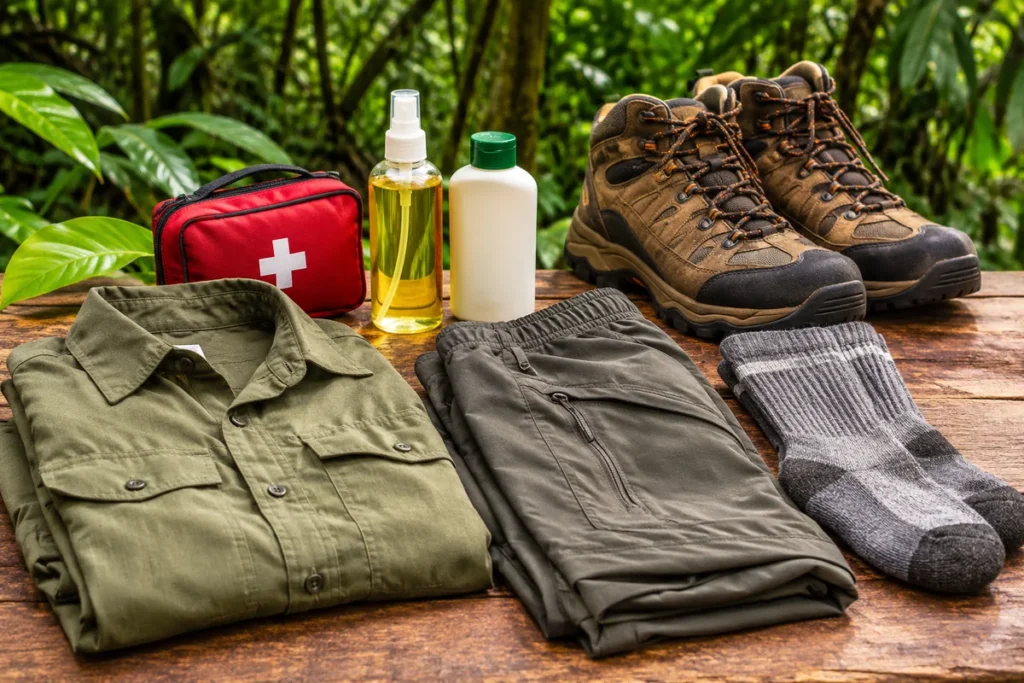
Whether you are visiting Bwindi Impenetrable National Park or Mgahinga Gorilla National Park, a comfortable trek begins with suitable clothing, careful planning and respect for ranger instructions. PrideMark Safaris helps guests prepare for the terrain and activities included in their Uganda safari.
1. Why Insect Protection Matters During Gorilla Trekking
Insect protection is a practical part of preparing for a walk through Uganda’s tropical and montane forests. Visitors may encounter mosquitoes, biting flies, and other small insects around trails, accommodation grounds, and wet vegetation. The number and type of insects vary by location, season, time of day, and weather. No product guarantees that you will avoid every bite, but a sensible combination of repellent, clothing, and good habits can reduce exposure.
Gorilla trekking is different from a relaxed walk in a garden. Groups may move through thick plants, climb muddy slopes, and stop while trackers locate a habituated gorilla family. You may sweat, brush against wet foliage, or put on and remove a rain jacket. Those everyday movements affect how comfortably repellent stays on exposed skin. Choose a product you can use correctly rather than the strongest-sounding label.
The best insect repellents for gorilla trekking should be selected for the whole journey, not just the forest encounter. A traveler might spend evenings at lodges, travel near lakes, take a boat cruise, or enjoy birdwatching in other habitats. Bite prevention is particularly important during evenings and overnight stays where mosquitoes may be present. Follow local health advice and do not confuse repellent with comprehensive disease prevention.
Visitors sometimes assume that all insect repellents work in the same way. In fact, active ingredients, concentrations, formulations, application intervals, and age restrictions can differ. A spray may be convenient for adults, while a lotion or wipe may be easier to apply without drifting toward eyes or nearby people. The right choice depends on label directions, skin sensitivity, and how you intend to travel.
PrideMark Safaris encourages guests to pack breathable long clothing, rain protection, and a modest daypack alongside any insect protection products. These measures support comfort during an active day outdoors. If you have a history of skin reactions, are traveling with children, or are pregnant, consult a qualified clinician or pharmacist about product suitability before departure.
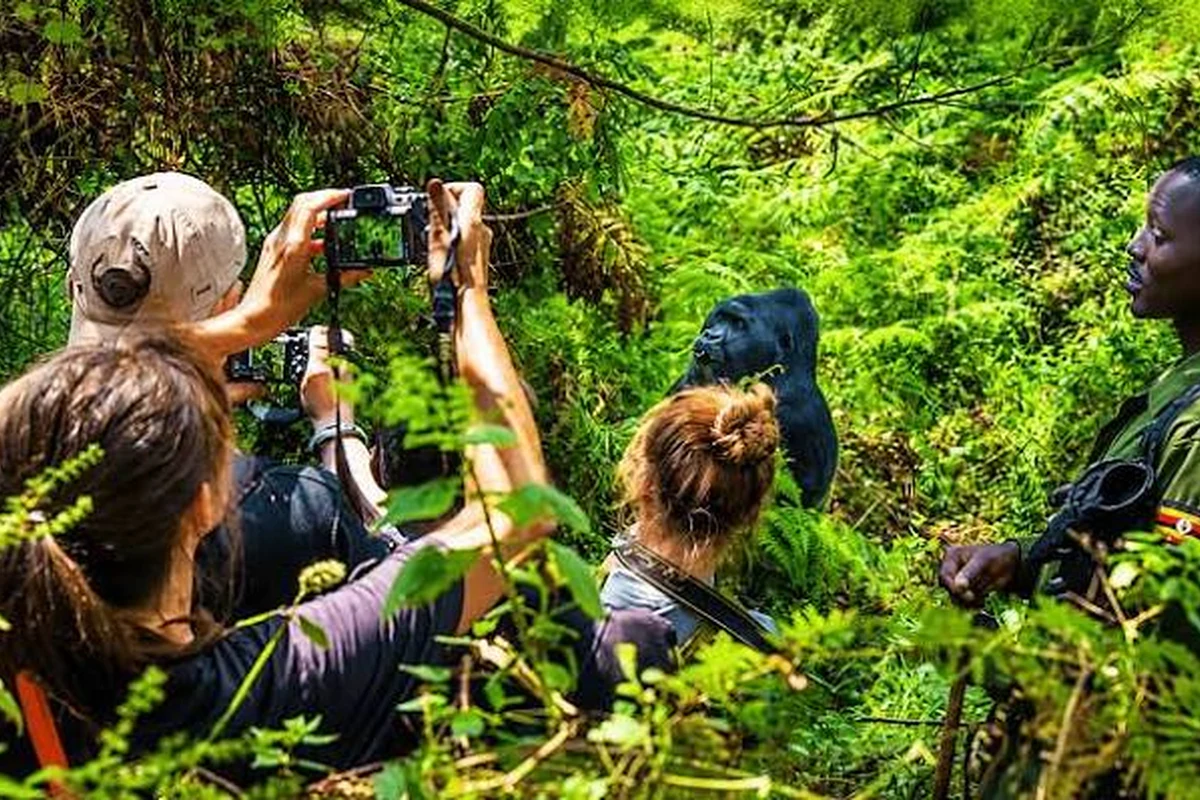
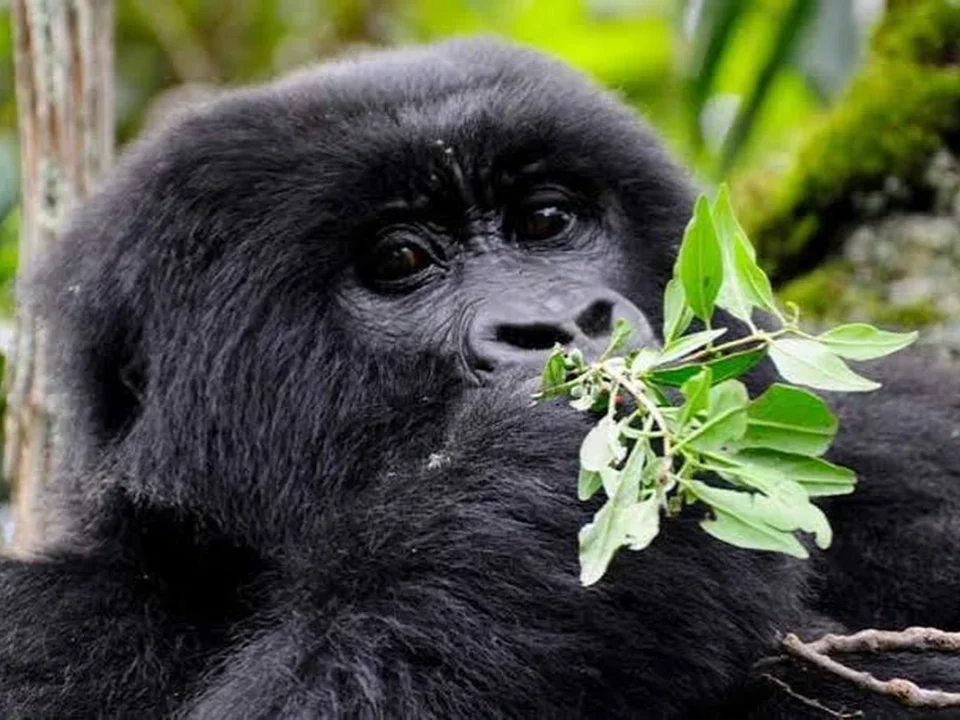
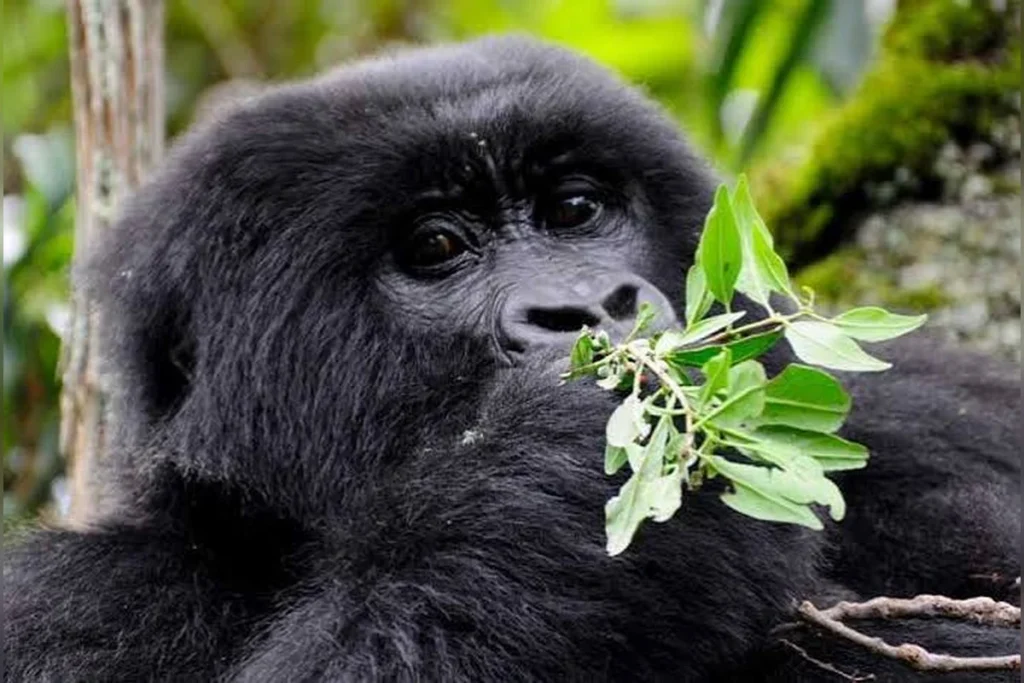
Visitors observing and photographing a mountain gorilla during a guided rainforest trekking experience in Uganda.
2. Best Types of Insect Repellents for Uganda’s Rainforests
Common skin-applied repellents include products containing DEET, picaridin (also called icaridin in some markets), IR3535, and certain registered oil of lemon eucalyptus-derived ingredients. Product availability and registration vary between countries. Look for a locally authorized product with a clear ingredient list and application instructions. The active ingredient and its concentration matter more than marketing terms such as ‘jungle strength’ or ‘all natural.’
DEET is a widely studied active ingredient used in many insect repellents. It is available in different concentrations and formulations. Higher concentrations generally extend protection time up to a point; they do not necessarily make the repellent proportionally more effective at any given moment. Follow the specific product label for reapplication and avoid assuming a concentration guarantees a fixed number of hours in humid conditions.
Picaridin is another well-established option for travelers who prefer a different feel or odor from some DEET products. Formulations differ, so compare the concentration, intended pests, and label instructions rather than assuming all picaridin products perform identically. A lotion or pump spray can be convenient for deliberate application to exposed skin without saturating clothing.
IR3535 is included in certain registered repellents and may be useful when applied according to the label. Its protection duration varies by formulation and conditions. Do not judge a product by ingredient name alone; the directions and supported protection claims are essential. For travel, keep the packaging or photograph the label so you can check reapplication intervals when needed.
Some products use oil of lemon eucalyptus or its synthesized active ingredient, PMD. These are not the same as casually applying essential oils. Age restrictions apply to certain formulations, and products containing oil of lemon eucalyptus or PMD should not be used on children younger than three years under CDC guidance. Check your destination and home-country health authority recommendations before purchase.
Citronella candles, scented bracelets, ultrasonic gadgets, and unregistered homemade blends should not be treated as reliable substitutes for a proven skin repellent. They may be marketed attractively, but travelers should prioritize products with evidence-based active ingredients and clear regulatory labeling. The best insect repellents for gorilla trekking are practical products that can be applied safely and consistently.
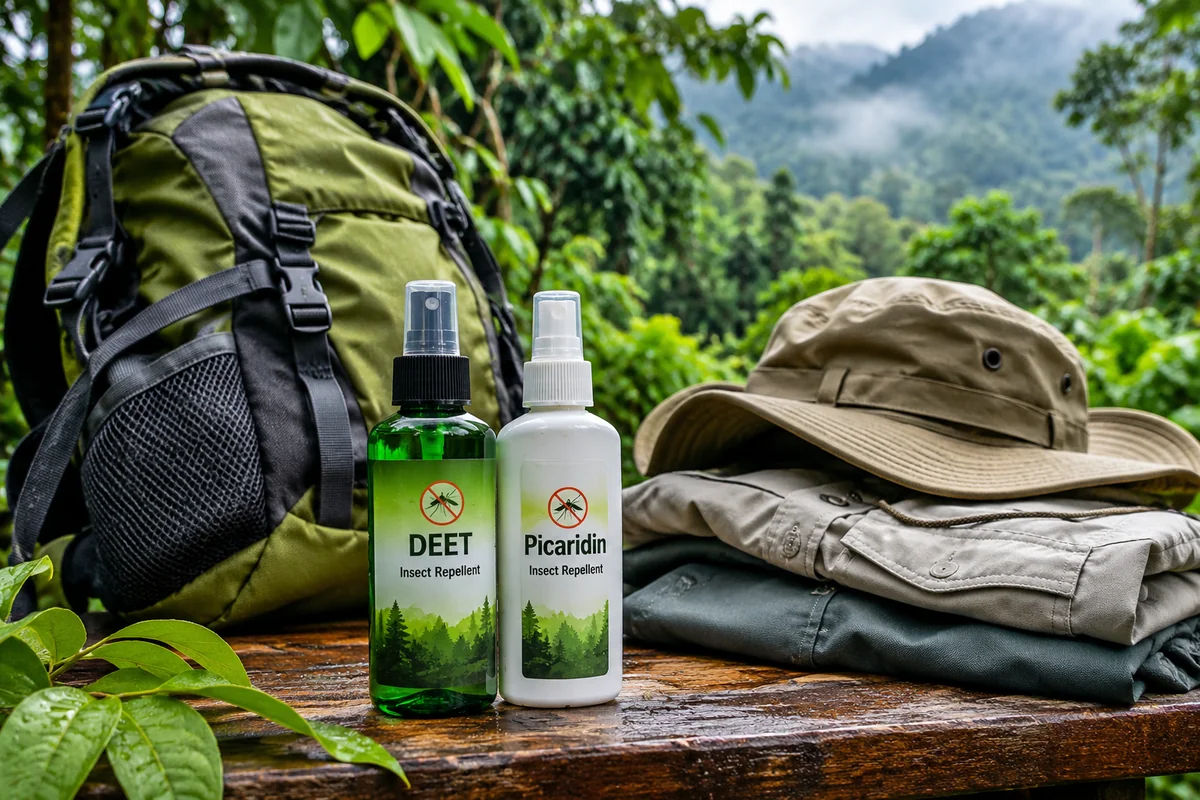
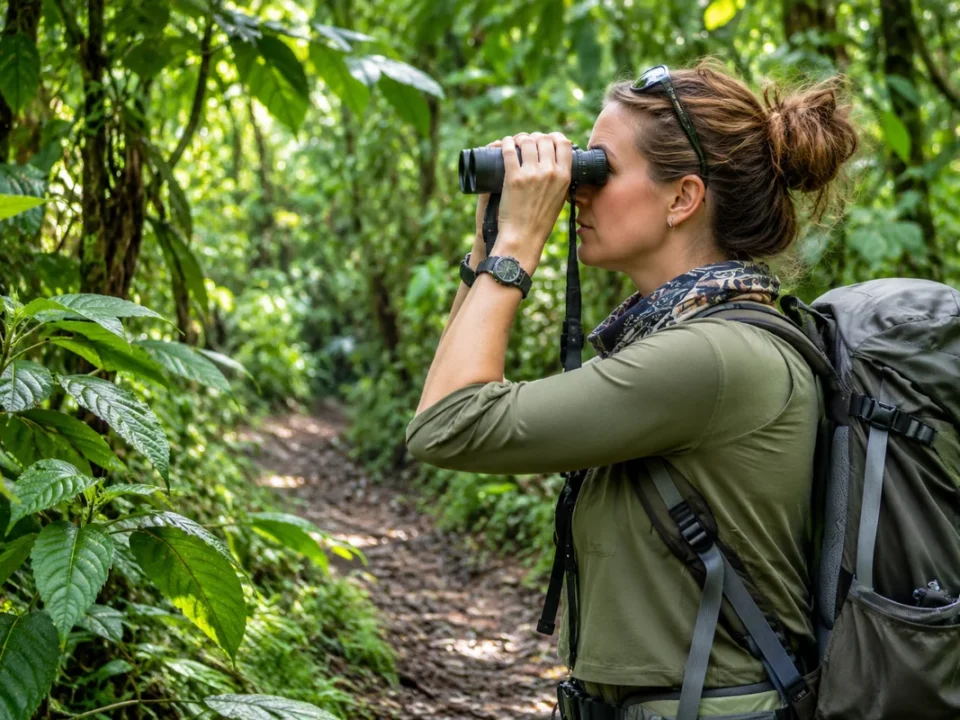
DEET and picaridin are two widely used insect repellent ingredients for outdoor travel.
3. DEET Versus Picaridin Versus Other Repellent Ingredients
Choosing between DEET and picaridin is usually a matter of personal preference, availability, and the specific registered product. Both are commonly recommended for preventing mosquito bites when used as directed. Neither ingredient makes a traveler immune to insect bites or mosquito-borne illness. For forest travel, consistency and correct coverage often matter more than debates over one universal winner.
DEET products may have a noticeable odor or feel on the skin, and DEET can affect certain plastics, synthetic materials, and finishes. Avoid contact with camera bodies, watch surfaces, sunglasses, and other vulnerable equipment where the manufacturer warns against it. Apply repellent to skin away from delicate gear, let it dry as directed, and wash your hands before handling optics.
Picaridin is often chosen by travelers who want an alternative with less impact on some plastics, although compatibility still depends on the formulation. It is not a reason to ignore handling precautions. Always check whether the label permits application to clothing, and do not spray directly onto camera lenses, waterproof jacket membranes, or binocular eyecups.
IR3535 and registered PMD-based products offer additional choices, but not every ingredient is available in every market or appropriate for every traveler. A product’s instructions may specify age limits, exposure intervals, or restrictions on damaged skin. Travelers with allergies or sensitive skin should read the full ingredient list, not just the name of the active repellent.
Repellents for skin and insecticides for clothing are separate categories. Permethrin is used to treat clothing and gear where the product label permits; it must not be applied directly to skin. Some garments are factory treated. Follow all label directions, keep treated items away from cats while wet, and let clothing dry fully before wearing. If local park or accommodation rules restrict treatment or disposal, comply with them.
For a simple packing decision, compare registered products available where you live, check the stated protection against mosquitoes and biting flies, and choose a formulation that you will actually use. If you are unsure which ingredient is appropriate for a child or a particular medical situation, ask a health professional rather than relying on a generic packing list.
| Ingredient | Practical advantages | Important considerations |
|---|---|---|
| DEET | Well-studied; multiple concentrations and formulations | Follow label; may affect some plastics and finishes |
| Picaridin / icaridin | Widely used alternative; varied formulations | Check product concentration and reapplication directions |
| IR3535 | Available in some registered repellents | Protection varies by formulation and label |
| Registered OLE / PMD | Additional repellent option | Not for children under 3 under CDC guidance; not equivalent to unregistered essential oils |
4. Choosing Suitable Concentrations and Formulations
Repellent concentration is not a simple measure of strength in the way many shoppers imagine. For some ingredients, a higher concentration can extend the duration of protection, but it does not guarantee better immediate protection. Humidity, sweating, water exposure, abrasion, and individual skin chemistry all influence real-world performance. The product label is the best starting point for how often to apply it.
A spray is convenient when you need to cover exposed arms or lower legs quickly, but spraying in windy conditions may waste product or direct it toward other people. For the face, spray into your hands first if the label allows, then apply carefully while avoiding eyes and mouth. Never spray repellent directly into the face. Wash your hands afterward, particularly before eating.
Lotions and creams can be easier to control and may feel less likely to drift onto equipment. Wipes are compact and convenient for small exposed areas, although travelers should consider the packaging waste and whether a single wipe provides enough coverage. Aerosols are less attractive in cramped vehicles and may have airline restrictions. Check current carrier rules before packing liquids or pressurized containers.
Water-resistant or sweat-resistant claims need to be read carefully. A repellent is not necessarily effective after swimming, heavy rain, or repeated wiping. Follow the instructions for reapplication, and avoid using more than recommended. If the label says to reapply only after a specified interval, do not shorten that interval simply because the forest feels humid.
Choose a container that closes securely and fits inside a sealed pouch in your daypack. A leaking bottle can damage clothing, food packaging, or camera accessories. For a multi-day safari, carry enough for the planned itinerary while keeping weight reasonable. If buying locally, confirm that the product is properly labeled and within its expiry date.
The best insect repellents for gorilla trekking are not necessarily the most concentrated or expensive. A reputable, clearly labeled formulation that suits your skin and can be reapplied appropriately is more useful than a large bottle that stays buried in your luggage.
| Format | Convenience | Packing and use notes |
|---|---|---|
| Pump spray | Quick coverage of exposed areas | Avoid wind, eyes and nearby equipment |
| Lotion or cream | Controlled, targeted application | Allow to dry before handling gear |
| Wipes | Portable and easy to carry | Check coverage and packaging waste |
| Aerosol | Convenient in some settings | Check airline rules and avoid enclosed spaces |
5. How to Apply Insect Repellent Correctly Before Trekking
Start with clean, dry skin when possible and read the product instructions before leaving your lodge. Apply repellent to exposed skin as directed, using enough to cover the area evenly without overapplying. Do not put repellent under clothing unless the label specifically directs otherwise. Long sleeves and trousers reduce the amount of skin that needs treatment.
If you are using sunscreen, apply sunscreen first and insect repellent afterward, following the guidance for each product. Avoid relying on combination sunscreen-and-repellent products because sunscreen often needs more frequent reapplication than repellent. Keep both products in accessible but separate containers, and follow each label for timing.
Never apply repellent to cuts, irritated skin, or wounds unless the product specifically permits it. Avoid the eyes, mouth, and hands of young children. Adults should apply repellent to children rather than letting them handle the product themselves. Use only age-appropriate formulations and follow medical guidance for infants and young children.
Before the trek, ensure your repellent has dried as instructed before handling a camera, binoculars, or trekking poles. If you are using a spray, apply it outdoors or in a ventilated place away from other guests and food. Avoid spraying toward waterways, wildlife, or vegetation. Repellent belongs on the permitted application surface, not on the forest.
During the walk, pause in a safe place if reapplication is necessary. Do not spray while moving over slippery ground or when a gorilla group is nearby. Follow ranger instructions and keep your equipment securely packed. A small wipe or travel-size lotion can be easier to use during a designated break than a large aerosol.
After returning to the lodge, wash treated skin with soap and water when protection is no longer needed, following label guidance. Wash treated clothing before wearing it again if the product directs you to do so. Stop using a product and seek medical advice if you develop a concerning reaction. Proper use matters as much as product selection.
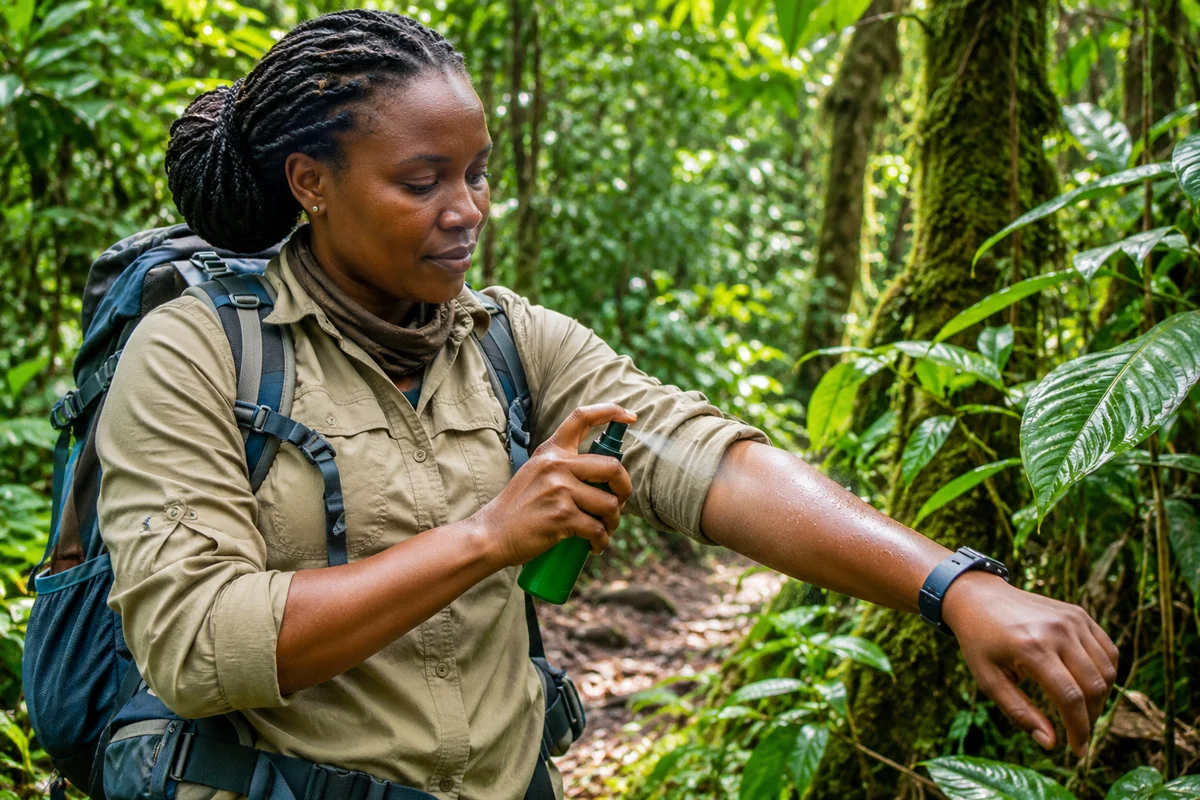
Applying insect repellent correctly to exposed skin helps reduce insect bites during rainforest trekking.
6. Insect Protection in Bwindi and Mgahinga Forests
Bwindi Impenetrable National Park and Mgahinga Gorilla National Park are distinct environments with varied altitude, vegetation, weather, and trekking routes. Insect activity can differ within and between these areas. Pack protection for changing conditions rather than assuming that a high-elevation forest is entirely free of mosquitoes or other biting insects.
On a forest trek, the most useful defenses are often ordinary clothing choices: long sleeves, full-length trousers, socks, and closed footwear. These reduce exposed skin and help protect against vegetation scratches as well as some bites. Tucking trousers into socks or gaiters may be practical on certain muddy routes, but follow your guide’s recommendations.
Avoid relying on insect repellent to address every forest hazard. It does not protect against thorny plants, slipping, altitude effects, or all ticks and other biting arthropods. Check exposed skin and clothing after outdoor activities, especially if you have walked through dense vegetation. Seek medical advice for unusual symptoms following a bite.
Keep insect protection separate from gorilla encounter behavior. Rangers manage the viewing experience and may direct visitors to put down walking sticks, maintain distance, or remain still. Do not spray repellent or insecticide toward gorillas or any other wildlife. Follow the ranger’s instructions at all times.
Repellent is also relevant outside the forest. Lodge grounds, lakeside areas, evening meals, and transfers may present different mosquito exposure patterns. A safari packing plan should cover those settings without assuming that a single morning application protects throughout the day and night.
Visitors should confirm current trekking arrangements and wildlife rules with the Uganda Wildlife Authority at Uganda Wildlife Authority official website and with their operator. PrideMark Safaris can explain the likely terrain and daily schedule so guests can prepare suitable clothing and supplies.
7. Insect-Repellent Clothing and Additional Protective Measures
Physical barriers are a reliable complement to skin repellent. Choose lightweight, breathable long-sleeved shirts and long trousers that allow comfortable movement. Dense fabric and a good fit can reduce exposed skin, but loose gaps at cuffs or ankles may still allow insects through. Clothing should also suit steep walking and sudden rain.
Some outdoor garments are sold with factory-applied insect treatment, while other clothing can be treated with registered permethrin products where allowed. Permethrin is for clothing and gear only, never for direct application to skin. Follow manufacturer directions for treatment, drying, laundering, storage, and the duration of effectiveness.
Footwear, socks, and gaiters help keep vegetation away from the ankles and lower legs. They also provide useful protection against mud and abrasions. Choose garments that are comfortable enough to wear for several hours; overheating may tempt travelers to roll up sleeves and expose skin despite having packed protective clothing.
At accommodation, check whether windows have screens, use bed nets where supplied or recommended, and close doors promptly in mosquito-prone areas. A fan or air conditioning may improve comfort, but should not be treated as a complete bite-prevention measure. Use any provided mosquito net correctly, keeping it tucked in and free of holes.
Repellents are one part of travel health preparation, not a replacement for medical advice about malaria prevention. Uganda has malaria risk, and travelers should consult a travel-health professional about recommended preventive medication and other measures for their specific itinerary. Seek prompt medical evaluation for fever during or after travel and mention your travel history.
Combining clothing, an effective repellent, accommodation precautions, and appropriate medical guidance offers a more dependable approach than relying on a single spray. The best insect repellents for gorilla trekking fit into this broader prevention strategy.
8. Nine Essential Tips for Choosing and Using Insect Repellents
Tip 1 — Choose an evidence-based active ingredient. Look for a properly registered repellent containing DEET, picaridin, IR3535, or an age-appropriate registered PMD-based ingredient. Confirm that the product label covers the insects you want protection against.
Tip 2 — Read the complete label before travel. Check age limits, application surfaces, recommended intervals, expiry date, and warnings. Keep the packaging accessible or save a photograph of the directions for use.
Tip 3 — Match the formulation to your routine. A lotion or wipe may be easier for careful application, while a pump spray may be convenient for larger exposed areas. Choose a container that will not leak inside your daypack.
Tip 4 — Do not overapply. Use only as much as directed and reapply according to the product instructions. More product does not guarantee better protection and can increase unnecessary exposure.
Tip 5 — Protect your equipment. Apply repellent away from cameras, binoculars, watches, and sensitive plastics. Wash hands before handling optical gear, particularly after using a DEET-containing formulation.
Tip 6 — Cover up before reaching for the bottle. Long sleeves, trousers, socks, and closed footwear can reduce exposed skin. Breathable clothing helps make this approach comfortable during strenuous trekking.
Tip 7 — Keep a small supply accessible. Store a travel-size container in a sealed pouch so it can be used during an appropriate break. Do not stop on dangerous ground or apply products during the gorilla encounter.
Tip 8 — Plan for evenings as well as trekking mornings. Mosquito exposure can occur at lodges and around other safari destinations. Follow label guidance for any further application and use accommodation barriers where available.
Tip 9 — Seek individualized health advice. Pregnant travelers, families with children, people with sensitive skin, and anyone concerned about malaria prevention should consult qualified professionals. Repellent selection is only one part of travel preparation.
Together, these nine tips help travelers select and use the best insect repellents for gorilla trekking without treating any product as a magic shield. The goal is practical protection, responsible behavior, and a comfortable wildlife experience.
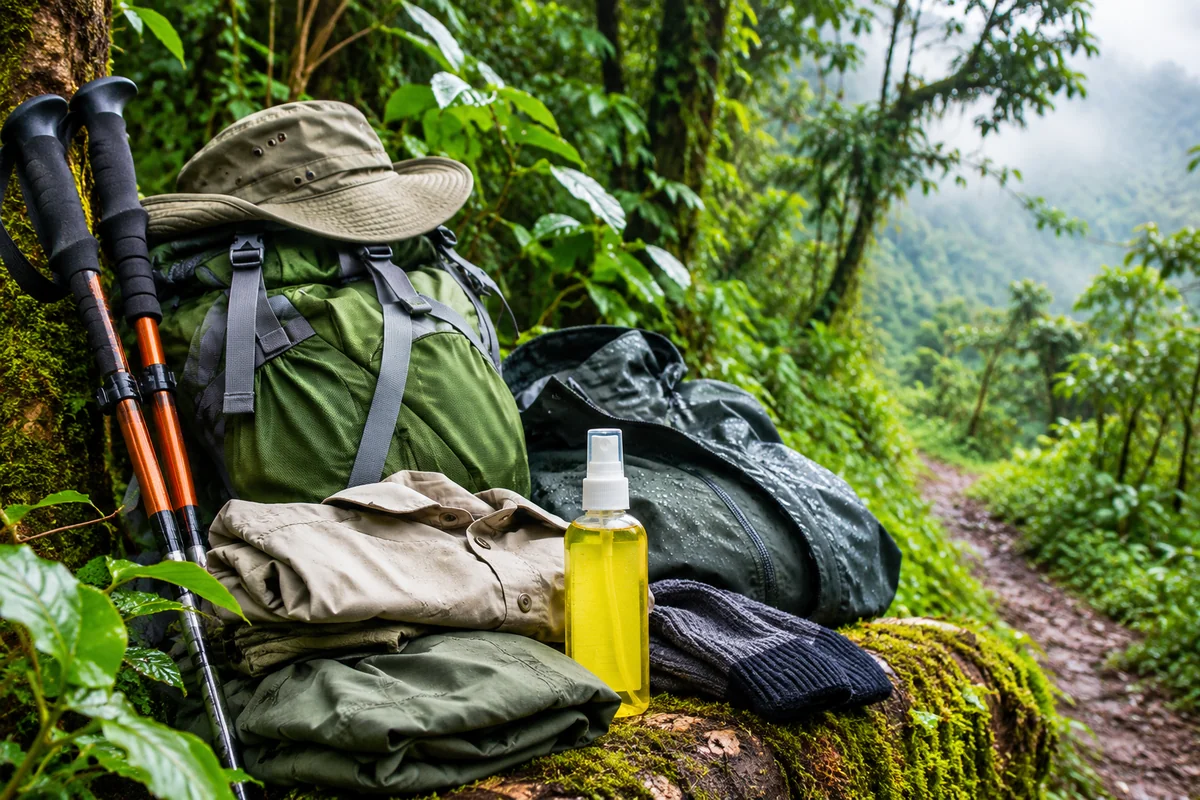
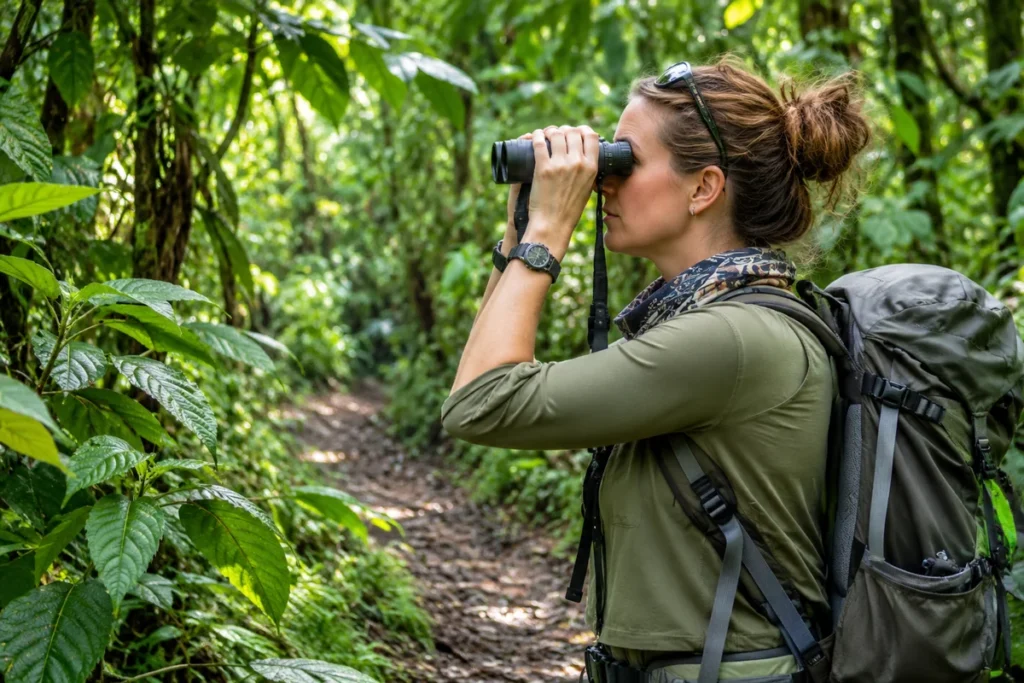
Pack insect repellent together with long clothing, trekking poles, rain protection and a comfortable backpack.
9. Insect Repellent Packing and Safety Checklist
Before departure, inspect your repellent packaging and confirm that the active ingredient, concentration, expiry date, and directions are legible. Make sure the container is securely closed and suitable for your airline baggage. Carry the amount needed for your itinerary without bringing excessive liquid into your trekking daypack.
Pack long trousers, a breathable long-sleeved shirt, socks, closed hiking boots, and rain protection. Add a small waterproof pouch for repellent, sunscreen, and personal essentials. Keep repellent away from food and drinking water containers, and avoid placing leaking products beside electronics.
On trekking morning, dress first, apply sunscreen if needed, and then use repellent on exposed skin as directed. Check that the product has dried before adjusting backpack straps or handling sensitive equipment. Do not spray repellent near other guests, wildlife, or food.
During the trek, follow your ranger and use only designated safe breaks for any necessary reapplication. Stay with your group and do not leave the route to avoid insects. If you notice a bite, avoid scratching; follow ordinary first-aid advice and seek medical attention for severe reactions.
At the lodge, clean and dry equipment, wash skin as directed, and store repellent safely out of children’s reach. Inspect clothing after forest walks and follow manufacturer guidance for any insecticide-treated garments. Dispose of empty containers responsibly rather than leaving them in the park.
Finally, check current medical and park guidance shortly before departure. For itinerary planning, contact PrideMark Safaris. A well-prepared traveler can focus on the forest, the guide’s instructions, and the remarkable opportunity to observe mountain gorillas.
| Item | Why it matters | Practical reminder |
|---|---|---|
| Registered skin repellent | Reduces bites from targeted insects | Follow age and reapplication directions |
| Long-sleeved shirt | Limits exposed skin | Choose breathable fabric |
| Long trousers and socks | Protects legs and ankles | Keep comfortable for steep walking |
| Waterproof pouch | Prevents bottle leaks | Separate from electronics and food |
| Travel-health consultation | Addresses malaria prevention and individual needs | Arrange before departure |
12 Frequently Asked Questions About Insect Repellents for Gorilla Trekking
Do I need insect repellent for gorilla trekking in Uganda?
It is sensible to pack a registered repellent because insects may be encountered on forest walks and elsewhere during the safari. Repellent complements protective clothing and does not replace malaria prevention advice.
Is DEET safe to use for travel?
DEET is a well-studied repellent ingredient when used according to the product label. Follow age and application instructions, and ask a clinician about individual concerns.
Is picaridin better than DEET?
Both can be effective when used correctly. The better choice depends on the specific product, intended insects, personal preference, and label instructions.
What concentration of DEET should I choose?
Protection duration varies by concentration and formulation. Choose a registered product appropriate to your needs and follow its label rather than relying on one universal percentage.
Can I use natural essential oils instead?
Unregistered homemade oils should not be relied upon for dependable bite prevention. Some registered repellents use plant-derived ingredients, but their specific labels and age restrictions still matter.
Should I apply insect repellent to my clothes?
Only if the product label permits it. Permethrin is a clothing-and-gear treatment and must never be applied directly to skin.
Can children use insect repellent?
Use only age-appropriate products and have an adult apply them. CDC advises against oil of lemon eucalyptus or PMD repellents for children under three.
Should sunscreen or repellent go on first?
Apply sunscreen first and insect repellent afterward, following both product labels.
How often should I reapply repellent in the forest?
Follow the specific product label. Sweating, rain, and abrasion may affect protection, but do not reapply more frequently than directed.
Does insect repellent prevent malaria?
Repellent reduces some mosquito bites but does not replace medical advice about malaria preventive medication and other protective measures.
Can I spray repellent near mountain gorillas?
Do not spray toward gorillas or other wildlife. Follow ranger instructions and apply products only at an appropriate time and place.
What should I pack alongside insect repellent?
Bring long sleeves, trousers, socks, suitable hiking footwear, rain protection, sunscreen, drinking water, and any medications recommended by your travel-health professional.
Plan a Comfortable Gorilla Trekking Safari with PrideMark Safaris
The best insect repellents for gorilla trekking are those that you can use correctly and comfortably alongside suitable clothing and sensible travel-health precautions. No repellent can guarantee a bite-free trip, and no product replaces professional advice about malaria prevention. Read labels carefully, protect the environment and follow your ranger’s instructions.
For general bite-prevention and travel-health guidance, consult the CDC mosquito prevention guidance, CDC Travelers’ Health, and the Uganda Wildlife Authority. Confirm current recommendations before departure. This article is educational and not individual medical advice.