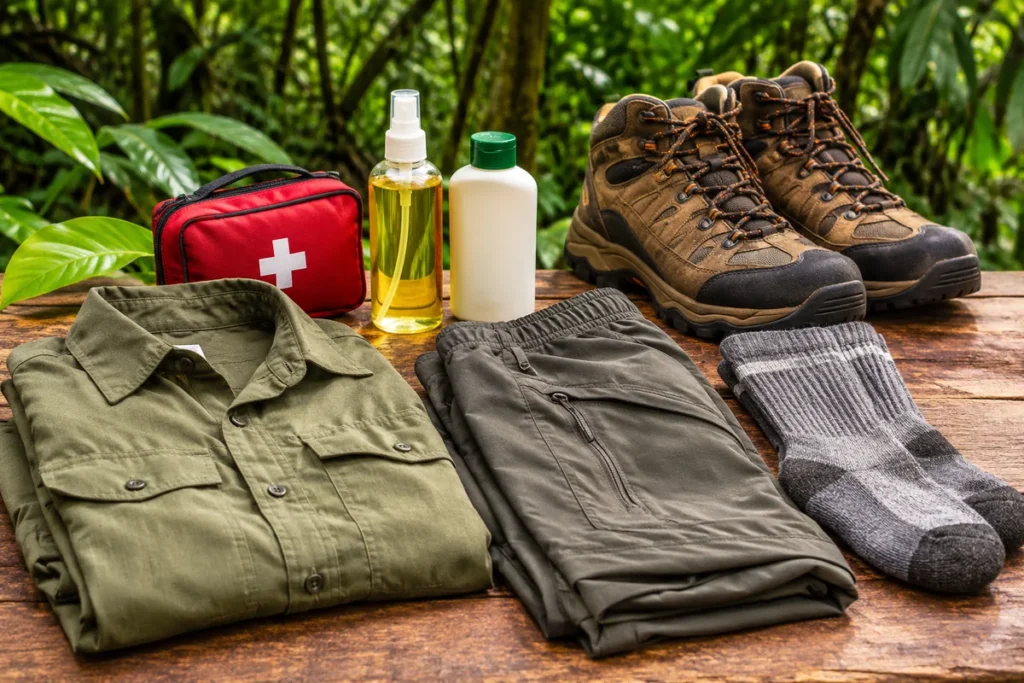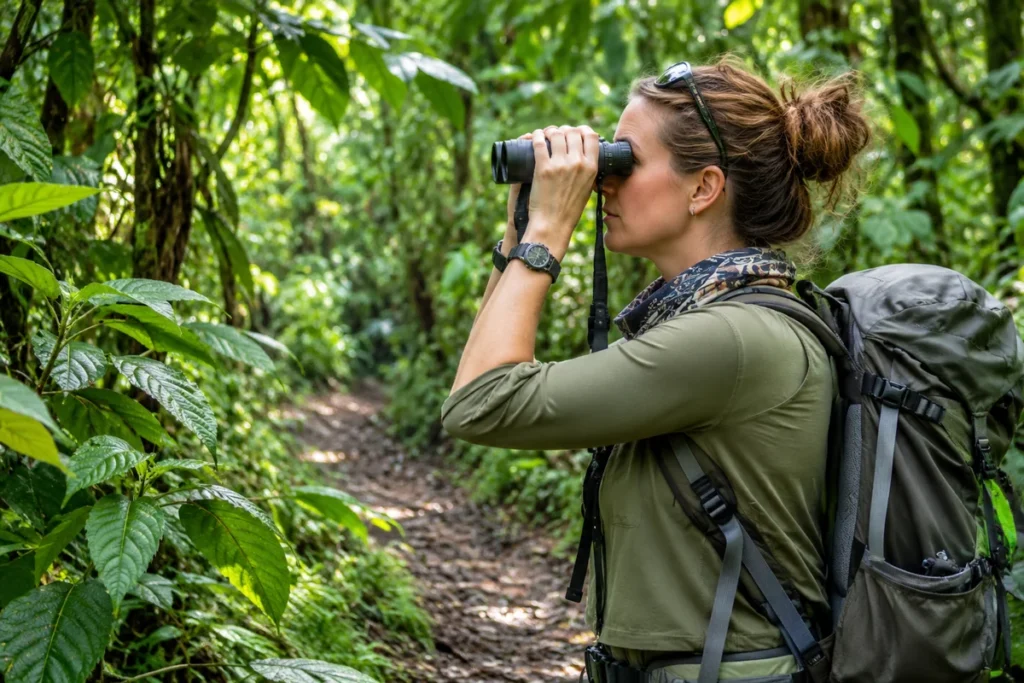
Whether you are trekking in Bwindi Impenetrable National Park or Mgahinga Gorilla National Park, PrideMark Safaris can help you prepare a practical daypack and understand the activities in your itinerary. Explore our gorilla trekking safari packages for inspiration.
1. Why Hydration Matters During Gorilla Trekking
Gorilla trekking can involve walking on steep, uneven ground, sometimes through thick vegetation and in humid conditions. The duration and effort vary widely: one group may locate gorillas relatively quickly, while another spends several hours hiking. Carrying safe drinking water helps you stay comfortable and supports normal physical function throughout the activity. Your guide can advise on the route, but no one can guarantee how long the trek will take.
The most useful trekking bottles are those you can carry securely, open without difficulty and drink from while taking an appropriate break. A beautiful bottle that leaks in your backpack or is too heavy to carry is less useful than a simple reliable one. Consider the complete experience, including the drive to the briefing point, the forest walk and the return journey.
Trekking is not a competition to drink the greatest possible volume. Individual fluid needs depend on body size, exertion, temperature, health and other factors. Drink according to your needs and professional advice, and do not force excessive amounts of plain water. People with medical conditions or prescribed fluid restrictions should follow their clinician’s guidance.
Good hydration planning begins before you enter the park. Ask your operator whether bottled drinking water is supplied, how long the day may last, and whether there are opportunities to refill with treated water. Never assume a forest stream is safe simply because it looks clear. Waterborne microorganisms can be present even in pristine-looking places.
On a guided trip, PrideMark Safaris can discuss the expected walking conditions and the water supplied during transfers and activities. That helps guests decide whether they prefer a reusable bottle, two smaller bottles or a hydration reservoir. The objective is convenience and sensible preparation, not an arbitrary one-size-fits-all prescription.
Because trekking can involve photography and careful movement, the bottle must also be easy to stow. Avoid holding an unsecured bottle when negotiating a slippery slope or when rangers ask guests to keep their hands free. A side pocket, secure bottle sleeve or reservoir hose can reduce unnecessary stops and dropped items.
Visitors who combine gorilla trekking with wildlife drives and lake excursions should plan for several different settings. A bottle that is comfortable for a forest walk should also work in a safari vehicle. For broader trip ideas, explore our Uganda safari packages and ask PrideMark Safaris about tailoring a route to your preferred pace.
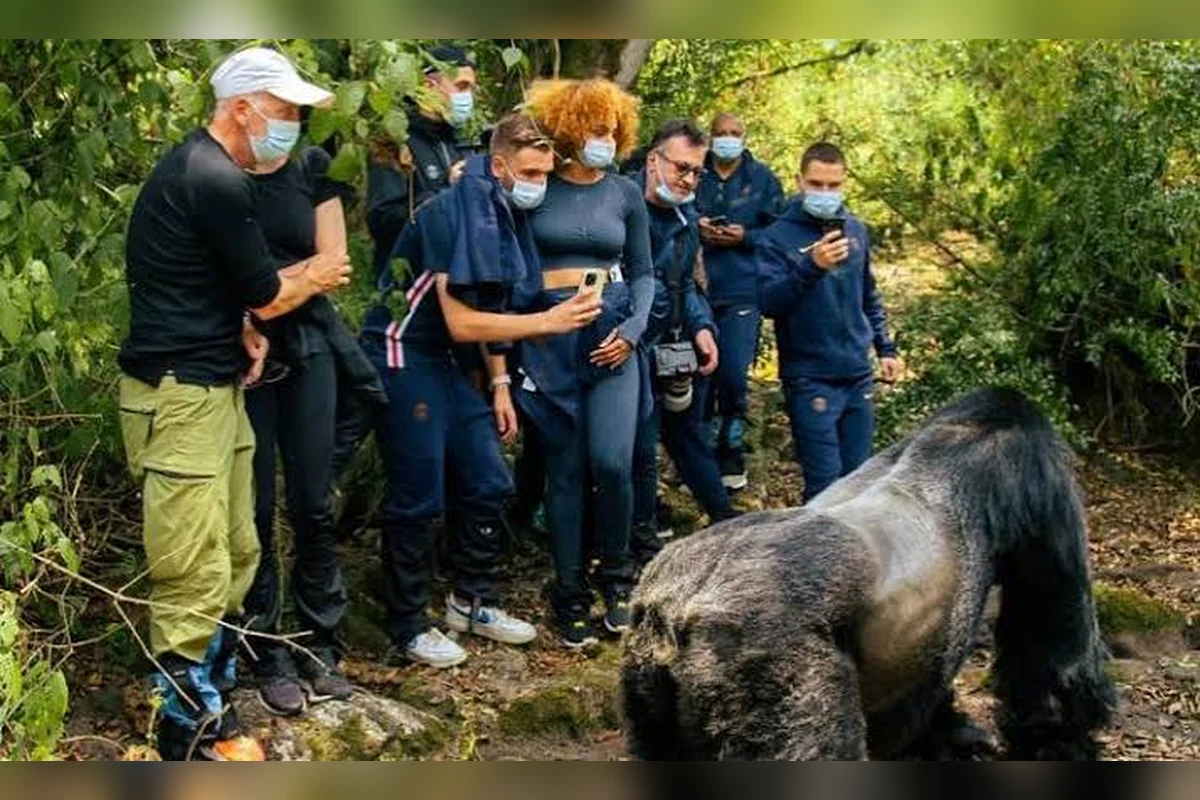
Visitors observing a silverback gorilla during a guided forest trekking experience in Uganda.
2. Best Types of Water Bottles for Rainforest Hiking
Outdoor stores offer rigid plastic bottles, stainless-steel bottles, insulated containers, collapsible bottles and soft hydration flasks. Each design solves a different problem. For a wet forest trek, prioritize a secure closure, a comfortable drinking opening, easy cleaning and a shape that fits your daypack. A bottle that works beautifully on an office desk may be awkward on a muddy hillside.
Rigid reusable plastic bottles are often relatively lightweight and easy to see into, making it simpler to judge how much water remains. Look for food-contact materials from a reputable manufacturer, a reliable cap and clear cleaning instructions. Avoid damaged or badly scratched bottles that are difficult to clean. Plastic bottles differ in durability, so do not assume all models are interchangeable.
Stainless-steel bottles are robust and can be a good long-term choice. Single-wall versions may be lighter than insulated steel models, although weights vary. Double-wall insulated designs keep drinks cooler or warmer for longer but can add substantial weight. For many hikers, the trade-off between temperature control and portability matters more than appearance.
Collapsible bottles and soft flasks can save space as they empty. They are useful as supplementary water storage, but some can be awkward to stand upright, fill or clean. Check the seams and closure before travel. A collapsible container is not automatically the best primary bottle for someone who wants to take quick, easy sips on a moving trek.
Wide-mouth openings are convenient for filling and cleaning, while narrower openings may be easier to drink from on uneven ground. Straw lids and bite valves can be convenient but require extra attention to cleaning. Choose a lid you can operate with wet hands and that does not spring open inside your bag.
When choosing the best water bottles for gorilla trekking, test the bottle inside your actual backpack before departure. Fill it with water, close it, turn it upside down over a sink and walk with it in its intended pocket. Small fit problems become more frustrating after several hours of trekking.
If you are building a complete packing list, see our gorilla trekking packing guides and trekking backpacks resources. PrideMark Safaris can also explain what guests typically carry on a guided trekking day.
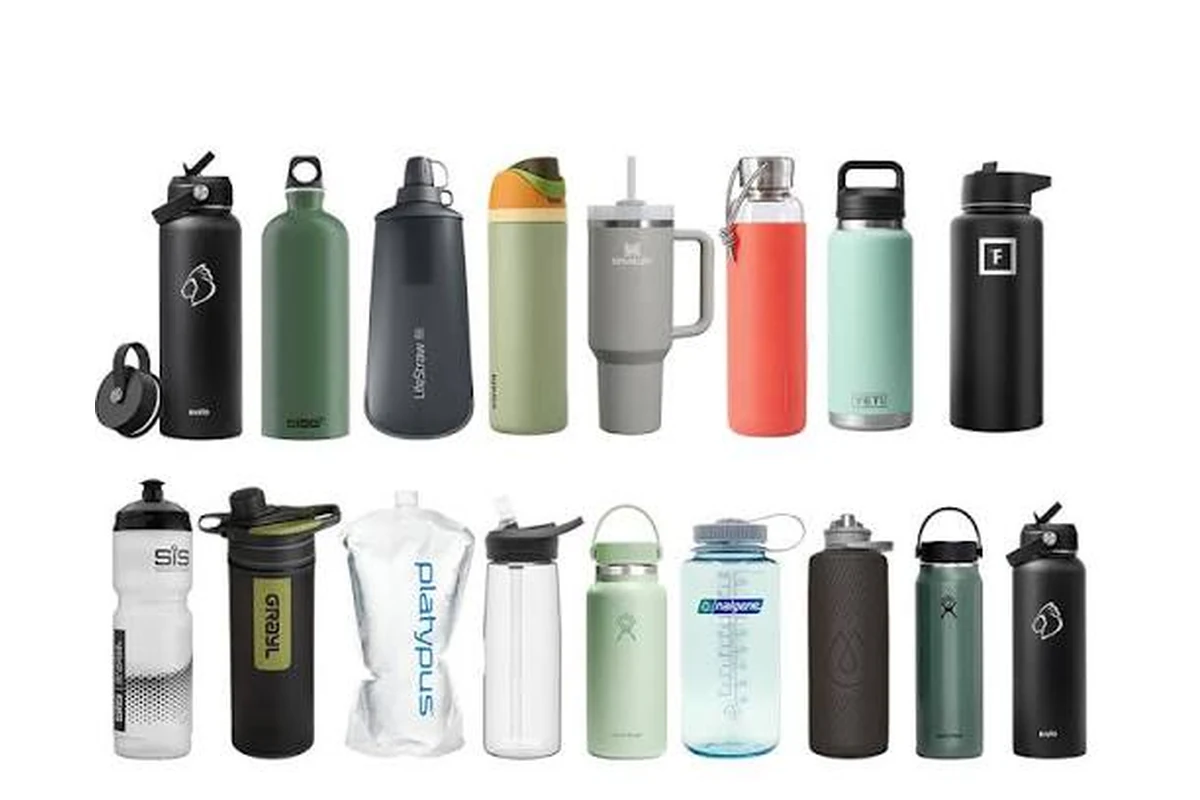
Different reusable water bottle designs, including insulated, lightweight and collapsible options for gorilla trekking in Uganda.
3. Stainless Steel vs Plastic vs Collapsible Bottles
There is no universal winner among bottle materials. A lightweight plastic bottle can be more practical for a traveler who prioritizes minimal pack weight, while a steel bottle may appeal to someone who wants a durable everyday item. Collapsible bottles suit people who value spare storage capacity and compact packing. The best option is the one that fits your particular use.
When comparing weights, measure the complete bottle with its lid rather than relying on marketing labels. A thick insulated steel bottle can weigh significantly more than a lightweight plastic model even before it is filled. Water itself is heavy: one litre has a mass of roughly one kilogram, so carrying more than you need adds to the load on steep ground.
Durability also means more than resistance to dents. A bottle must maintain a leak-resistant seal, survive repeated opening and closing, and be easy to clean after travel. Some bottles are tough but have complicated lids with seals that trap moisture. Others have simple parts that can be rinsed and dried thoroughly.
Plastic can be translucent, allowing you to check remaining water at a glance. Steel is generally opaque, so you may need to open the bottle or estimate its weight. Collapsible flasks often show volume markings but may lose their shape as they empty. None of these differences is necessarily decisive, but they influence convenience during a long hike.
Insulation is not the same as safety. An insulated bottle can help maintain a preferred drink temperature, but it does not purify water or make untreated water safe. Similarly, a filter bottle is only useful against the contaminants its specific treatment system is designed and validated to remove. Always start with a safe water source.
The environmental impact of a bottle depends on materials, production, durability and how often it is reused. A reusable bottle that lasts for many trips can help reduce reliance on single-use packaging, but guests should also respect local waste systems and avoid discarding broken bottles in protected areas.
For visitors booking Bwindi gorilla trekking itineraries, PrideMark Safaris recommends testing whichever bottle you already own before buying another. A secure, clean and comfortable bottle is often sufficient; expensive features are optional rather than essential.
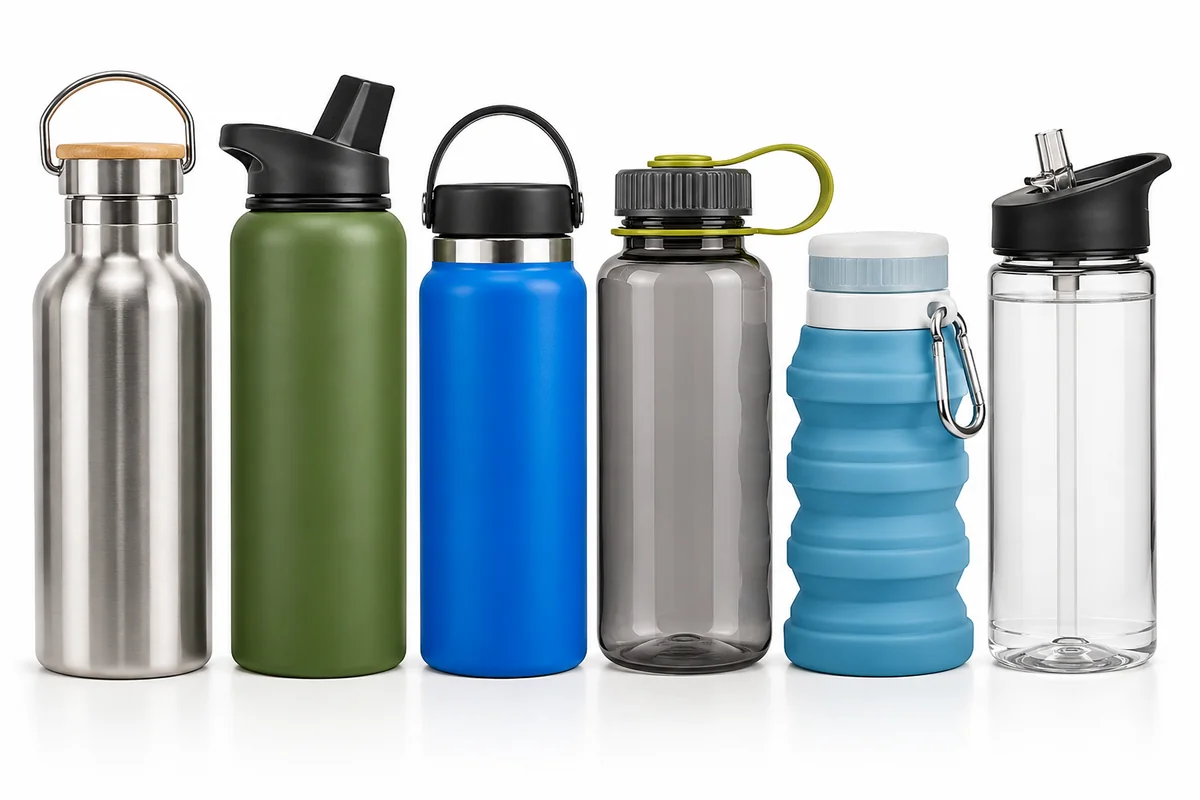
A comparison of six reusable water bottle designs suitable for hiking and outdoor travel.
| Bottle material | Advantages | Trade-offs |
|---|---|---|
| Reusable plastic | Often lightweight, affordable and easy to monitor | Durability and cleaning needs vary by model |
| Single-wall stainless steel | Robust and reusable | Can weigh more than lightweight plastic |
| Insulated stainless steel | Helps maintain drink temperature | Heavier and bulkier in many designs |
| Collapsible soft flask | Packs down when empty | Can be harder to fill, stand upright or clean |
4. Choosing the Right Water Bottle Capacity
Capacity should be based on your individual needs, expected exertion, weather, access to safe water and advice from your guide or health professional. A short walk and a strenuous multi-hour trek are different situations. Do not assume that every visitor needs the same volume or that one bottle size is automatically enough for the whole day.
A bottle around 500–750 millilitres can be easy to handle and fit in many side pockets, but it may need to be paired with another container or a refill plan. A one-litre bottle offers more capacity in a single container but is heavier when full. Two smaller bottles can distribute weight and provide a backup if one closure fails.
Before travel, check whether the daypack has one or two usable side pockets, whether the bottle can be removed without help, and whether the cap can be opened with wet hands. A larger bottle is not automatically more practical if it falls out on steep terrain or cannot be reached without removing your backpack.
When planning capacity, include water used during the drive and at the briefing point if appropriate, but distinguish that from what you need to carry into the forest. Your driver-guide can clarify where safe drinking water will be available. Do not count on being able to refill from streams, waterfalls or unverified roadside taps.
Watch for signs that you may need to rest and reassess your hydration, such as unusual dizziness, headache or marked fatigue, but remember that these symptoms have many possible causes. Severe symptoms require medical attention. Avoid drinking excessive water rapidly, as overhydration and low blood sodium can also be dangerous.
A good trekking bottle supports frequent, convenient access to water without requiring you to carry an unnecessarily burdensome load. If you are uncertain about a suitable quantity, discuss the day’s plan with your guide and seek individual medical advice when relevant.
Guests arranging their safari through PrideMark Safaris can ask about water provision in advance. We include bottled drinking water throughout our safari arrangements and can help you decide how to carry it conveniently on trekking days.
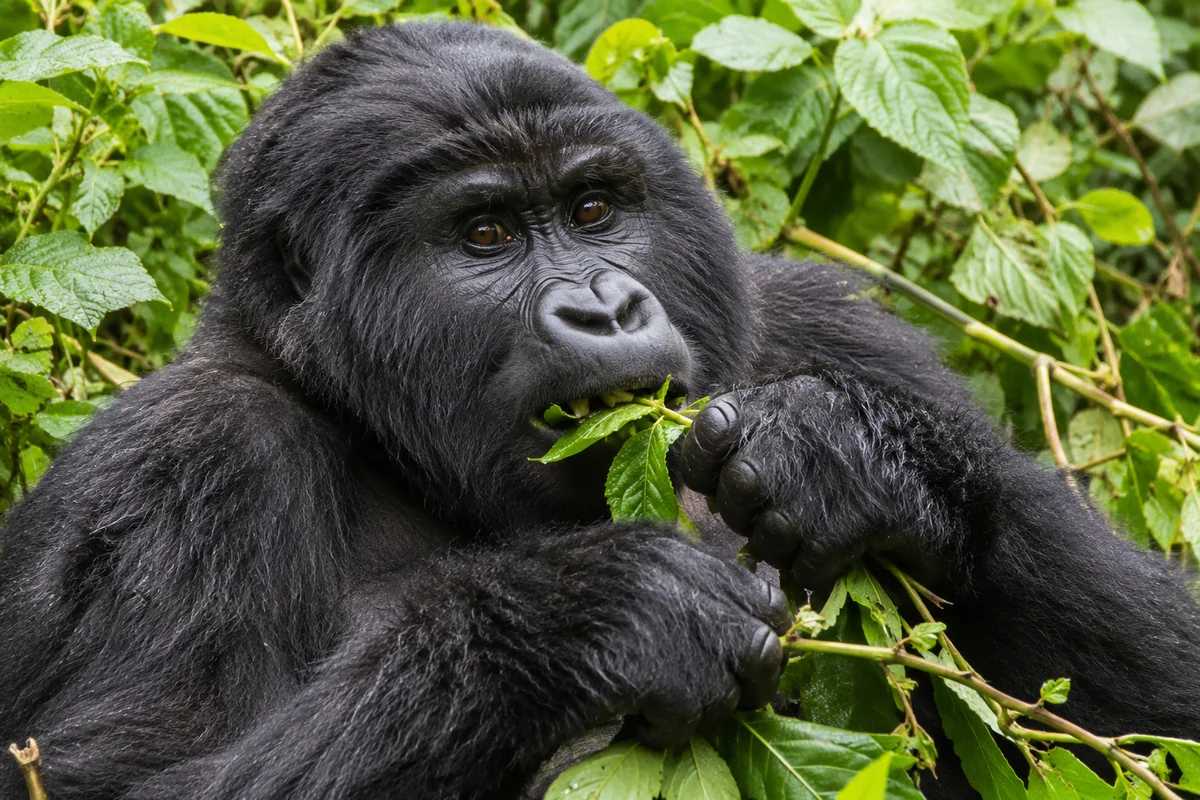
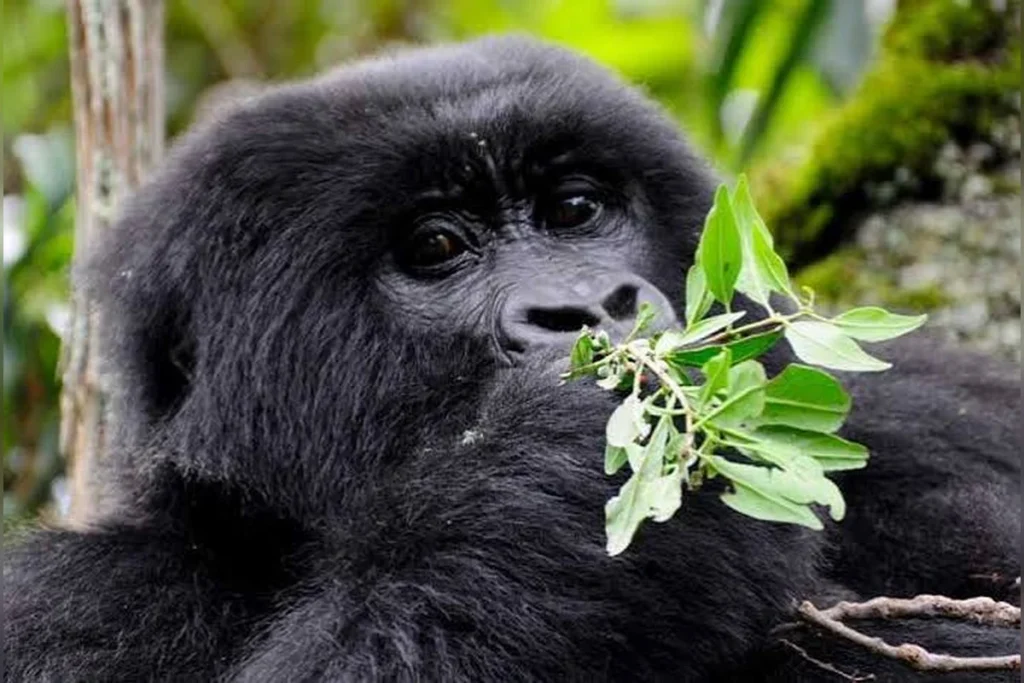
A mountain gorilla feeding on green leaves in its natural rainforest habitat.
5. Insulated Water Bottles for Uganda’s Climate
Insulated bottles are popular because they can keep a drink closer to its starting temperature for several hours. That can be pleasant on a warm afternoon or during long road transfers. In Uganda’s highland gorilla trekking areas, however, mornings can feel cool and conditions may change rapidly. Temperature control is a preference rather than a strict trekking requirement.
Double-wall vacuum-insulated steel bottles are typically heavier and bulkier than comparable single-wall bottles. Some are too wide for narrow daypack pockets. If you already own an insulated bottle, test it with your pack and decide whether its extra weight is worthwhile on steep forest trails.
Insulation does not make a container hygienic by itself. The cap, drinking spout, threads and seals must still be cleaned and dried regularly. A bottle left sealed while damp may develop unpleasant odours or microbial growth. Follow the manufacturer’s care instructions, especially if the bottle has a straw or complex lid.
Cold drinks can be refreshing, but water does not need to be icy to support hydration. Some hikers find room-temperature water more comfortable when walking hard. Choose what encourages sensible drinking without adding unnecessary weight or relying on temperature as a measure of water safety.
If you pack an insulated bottle for the drive and a lighter bottle for the trek, label them or keep them in separate pockets so you know which contains drinking water. Avoid carrying hot liquids in a bottle with an unpredictable or pressure-sensitive lid. Spills on steep ground can create safety problems.
Travellers who enjoy long Uganda wildlife safaris may value insulation more on vehicle days than in the forest. PrideMark Safaris can help guests prepare a day-by-day packing approach rather than treating every safari activity as identical.
For most travelers, the best water bottles for gorilla trekking are chosen first for reliability and fit, with insulation considered only after those essentials. A secure ordinary bottle can serve just as well if the water is safe and the container is clean.
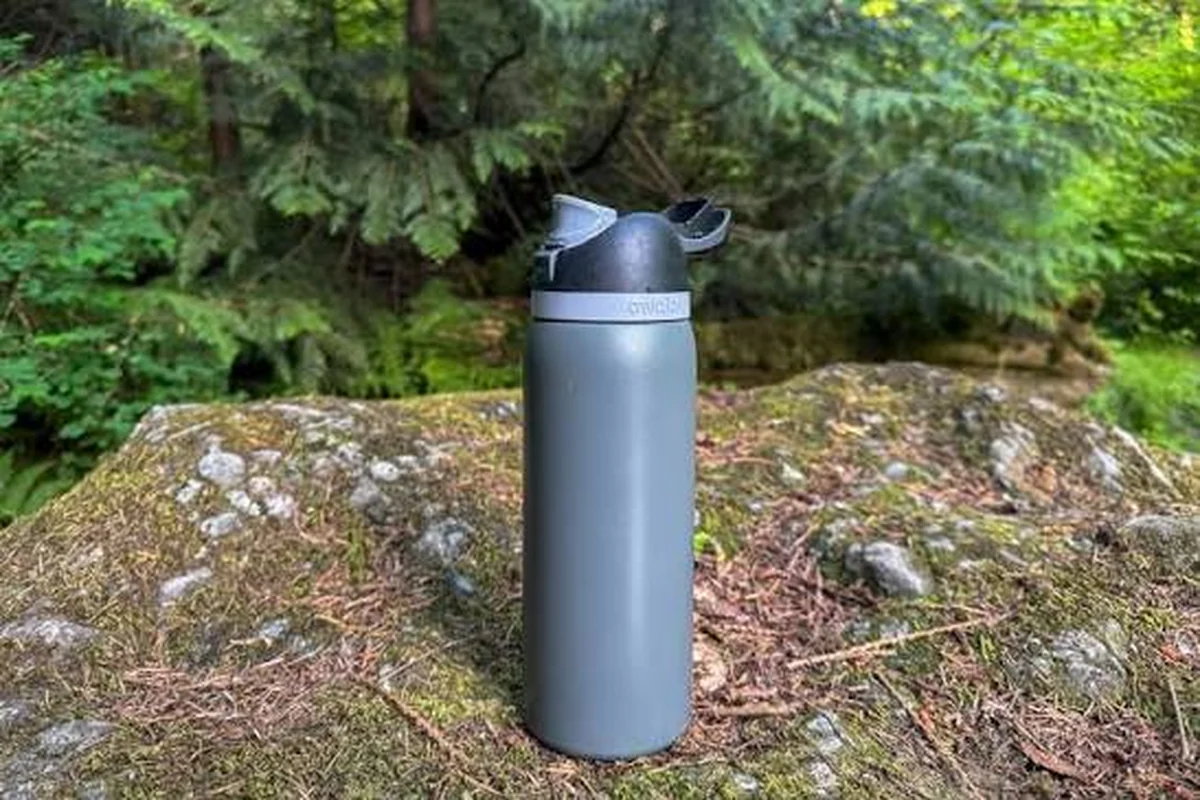
A reusable insulated water bottle is a practical hydration accessory for gorilla trekking and rainforest hiking in Uganda.
6. Water Bottles vs Hydration Backpacks
A hydration reservoir, often called a hydration bladder, stores water inside a backpack and delivers it through a hose. This lets hikers sip without taking out a bottle. It can be useful when carrying trekking poles or walking over uneven ground, although it is not essential for gorilla trekking.
The main convenience of a reservoir is hands-free access. Some hikers drink more regularly when a hose is within reach, while others prefer a visible bottle so they can monitor how much remains. A reservoir may be harder to inspect, refill or clean thoroughly, especially if the hose and bite valve have narrow internal passages.
Check that your backpack has a reservoir sleeve and a suitable hose opening. A reservoir squeezed into an ordinary compartment can be punctured or compressed by other gear. Always check for leaks before placing it beside cameras, phones, documents or spare clothing.
Bottles are generally simpler to refill, share between bags and clean. They are also easier to replace if lost or damaged. A bottle with a secure cap can sit in an external pocket, but it must not be able to bounce out while hiking. Some travelers carry both a bottle and a reservoir for flexibility.
Clean the reservoir, hose and bite valve according to the manufacturer’s instructions and let every component dry fully after use. Do not store a wet bladder sealed for long periods. If you add electrolyte powders or flavored drinks, follow the product instructions and clean the system especially carefully.
Reusable bottles do not have to compete with hydration backpacks. They can work together: a simple bottle offers easy access at stops, while a reservoir can provide hands-free drinking on longer walks. The right combination depends on your pack, comfort and water needs.
Our related guides to trekking backpacks and gorilla trekking poles explain how equipment choices interact. PrideMark Safaris can help you consider the overall weight and practicality of your trekking setup.
| Feature | Reusable bottle | Hydration reservoir |
|---|---|---|
| Access | Remove from pocket or use attached spout | Drink through hose while walking |
| Cleaning | Usually straightforward | Hose and bite valve need extra care |
| Leak checks | Cap and gasket | Reservoir seams, hose and bite valve |
| Water visibility | Often easy with translucent bottles | Usually requires opening pack or checking markings |
| Best fit | Simple, flexible daypack setup | Compatible hydration-ready backpack |
7. Safe Drinking Water During Gorilla Trekking
The most important characteristic of any drinking bottle is the safety of the water inside it. Water that looks clean can still contain harmful microorganisms. Do not drink directly from forest streams, ponds or waterfalls unless the water has been appropriately treated and verified safe. A reusable bottle is a container, not a water treatment system.
When preparing for the trek, fill your bottle with safe drinking water supplied by your accommodation, operator or another reliable source. If you are unsure whether a source is potable, ask before filling. Sealed commercial bottled water can be an option, but check the seal and avoid leaving litter in parks or along roads.
Portable filters and purification products vary considerably. Some filters remove protozoa and bacteria but do not reliably remove viruses; chemical treatments and UV systems also have limitations and specific instructions. Do not assume a generic filter straw makes all water safe. Follow authoritative travel-health advice and the treatment product’s verified claims.
Use clean hands when opening the bottle and avoid touching the drinking surface unnecessarily. Do not put a dirty lid on the ground while resting. After the trek, wash the bottle, cap and any drinking valve and let the components dry completely. A reusable bottle is only as hygienic as its maintenance.
If you experience vomiting, diarrhea, fever or signs of dehydration during travel, seek appropriate medical care. Do not assume all symptoms are caused by insufficient water intake. For individualized medical advice, consult a travel-health professional before departure, particularly if you have underlying conditions.
Follow current advice from the Uganda Wildlife Authority and your ranger about permitted behavior in protected areas. Keep drinks and food away from gorillas, respect viewing rules and carry all packaging out of the forest. Never offer water to wildlife.
On itineraries organized by PrideMark Safaris, bottled drinking water is included throughout the safari. Guests can ask how it will be supplied on trekking days and how best to transfer it into their own reusable containers. See our gorilla trekking safari packages for related travel planning.
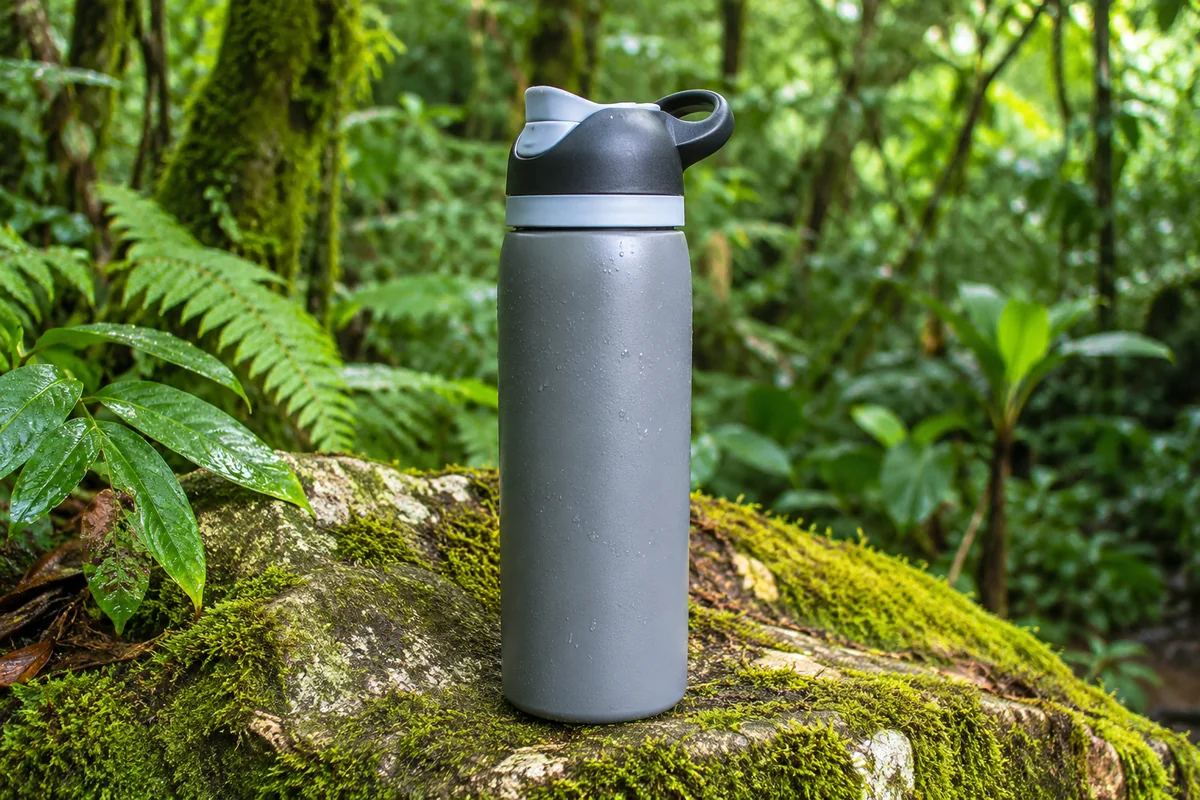
An insulated reusable water bottle is a practical option for carrying drinking water during forest hikes.
8. Nine Essential Tips for Choosing a Trekking Water Bottle
Tip 1 — Prioritize a leak-resistant closure. Fill your bottle, tighten the cap and test it upside down before travel. A dependable seal protects your backpack and other belongings. Do not rely on a lid that regularly drips, even if the bottle looks stylish.
Tip 2 — Test the bottle in your daypack. Confirm that it fits the pocket, can be removed easily and will not fall out on uneven ground. A bottle that needs two hands to retrieve may be inconvenient during a demanding walk.
Tip 3 — Choose a manageable capacity. Discuss the expected trek and safe-water availability with your operator. Carry enough for your needs without making the pack unnecessarily heavy. Two smaller containers may be more convenient than one oversized bottle.
Tip 4 — Look for easy cleaning. Wide openings and removable seals can make washing simpler. Clean lids, straws and bite valves carefully. A bottle that is hard to maintain may not be a good choice for a multi-day trip.
Tip 5 — Consider the complete weight. Compare bottle weight when empty and remember that each litre of water adds roughly one kilogram. Extra insulation and heavy-duty construction are optional features, not automatic advantages.
Tip 6 — Keep water safe. Fill from a reliable potable source and do not drink untreated forest water. If you use a treatment device, understand its limitations and follow the manufacturer’s instructions.
Tip 7 — Protect electronics. Carry bottles upright where possible and keep them away from cameras, phones and documents. A small waterproof bag may help contain minor leaks, but it does not replace a properly sealed cap.
Tip 8 — Respect wildlife and the forest. Drink during appropriate breaks, follow ranger directions and never leave bottle caps or other rubbish behind. Do not feed or offer water to gorillas or other animals.
Tip 9 — Choose comfort over trends. The best water bottles for gorilla trekking are easy to carry, clean, fill and use. A familiar bottle you have tested is often a better choice than an untested premium product.
These nine tips work alongside the rest of your preparation. Read our guides to gorilla trekking boots, gorilla trekking rain jackets and gorilla trekking insect repellents to build a practical kit.
For personalized preparation advice, PrideMark Safaris can discuss trekking-day expectations and help guests match their equipment to their itinerary. The goal is a safe, comfortable experience that leaves room to appreciate the forest rather than constantly adjusting gear.
9. Water Bottle Cleaning, Packing and Maintenance Checklist
Before departure, wash your bottle and check the cap, gasket and threads for wear. Fill it and test for leaks. If the bottle has a straw, hose or bite valve, inspect those parts too. Replace damaged seals when possible, and avoid taking a container that cannot close reliably.
Pack your bottle where you can reach it without unpacking the whole bag. Keep it away from sharp tools, fragile electronics and items that may puncture a soft reservoir. Make sure the daypack still sits comfortably on your shoulders and does not pull you off balance.
On trekking morning, fill the container with safe drinking water and verify that the cap is secure. Ask your guide if you are uncertain about the day’s expected duration or water provision. Carry drinking water rather than relying on finding a refill source inside the park.
During the hike, take drinking breaks when safe and appropriate. Follow ranger instructions and avoid handling loose equipment while crossing difficult terrain. A bottle should support your walk, not distract you from footing or wildlife guidance.
After the trek, empty leftover water if necessary, wash the bottle with suitable cleaning materials and rinse thoroughly. Allow the bottle and cap to dry separately before storing. Pay special attention to narrow drinking spouts and any detachable rubber seals.
For a multi-day safari, establish a simple evening routine: refill from a safe source, check for leaks and place the bottle with your daypack. That prevents hurried preparation before an early departure. If your bottle becomes damaged, replace it rather than risking a leak.
Consider waste reduction by reusing durable containers and disposing of any single-use packaging responsibly. Protected forests are sensitive environments, and small items such as caps, wrappers and bottle seals can become litter if not secured.
The best choices are the ones that remain dependable after repeated use. With safe water, sensible capacity, regular cleaning and appropriate guidance, a simple bottle can be a valuable part of your Uganda adventure.
When you are ready to travel, PrideMark Safaris can help organize a tailor-made journey combining gorilla trekking with other experiences. Explore Uganda safari packages and contact PrideMark Safaris for itinerary assistance.
| Before the trek | During the trek | After the trek |
|---|---|---|
| Fill from safe drinking-water source | Drink at appropriate breaks | Wash bottle, lid and seals |
| Check cap and leaks | Keep bottle secure on steep ground | Dry components thoroughly |
| Check fit in backpack | Follow ranger instructions | Inspect for damage |
| Confirm water provision | Carry out all packaging | Refill safely for next activity |
Practical Examples for Different Trekking Styles
For a traveler who prefers a lightweight daypack, a basic reusable bottle with a dependable screw cap may be the simplest option. It can sit in an accessible side pocket, and its remaining water is easy to check if the material is translucent. Before departure, the traveler can practice reaching the pocket while wearing the pack. This matters because a pocket that seems convenient in a hotel room may be difficult to reach when the backpack is loaded with rainwear and a camera.
A photographer may choose a separate compartment for water and another for lenses, batteries and a camera body. Even bottles advertised as leakproof should be tested, and an additional protective sleeve can reduce the consequences of a spill. Keep liquids away from cleaning cloths and spare memory cards. If the bottle is handled after insect repellent, wash or clean your hands according to the repellent label before touching optical equipment.
Travelers who already use a hydration reservoir on hikes may prefer its familiar drinking hose. Before taking it to Uganda, inspect the reservoir for wear and clean every component. Fill it, close it and leave it on a dry towel for a leak test. Check that the hose does not catch on vegetation and that the bite valve is easy to stow. Familiar equipment is an advantage only when it is maintained correctly.
For guests who plan to combine gorilla trekking with a boat cruise or game drive, it may be useful to keep one everyday bottle for vehicle travel and a lighter container for the forest. The extra bottle should not become an excuse to carry excessive weight on every outing. Instead, plan around the activities and the availability of safe water at each stage of the itinerary.
Travelers using trekking poles should think about how they will access their water without dropping equipment. A reservoir can help, but a secure bottle pocket works too if the group stops for a break. When the trail is steep or muddy, it is better to stop safely than to drink while struggling for balance. The ranger’s directions take priority over any personal gear routine.
Families or groups should check that each traveler can identify and access their own drinking water. Shared containers can be awkward when the group is spread out along a path, and some people may need more frequent breaks than others. If a traveler has particular medical requirements, arrange those privately with a qualified clinician and tell the operator about practical accommodations that may be needed.
For a longer Uganda itinerary, a bottle-cleaning routine is useful. Set aside a few minutes each evening to rinse and wash containers as recommended, check seals, and allow them to dry. A spare cap or replacement gasket may be useful for some specialized bottles, but the simplest strategy is choosing a common, dependable design with few complicated parts.
Finally, remember that equipment cannot replace preparation. Suitable footwear, a comfortable pack, weather protection, adequate rest and attention to your guide all contribute to the trekking experience. A water bottle is one small component of a thoughtful plan. Travelers can ask PrideMark Safaris about how the trekking day fits into the rest of their safari and what practical supplies are provided.
When comparing bottles in a shop, take a moment to check the opening and closing mechanism rather than selecting by colour alone. A cap that is difficult to grip with wet fingers may become frustrating after rain. Check whether replacement seals are available, whether the bottle is dishwasher-safe according to its manufacturer, and whether the mouth is wide enough for your preferred cleaning brush. If you plan to travel by air, carry the bottle empty through security when required and fill it with safe drinking water afterward where permitted.
At the trekking briefing, ask any remaining practical questions about carrying water and where the group is likely to pause. Keep your drinking container with you rather than leaving it in a vehicle when heading into the forest. On return, check that you have not dropped a cap or wrapper. These small habits help make hydration equipment convenient, hygienic and respectful of the protected environment. ‘+brand()+’ can help guests prepare a daypack checklist in advance.
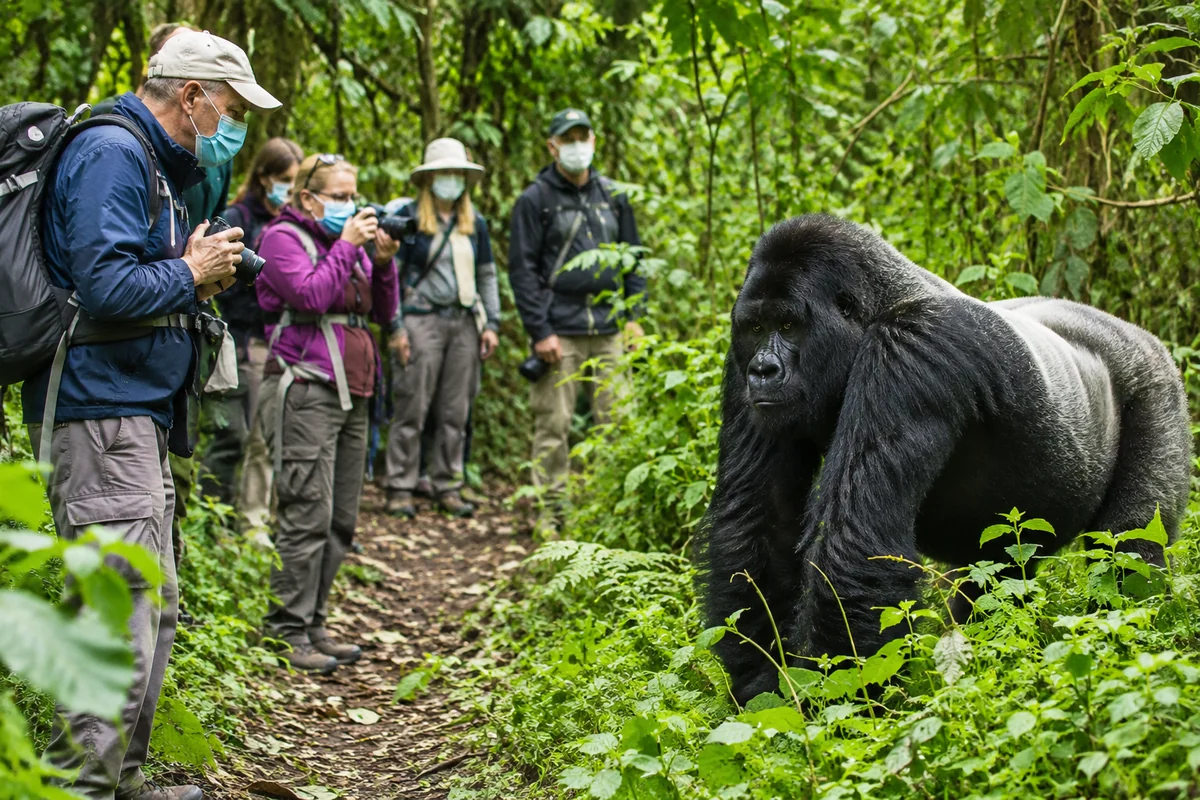
A group of visitors observing a silverback gorilla in a lush rainforest setting.
12 Frequently Asked Questions About Water Bottles for Gorilla Trekking
What is the best water bottle for gorilla trekking?
A reliable, easy-to-clean, leak-resistant bottle that fits your daypack is a good choice. The ideal material and capacity depend on your needs and the planned trek.
How much water should I carry on a gorilla trek?
There is no single amount suitable for everyone. Ask your guide about the expected conditions and safe-water availability, and consider individual health and exertion needs.
Are stainless-steel bottles better than plastic bottles?
Not universally. Steel can be durable, while some plastic bottles are lighter. Compare the full bottle weight, closure, cleaning and how it fits your bag.
Do I need an insulated water bottle in Bwindi?
Insulation is optional. A clean, secure bottle with safe drinking water is more important than keeping the water cold.
Can I drink water from forest streams in Uganda?
Do not assume stream water is safe. Use verified potable water or an appropriate, validated treatment method with awareness of its limitations.
Are hydration bladders suitable for gorilla trekking?
Yes, if they fit your pack, are cleaned properly and do not leak. Some hikers prefer the simplicity of ordinary bottles.
Can I carry two smaller water bottles?
Yes. Two smaller containers can help distribute weight and provide flexibility, provided both are secure and easy to access.
Does a filtered water bottle make all water safe?
No. Filters differ in what they remove and may not address viruses or chemical contamination. Follow product instructions and reliable travel-health guidance.
Should I carry a disposable or reusable bottle?
A reusable bottle can be practical and reduce waste when properly cleaned. The key is using safe drinking water and carrying out all rubbish.
Can I drink water while observing gorillas?
Follow your ranger’s instructions and park rules. Do not eat, drink or handle loose items near gorillas if prohibited by the guide.
How do I clean a hydration bladder after trekking?
Follow its manufacturer’s instructions, including cleaning the hose and bite valve and drying all components completely.
Does PrideMark Safaris provide drinking water?
PrideMark Safaris includes bottled drinking water throughout its safari arrangements. Confirm the practical distribution plan for your particular trekking day before departure.
Plan Your Gorilla Trekking Safari with PrideMark Safaris
Choosing the best water bottles for gorilla trekking means prioritizing a secure cap, sensible weight, comfortable access and safe drinking water. Pair your bottle with suitable gorilla trekking boots, trekking backpacks and weather protection, and follow the advice of your ranger and health professional when relevant.
This article provides general packing and hydration guidance, not individualized medical advice. Confirm park rules with the Uganda Wildlife Authority and consult a qualified clinician for medical conditions or fluid restrictions. Related article and package links above use PrideMark Safaris website search pages so visitors can find the relevant current listings without relying on unverified page URLs.