Mountain Gorillas vs Eastern Lowland Gorillas: 9 Key Differences
Discover how these two remarkable eastern gorilla subspecies differ in habitat, body shape, diet, range, behaviour and conservation needs—and learn why Uganda’s mountain gorillas are an unforgettable focus for a responsible wildlife safari.
Gorillas are among Africa’s most extraordinary wildlife species, but not all gorillas live in the same environments or face the same conservation challenges. When comparing mountain gorillas vs eastern lowland gorillas, the first important detail is that they are not two separate gorilla species. They are two subspecies of the eastern gorilla, scientifically known as Gorilla beringei. The mountain gorilla is Gorilla beringei beringei, while the eastern lowland gorilla—also called Grauer’s gorilla—is Gorilla beringei graueri.
Both are large, intelligent, mostly plant-eating great apes that live in social groups and depend on healthy forests. Yet they occupy different parts of central and eastern Africa, and adaptations to local habitats influence their appearance, feeding patterns and conservation circumstances. Understanding these differences helps travellers appreciate why gorilla conservation is not a one-size-fits-all effort.

Mountain Gorillas vs Eastern Lowland Gorillas: Quick Comparison
| Feature | Mountain gorilla | Eastern lowland gorilla |
|---|---|---|
| Scientific name | Gorilla beringei beringei | Gorilla beringei graueri |
| Classification | Subspecies of the eastern gorilla | Subspecies of the eastern gorilla; also called Grauer’s gorilla |
| Main range | Bwindi–Sarambwe and the Virunga Massif across Uganda, Rwanda and DRC | Eastern Democratic Republic of Congo |
| Typical environment | High-altitude montane forest, bamboo and other cool forest habitats | Lowland and montane tropical forests, including forest mosaics |
| Appearance | Long, thick fur; powerful body adapted to cool forest conditions | Generally stockier build, large hands and a comparatively shorter muzzle; body hair is usually shorter |
| Diet | Mostly leaves, stems, shoots and other vegetation; exact diet changes by habitat and season | Leaves and other herbaceous plants, with fruit often an important part of the diet where available |
| Conservation picture | Population has increased with intensive, coordinated conservation, but remains restricted and endangered | Critically endangered; severe historical declines, habitat fragmentation and insecurity remain major concerns |
| Wildlife tourism | Established trekking experiences in Uganda and in other range countries, subject to permits and rules | Limited and location-specific; access and safety must be checked through official park channels |
This is a general overview, not a claim that every individual behaves identically. Diet, group composition and appearance can vary with age, sex, season and the particular forest. Conservation categories and population estimates should always be checked against the latest IUCN and park-authority information before publication.
1. They Are Different Subspecies, Not Different Gorilla Species
The first difference is taxonomic. Scientists recognise two living gorilla species: the eastern gorilla and the western gorilla. Mountain gorillas and eastern lowland gorillas belong to the eastern gorilla species, Gorilla beringei. Their scientific names identify two distinct subspecies within it.
Mountain gorillas are commonly referred to as mountain gorillas because they inhabit high-elevation forest areas. Eastern lowland gorillas are widely known as Grauer’s gorillas, named after zoologist Rudolf Grauer. The name “eastern lowland” can be slightly misleading, because Grauer’s gorillas are not restricted to flat lowland rainforest; their distribution includes a range of elevations and forest types in eastern DRC.
This distinction matters because it prevents confusion with western lowland gorillas, which belong to another species, Gorilla gorilla. Although the four gorilla subspecies share many behaviours and physical traits, their populations occupy different geographic areas and face different conservation pressures. For a useful overview of gorilla biology, see the World Wildlife Fund’s gorilla facts.
2. Their Geographical Ranges Are Different
One of the clearest differences between mountain gorillas vs eastern lowland gorillas is where they are found in the wild. Mountain gorillas survive in two separated areas: the Bwindi–Sarambwe forest landscape and the Virunga Massif. The mountain gorillas of Bwindi are especially important to Uganda’s conservation identity and wildlife tourism.
The Virunga Massif spans protected areas in Uganda, Rwanda and the Democratic Republic of Congo. By contrast, eastern lowland gorillas are native to the eastern part of the DRC. They are associated with a broader collection of forests and protected areas, including Kahuzi-Biega and Maiko National Parks and other forest landscapes and reserves. Their range is fragmented, and some areas are difficult to survey or protect effectively.
The difference in range affects conservation planning. Protecting mountain gorillas requires long-term cooperation across the countries that share the Virunga landscape, as well as continued management of Bwindi and neighbouring Sarambwe. Eastern lowland gorilla conservation must address widespread forest pressure across eastern DRC, where local insecurity and remote terrain can complicate research, ranger patrols and law enforcement.
For visitors planning a gorilla safari in Uganda, Bwindi Impenetrable National Park offers an opportunity to see habituated mountain gorilla families in their natural habitat under carefully managed rules. PrideMark Safaris explains the practical differences between Uganda’s two gorilla trekking parks in its guide to Bwindi vs Mgahinga gorilla trekking.

3. They Live in Different Forest Conditions
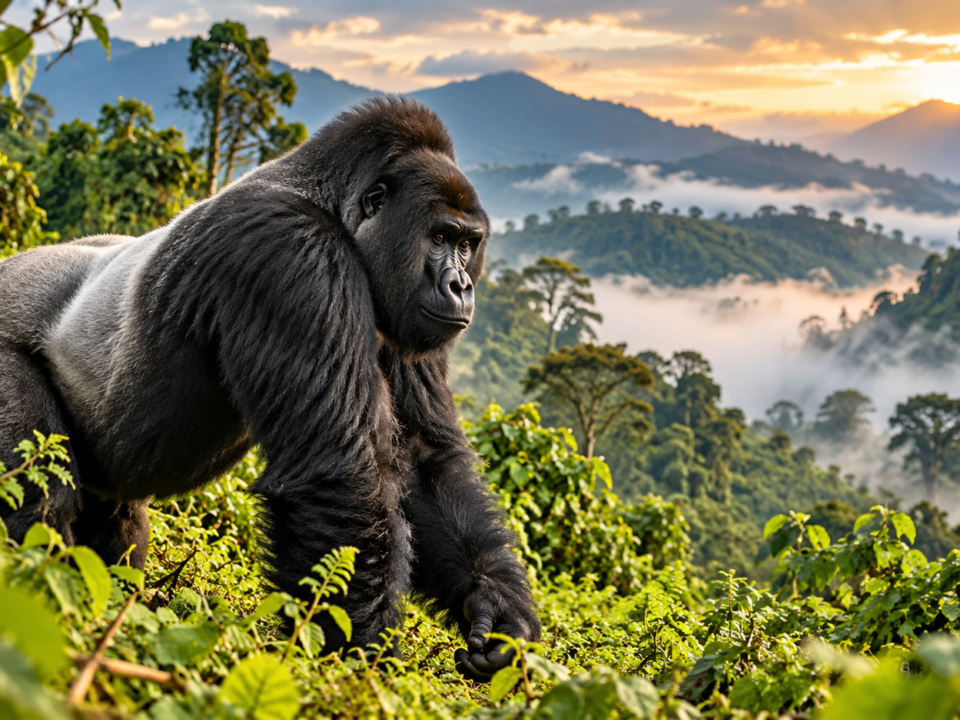
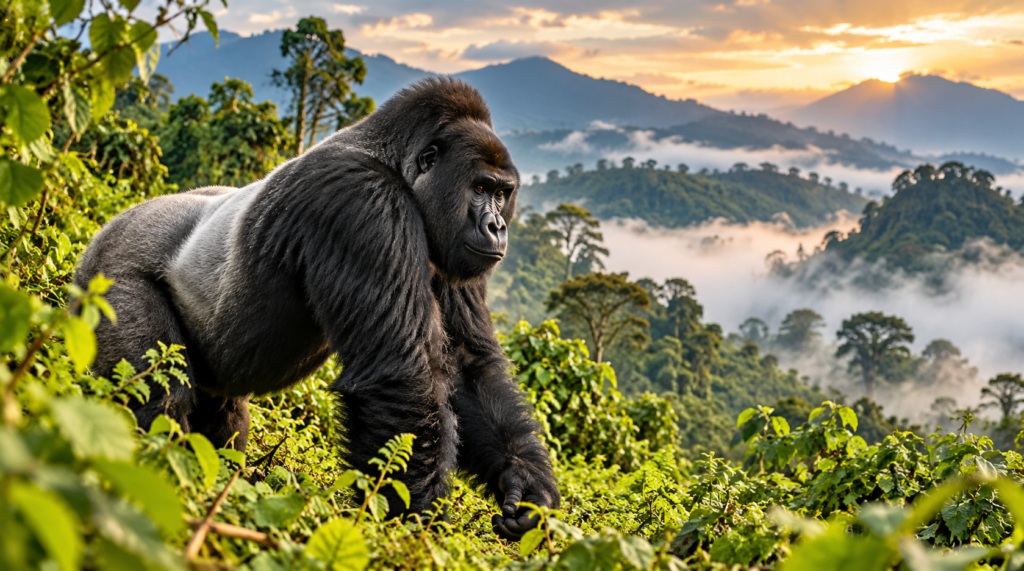
Mountain gorillas inhabit high-altitude forests where temperatures are generally cooler and conditions can be damp, misty and changeable. Their habitat includes montane forests and, in some areas, bamboo and other vegetation zones. The steep slopes and dense growth of Bwindi create a challenging environment for both wildlife and trekkers.
Eastern lowland gorillas occupy a wider range of forest habitats in eastern DRC, including lowland tropical rainforest and montane forest. “Lowland” refers to the historical name of the subspecies, rather than a rule that every individual lives at low altitude. Food availability and forest structure change from one part of their range to another, so local conditions influence how gorillas move and feed.
Habitat is more than the type of trees visible in a photograph. It provides food plants, nesting sites, shade, shelter, routes through the forest and enough space for groups to travel without constant disturbance. If forest is cleared or divided by roads, agriculture, mining or settlement, gorilla groups may have less access to resources and may become more isolated from one another.
For mountain gorillas, protecting the high-altitude forest and its boundaries is crucial. For eastern lowland gorillas, safeguarding large connected areas of forest is equally important, particularly where logging, mining, hunting and insecurity put pressure on wildlife. Conservation plans have to reflect the differences between these landscapes rather than applying exactly the same methods in every location.
4. Their Fur and Body Shape Reflect Different Adaptations
Mountain gorillas are known for their long, thick fur. This coat helps insulate them in the cool environments where they live. Their fur can look especially dense around the arms, shoulders and body, giving them a bulky outline in photographs taken in misty forest settings.
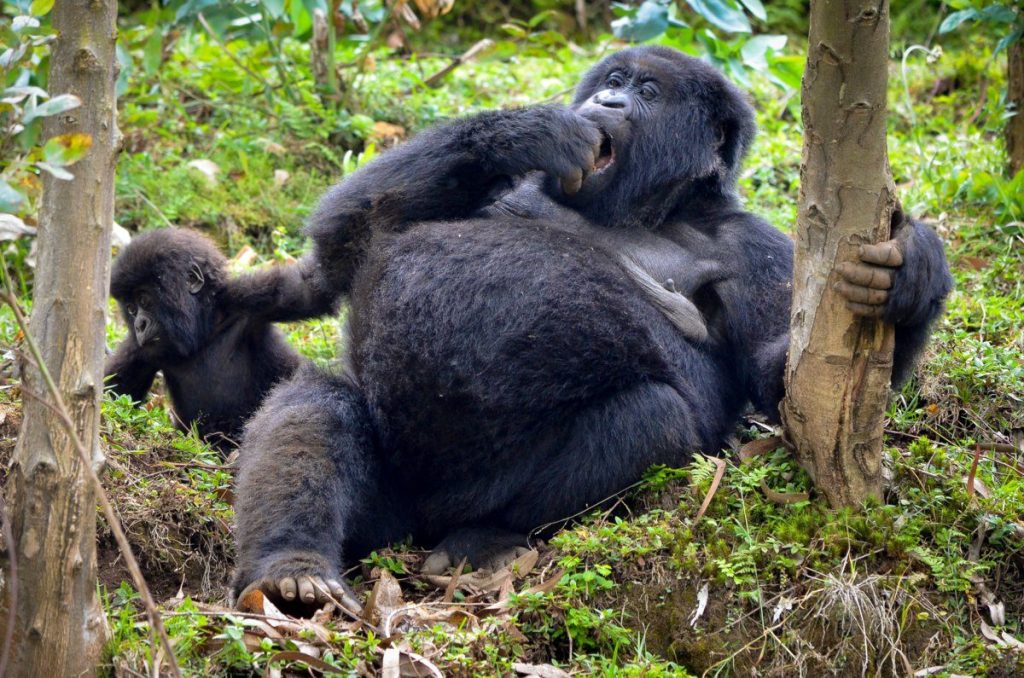
Eastern lowland gorillas generally have a stockier body, large hands and a comparatively short muzzle. Their hair is typically shorter than that of mountain gorillas. These features can help experienced observers recognise the subspecies, but photographs can be misleading: lighting, wet fur, age, sex, posture and camera angle can make animals look more similar or different than they really are.
Both subspecies have broad chests, strong arms and hands suited to moving on the ground, climbing when appropriate, gathering plant foods and manipulating vegetation. Adult males develop silver-grey hair across the back as they mature, which gives them the familiar name “silverback.” A silverback is not a separate species; it is a mature male gorilla.
It is best not to identify a gorilla by one feature alone. Researchers use several observations, along with location and other evidence, when identifying individuals and populations. For travellers, the main lesson is that close observation and good interpretation by trained guides add meaning to a wildlife encounter without disturbing the animals.
5. Eastern Lowland Gorillas Are Generally the Largest-Bodied Subspecies
Eastern lowland gorillas are often described as the largest of the four gorilla subspecies. They are recognised for their heavy, stocky build and large hands. Mountain gorillas are also powerful animals, and mature males can be very large, but comparisons should account for natural differences between individual gorillas and between adult males and females.
Body size is not a reliable measure of a gorilla’s health or conservation value. The size of an adult can be affected by sex, age, nutrition and individual variation. A large silverback does not automatically lead to a stronger or more stable population; viable populations need successful reproduction, healthy individuals, genetic diversity and safe habitat across generations.
For travellers, both subspecies can appear imposing, particularly when a mature male moves through thick vegetation. However, wild gorillas are not attractions to approach independently. In a properly managed trekking encounter, visitors follow trained guides, maintain the required distance and allow the animals to continue their normal activities.
6. Their Diets Overlap, but the Mix of Foods Can Differ
Both mountain gorillas and eastern lowland gorillas are predominantly herbivorous. Their diets may include leaves, stems, shoots, pith, bark, roots, herbs and other plant materials. Some gorillas also consume fruit, and they may occasionally eat small invertebrates. The specific mix depends on the habitat, seasonal availability and the plants accessible to each group.
Mountain gorillas often rely heavily on leaves, stems, shoots and other herbaceous vegetation. In some high-altitude habitats, fruit is less available than it is in many lowland tropical forests, which can influence their feeding patterns. Eastern lowland gorillas may consume more fruit when it is available in their forest, alongside a broad selection of leaves and other plant foods. This is a general distinction, not a strict rule that every eastern lowland gorilla eats fruit more often than every mountain gorilla.
Diet shapes daily movement. A group may travel to find preferred plants, pause to feed, rest during the day and continue foraging later. Researchers study feeding remains, plant availability and gorilla movements to understand how populations use a landscape. These details are important because habitat loss can remove not only sleeping areas but also the plants that sustain gorilla groups.
Gorillas also contribute to forest ecology. As they feed and move, they can influence vegetation structure and disperse seeds from the fruits they consume. Protecting gorillas therefore helps conserve the forest communities connected to them. Read more about gorilla behaviour and family structure in PrideMark Safaris’ article on why mountain gorillas live in families, where available on the website.
7. Their Social Lives Share Many Similarities
Despite their differences, mountain gorillas and eastern lowland gorillas share a complex social life. Both generally live in groups that may include a dominant silverback, adult females, infants, juveniles and sometimes additional males. Group size and composition change over time through births, deaths, migration and changes in social relationships.
The silverback often plays a central role in group movement and protection, but gorilla society involves more than a single leader. Females build relationships with other group members, mothers invest heavily in caring for infants, and young gorillas learn through exploration and play. Grooming, close contact, body language and vocalisations all help gorillas navigate their social environment.
The social lives of these subspecies should not be reduced to a simple claim that one is friendlier, more aggressive or more intelligent than the other. Behaviour depends on context, individual temperament, group history and the situation. Scientific observations need to distinguish repeated patterns from isolated encounters.
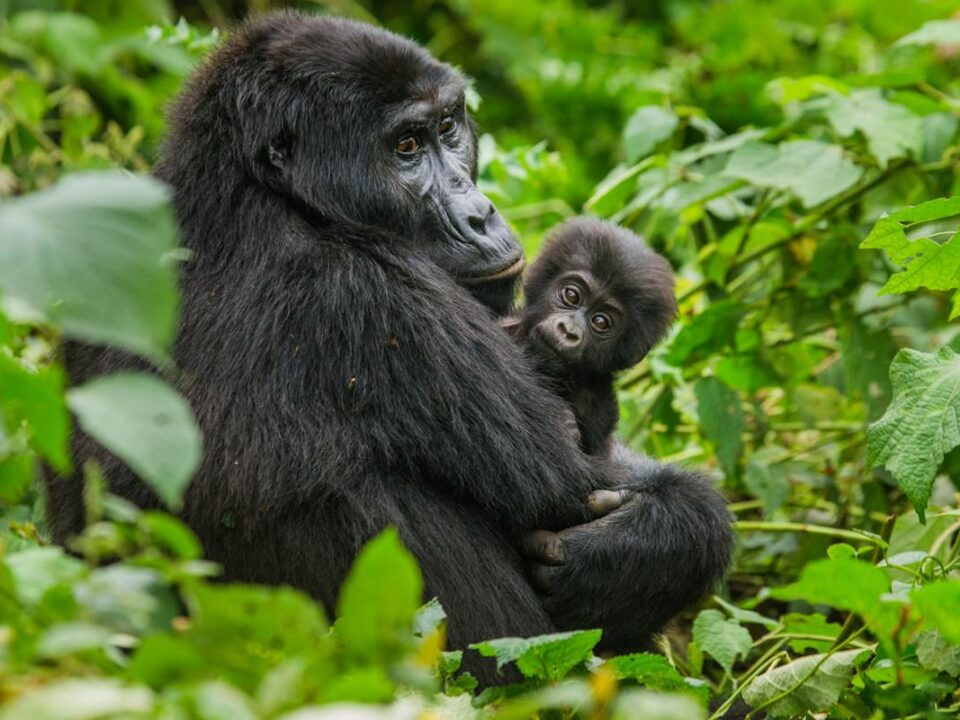
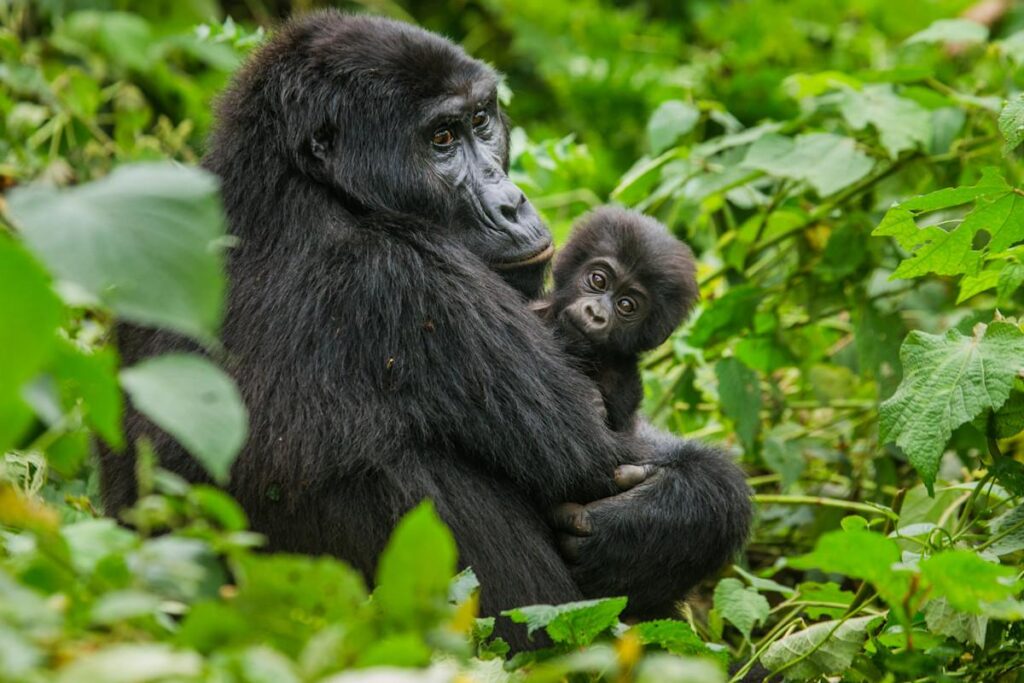
For people watching mountain gorillas in Bwindi, the most rewarding moments may be quiet ones: an infant staying close to its mother, a juvenile playing nearby, or adults feeding together. These moments show that gorilla conservation protects not only individual animals but also the social groups and natural behaviours that make their lives possible.
8. Their Conservation Challenges Are Not Identical
Both subspecies face serious threats, but the pressure and conservation progress differ across their ranges. Mountain gorillas have benefited from decades of coordinated conservation, veterinary interventions, anti-poaching patrols, research and carefully managed tourism. Their population has increased from historic lows, and their IUCN Red List category was changed from Critically Endangered to Endangered in 2018. That progress is significant, but it does not mean that the subspecies is safe: mountain gorillas remain geographically restricted and vulnerable to habitat pressure, disease and disruption.
Eastern lowland gorillas have suffered severe historical declines and are classified as Critically Endangered by conservation assessments. Their range includes areas affected by hunting, habitat degradation, mining, conflict and insecurity. Fragmented forest can isolate groups, while instability may make consistent monitoring and protection difficult. Population estimates for Grauer’s gorillas are less frequently updated across the full range than the better-monitored mountain gorilla population, so old counts should always be labelled with their survey year.
The wider eastern gorilla species is itself listed as Critically Endangered by the IUCN. A 2026 IUCN Green Status assessment highlighted a contrast: mountain gorillas show signs of recovery after long-term conservation work, while Grauer’s gorillas continue to experience substantial declines and fragmentation. This Green Status assessment measures recovery and ecological functionality; it should not be confused with a brand-new Red List category.
The key takeaway is that conservation wins need to be maintained and expanded. Ranger teams, veterinary specialists, researchers, governments, responsible tourism businesses and nearby communities all contribute to protecting gorillas. The most effective strategies are adapted to local circumstances and supported over many years.
Useful external sources include the IUCN’s Eastern Gorilla Red List assessment, WWF’s pages on mountain gorillas and eastern lowland gorillas.
9. The Wildlife Tourism Experience Is Very Different
For travellers, geography has a direct effect on what a gorilla safari can look like. Uganda offers mountain gorilla trekking in Bwindi Impenetrable National Park and Mgahinga Gorilla National Park. Rwanda’s Volcanoes National Park and the Virunga area in the DRC are also part of the mountain gorilla’s range. In these destinations, habituated gorilla groups are visited under established permit systems and park rules.
Eastern lowland gorilla encounters have been offered in specific locations in the DRC, including Kahuzi-Biega National Park. However, tourism access, operating conditions and personal security can change, and the situation can vary substantially by region. Anyone considering travel to the DRC should verify current access with park authorities and review official government travel advice before making plans.
A visitor should not assume that a mountain gorilla permit allows access to eastern lowland gorillas or that the experiences are interchangeable. These are different subspecies, in different habitats and countries, with separate park authorities and logistics. A responsible operator will explain the destination, permit requirements, travel time, accommodation, health rules and any relevant safety considerations clearly before a booking is confirmed.
If your goal is to see mountain gorillas in Uganda, PrideMark Safaris can help you compare the practical options. Begin with our Bwindi Gorilla Trekking Guide, review Bwindi vs Mgahinga, and browse our Uganda and Rwanda safari ideas for itineraries that may combine gorilla trekking with other wildlife experiences.
How Travellers Can Support Gorilla Conservation
Whether a traveller is interested in mountain gorillas or eastern lowland gorillas, the most helpful approach is to respect the animals and the people protecting them. Follow every instruction from official guides, maintain the required distance, avoid visiting when ill, never feed or touch a gorilla, and do not use flash photography where prohibited. Human illnesses can affect great apes, so health rules are a core part of responsible wildlife tourism.
Choose reputable operators, make sure permits are arranged through authorised channels, and ask sensible questions about how your trip is managed. Community livelihoods, local employment and conservation programmes can all be part of a responsible tourism economy, but benefits should be described accurately rather than promised without evidence. Wildlife viewing must never take priority over the welfare of the animals.
For gorillas in regions where tourism is limited or unsafe, conservation support does not require a visit. Learning from reputable conservation organisations, supporting transparent initiatives and sharing accurate information can all help build awareness. The most ethical safari is one that recognises the limits of tourism and follows the guidance of those responsible for protecting wildlife.
Which Gorilla Is Better to See?
There is no single answer that suits every traveller. Mountain gorillas may be the more practical choice for visitors planning a managed gorilla trekking safari in Uganda, because Bwindi and Mgahinga have established visitor systems. Eastern lowland gorillas are of enormous scientific and conservation importance, but travel to see them depends on the specific site, current access and security conditions in the DRC.
The best decision begins with your main purpose: an organised wildlife trek, a broader conservation interest or a specialised journey to learn about a particular subspecies. If you are planning a Uganda trip, consider travel dates, permit availability, physical fitness, accommodation, transfers and whether you want to combine gorilla trekking with other destinations. PrideMark Safaris can help you organise these details around a suitable itinerary.
Plan Your Uganda Mountain Gorilla Safari
Meet mountain gorillas in their natural forest habitat with a carefully planned Uganda safari. PrideMark Safaris can help coordinate your itinerary, transport, accommodation and gorilla trekking arrangements.
Explore Bwindi Gorilla Trekking
Explore Safari Packages
Contact PrideMark Safaris
Frequently Asked Questions
Are mountain gorillas and eastern lowland gorillas different species?
No. They are different subspecies of the eastern gorilla, Gorilla beringei. The mountain gorilla is G. b. beringei, while the eastern lowland gorilla, or Grauer’s gorilla, is G. b. graueri.
Which is bigger, a mountain gorilla or an eastern lowland gorilla?
Eastern lowland gorillas are generally described as the largest-bodied gorilla subspecies, with a stockier build and large hands. Individual size varies with age, sex and body condition.
Where can I see mountain gorillas?
Mountain gorillas live in the Bwindi–Sarambwe landscape and the Virunga Massif. Managed gorilla trekking is available in Uganda and in other parts of their range when permits and park operations allow.
Where do eastern lowland gorillas live?
Eastern lowland gorillas are native to forests in the eastern Democratic Republic of Congo. Their range includes lowland and montane forest areas, and their habitat is fragmented in parts of the region.
What do mountain gorillas and eastern lowland gorillas eat?
Both are mainly plant-eaters. Their diets include leaves, stems, shoots and other vegetation. Fruit may be an important part of the diet for eastern lowland gorillas where it is seasonally available, but diets vary by habitat and season.
Which gorilla is more endangered?
Mountain gorillas are listed as Endangered, while eastern lowland gorillas are classified as Critically Endangered in commonly cited conservation assessments. The broader eastern gorilla species is also Critically Endangered. Always check the latest IUCN and conservation-agency information for status updates.
Can I see eastern lowland gorillas on a Uganda gorilla trekking permit?
No. Uganda’s gorilla trekking permits are for the designated mountain gorilla trekking experience. Eastern lowland gorillas live in the Democratic Republic of Congo, where access and visitor arrangements are separate and must be verified independently.