Rwenzori Mountains: Uganda’s Frozen Wonder

Why Uganda Is Cheaper Than Rwanda for Gorilla Trekking
July 15, 2026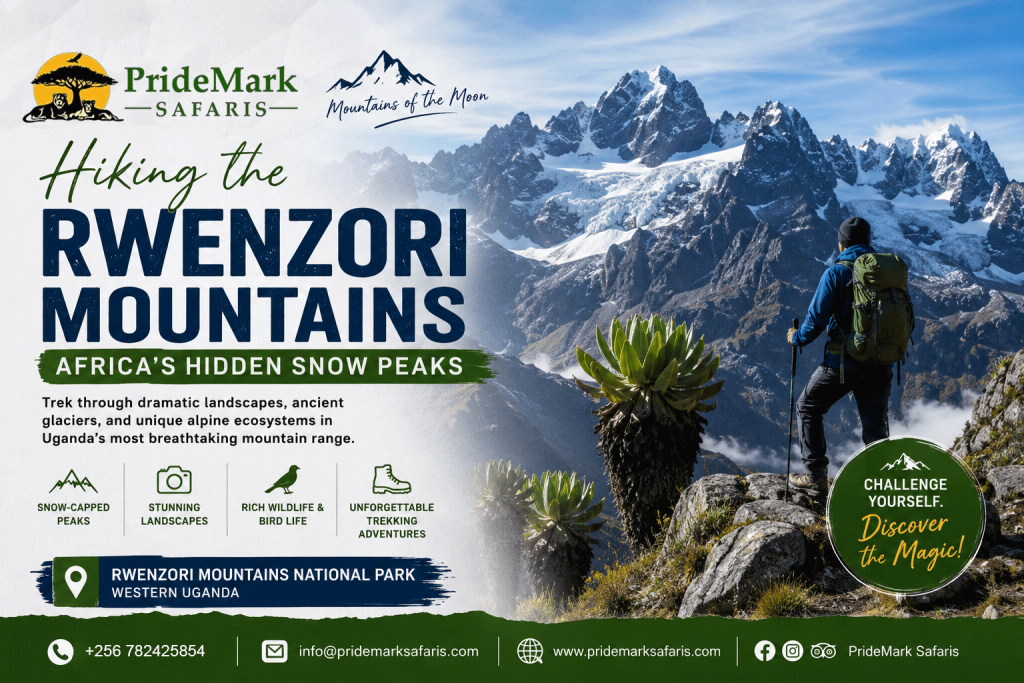
Hiking the Rwenzori Mountains: Africa’s Hidden Snow Peaks

Hiking the Rwenzori Mountains: Africa’s Hidden Snow Peaks
Discover the Untamed Beauty of the Rwenzori Mountains
When most travelers think about snow-covered mountains in Africa, they often picture Mount Kilimanjaro or Mount Kenya. However, tucked away along the border between Uganda and the Democratic Republic of the Congo lies one of the continent’s greatest natural treasures—the magnificent Rwenzori Mountains National Park. Commonly known as the “Mountains of the Moon,” the Rwenzori Mountains boast permanent glaciers, snow-capped peaks, crystal-clear alpine lakes, dramatic valleys, and one of the most unique mountain ecosystems on Earth. This UNESCO World Heritage Site offers an unforgettable trekking experience that combines breathtaking scenery, incredible biodiversity, and cultural encounters that remain untouched by mass tourism. For adventurous travelers seeking something beyond the ordinary, PrideMark Safaris proudly introduces this remarkable destination where every step reveals a new wonder hidden within Uganda’s western frontier.
Why Rwenzori Mountains Hiking Should Be on Every Adventurer’s Bucket List
Unlike many famous mountain destinations that attract thousands of climbers every week, the Rwenzori Mountains remain refreshingly uncrowded. This creates a more intimate and authentic hiking experience where trekkers can immerse themselves in nature without battling large crowds. Rising to an impressive 5,109 meters above sea level, Margherita Peak on Mount Stanley stands as the third-highest mountain in Africa after Kilimanjaro and Mount Kenya. What makes the Rwenzori range exceptional is that its snow and glaciers exist almost directly on the Equator, creating one of the world’s rarest geographical phenomena. Few places allow visitors to walk through tropical rainforest in the morning and arrive at snow-covered landscapes just days later. PrideMark Safaris carefully designs each expedition to maximize safety, comfort, and the opportunity to appreciate every ecological zone encountered during the journey.
The Remarkable History Behind Rwenzori Mountains Hiking
The history of the Rwenzori Mountains stretches back more than two thousand years. Ancient Greek geographer Claudius Ptolemy referred to these mysterious mountains as the legendary “Mountains of the Moon,” believing they were the source of the River Nile. For centuries, explorers questioned whether these snow-capped mountains truly existed because few outsiders had ever seen them. In 1889, explorer Henry Morton Stanley confirmed their existence during his expedition across Central Africa. Today, modern trekkers follow trails that wind through landscapes largely unchanged since those early explorations. Despite advances in tourism infrastructure, the Rwenzori Mountains continue to preserve their wilderness character, making every expedition feel like a genuine exploration rather than a commercial hike.
The Incredible Ecosystems You Experience During Rwenzori Mountains Hiking
One of the greatest highlights of hiking the Rwenzori Mountains is witnessing dramatic ecological changes over a relatively short distance. Trekkers begin their adventure in lush tropical forests filled with towering trees, colorful butterflies, and the songs of countless bird species. As the trail climbs higher, bamboo forests gradually replace dense rainforest before giving way to heather forests draped with old man’s beard moss. Higher still, visitors enter the spectacular Afro-alpine zone where giant lobelias and giant groundsels dominate the landscape. These prehistoric-looking plants have evolved specifically for the harsh mountain climate and exist in very few places worldwide. Eventually, hikers reach rocky alpine terrain covered by glaciers, snowfields, and dramatic ice formations that seem almost unbelievable for equatorial Africa. Every altitude introduces a completely different world, making the journey itself as rewarding as reaching the summit.
Wildlife Encounters Along the Rwenzori Trails
Although the Rwenzori Mountains are celebrated primarily for hiking, they also shelter extraordinary wildlife. The lower forests provide habitat for forest elephants, chimpanzees, blue monkeys, black-and-white colobus monkeys, bushbucks, giant forest hogs, and numerous small mammals. Birdwatchers enjoy exceptional opportunities to spot several Albertine Rift endemic species, including the handsome francolin, Rwenzori turaco, strange weaver, long-eared owl, and scarlet-tufted malachite sunbird. More than 217 bird species have been recorded within the park, making every trekking day rewarding for photographers and nature enthusiasts alike. While wildlife sightings are never guaranteed, the untouched nature of the Rwenzori ecosystem provides an authentic wilderness experience rarely found elsewhere in Africa.
Margherita Peak—The Ultimate Summit Challenge
For experienced mountaineers, reaching Margherita Peak represents the ultimate achievement. Standing at 5,109 meters on Mount Stanley, this iconic summit requires several days of challenging trekking, glacier crossings, scrambling over rocky ridges, and careful navigation across snowfields. Climbers must use crampons, ropes, harnesses, helmets, and ice axes under the guidance of highly trained local mountain guides. Although physically demanding, the reward is extraordinary. Standing atop Africa’s third-highest mountain offers panoramic views across Uganda and the Democratic Republic of the Congo, with glaciers stretching beneath your feet and endless mountain ridges fading into the horizon. PrideMark Safaris works with experienced mountain crews to ensure every expedition meets international safety standards while providing expert logistical support throughout the climb.

Choosing the Best Route for Your Adventure
Several trekking routes lead through the Rwenzori Mountains, each offering a unique experience depending on fitness level and available time. The Central Circuit Trail remains the most popular route because it provides access to several spectacular valleys, alpine lakes, glaciers, and Margherita Peak. The Kilembe Trail offers an alternative approach with equally breathtaking scenery, fewer crowds, and different perspectives of the mountain range. Shorter trekking options lasting two or three days allow visitors to experience the lower forests and beautiful waterfalls without attempting the highest elevations. Whether choosing a short scenic hike or a demanding summit expedition, PrideMark Safaris customizes every itinerary according to individual goals, physical ability, and available travel time.
The Best Time for Rwenzori Mountains Hiking
The Rwenzori Mountains can be visited throughout the year, but the drier months generally provide more favorable trekking conditions. The periods between June and August and from December to February typically experience less rainfall, making trails more manageable and mountain views clearer. Nevertheless, the Rwenzori climate remains unpredictable due to its equatorial location. Rain can fall during any month, and trekkers should always prepare for rapidly changing weather conditions. PrideMark Safaris advises visitors to bring waterproof clothing, warm insulation layers, sturdy hiking boots, gloves, and quality trekking gear regardless of the season to ensure maximum comfort throughout the expedition.
Preparing for Your Rwenzori Trek
Proper preparation significantly improves both safety and enjoyment during a Rwenzori expedition. Cardiovascular fitness, leg strength, and endurance training should begin several weeks before departure. Regular hiking with a backpack helps prepare the body for sustained elevation gain. Because the trek reaches high altitudes, gradual acclimatization remains essential to minimize the risk of altitude sickness. Trekkers should pack moisture-wicking clothing, waterproof outer layers, warm sleeping gear, trekking poles, reusable water bottles, energy snacks, sunscreen, sunglasses, and personal medications. Hiring professional guides and porters not only supports local communities but also enhances safety and allows visitors to focus entirely on enjoying the remarkable surroundings.

Supporting Local Communities Through Responsible Tourism
The communities surrounding the Rwenzori Mountains have lived alongside these peaks for generations. Tourism provides important employment opportunities through guiding, porter services, accommodation, transportation, handicraft production, and cultural experiences. Responsible travel helps improve livelihoods while encouraging conservation of both natural habitats and cultural heritage. PrideMark Safaris works closely with local service providers to ensure that tourism benefits surrounding communities while maintaining environmentally responsible practices that preserve the mountain ecosystem for future generations.
Why Choose PrideMark Safaris for Your Rwenzori Adventure?
Planning a successful mountain expedition requires expert local knowledge, reliable logistics, experienced guides, and careful attention to safety. PrideMark Safaris specializes in creating personalized trekking experiences that combine adventure, comfort, conservation, and authentic cultural encounters. From airport transfers and accommodation reservations to permits, mountain equipment coordination, professional guides, porters, and post-trek relaxation packages, every detail receives meticulous attention. Whether you dream of conquering Margherita Peak or simply exploring the magical lower valleys, PrideMark Safaris ensures your journey through the legendary Mountains of the Moon becomes an unforgettable lifetime achievement.
The Rwenzori Mountains remain one of Africa’s least explored natural masterpieces. Their glaciers, snow-capped summits, mystical forests, alpine lakes, giant vegetation, rich wildlife, and fascinating history create an experience unlike any other on the continent. Every trail reveals breathtaking scenery that few travelers ever witness, making this destination perfect for explorers seeking authenticity rather than crowds. If you are ready to discover Africa’s hidden snow peaks, PrideMark Safaris invites you to embark on an extraordinary journey into one of the world’s most remarkable mountain landscapes. Every step will bring you closer to nature, adventure, and memories that will last forever.