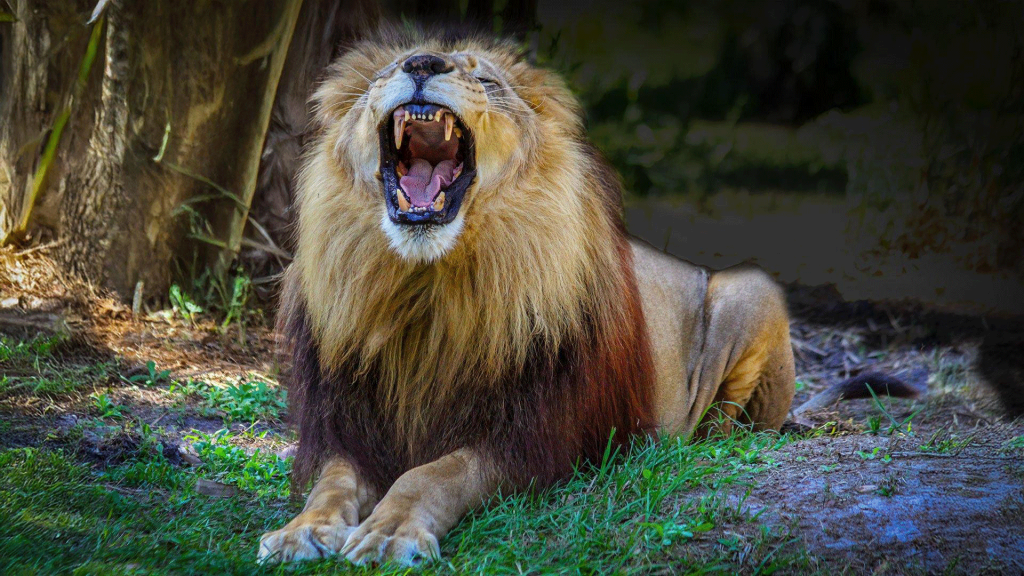
Few sounds in Africa are as unforgettable as the deep, rolling roar of a lion crossing the darkness of the savanna. You may be sitting quietly in a safari vehicle at sunset when a distant call suddenly rises from the grassland. One roar becomes two. Another answers from somewhere beyond the trees. For a moment, the entire landscape seems to listen. But why do lions roar? Is the sound simply an expression of aggression, or is a lion communicating something much more important to its pride?
The answer is far more fascinating than the dramatic sound itself. A lion’s roar can help communicate across large distances, reinforce territorial boundaries, maintain contact with pride members and signal the presence of an animal that other lions may need to take seriously. For travelers on an African safari, understanding the lion roar meaning transforms a spectacular wildlife encounter into something much deeper: a glimpse into the social life of one of Africa’s most iconic predators.
In Uganda, hearing lions is especially memorable because lions remain associated with some of the country’s most famous savanna landscapes. Uganda Wildlife Authority identifies Queen Elizabeth National Park, Murchison Falls National Park and Kidepo Valley National Park as the country’s current lion areas. Queen Elizabeth is particularly famous for its tree-climbing lions in the Ishasha sector.
Quick Facts About Lion Roars
Before exploring the deeper science behind why do lions roar, it helps to understand a few basic facts. The roar is only one part of the lion’s vocal repertoire. Lions also communicate using grunts, growls, moans, snarls, huffs, contact calls and body language. The famous roar is therefore best understood as one powerful component of a much larger communication system.
| Fact | What Travelers Should Know |
|---|---|
| Scientific name | Panthera leo |
| Social group | Lions commonly live in groups called prides, although group structure can vary. |
| Who roars? | Both male and female lions can roar. |
| Why roar? | Roaring can support communication, territorial advertisement and contact between lions. |
| When is roaring common? | Roaring is often associated with periods of lower light and cooler conditions, particularly around evening and nighttime. |
| How far can a lion roar be heard? | Under suitable conditions, lion roars may carry for several miles; commonly cited estimates reach around 5 miles or 8 kilometres. |
| Can lionesses roar? | Yes. Roaring is not exclusive to male lions. |
| Uganda lion destinations | Queen Elizabeth, Murchison Falls and Kidepo Valley National Parks are Uganda’s principal current lion areas. |
| Best safari response | Stay quiet, remain inside the vehicle and follow your guide’s instructions. |
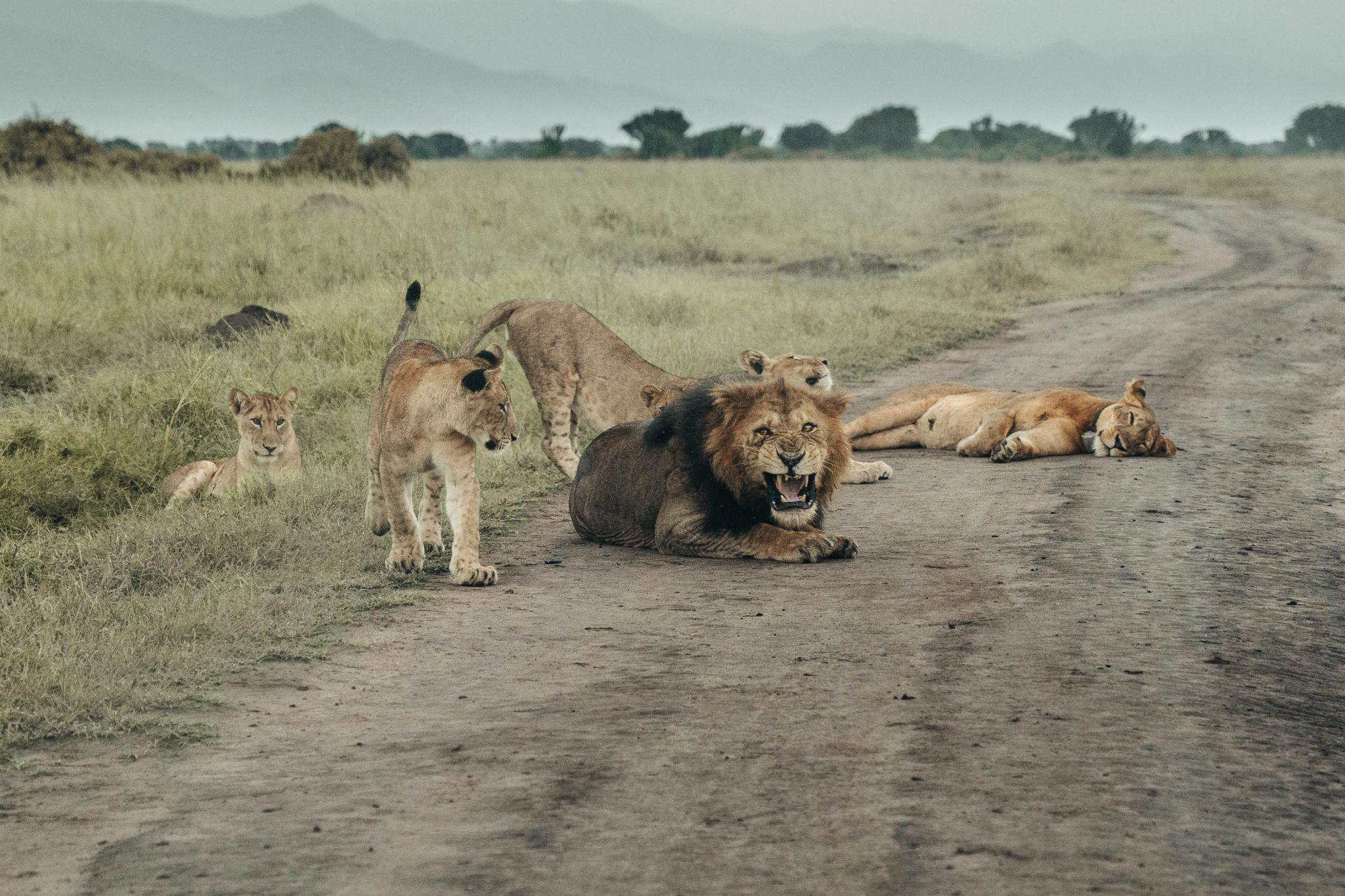
Secret 1: Why Do Lions Roar? Communication Across the Savanna
The simplest way to understand why do lions roar is to think of the African savanna as a huge communication landscape. Lions do not live in small, enclosed spaces. A pride may spread out while resting, hunting, following prey, caring for cubs or moving through its territory. Trees, tall grass, hills and other landscape features can also separate individuals. A vocal signal that travels over a long distance therefore becomes extremely useful.
A roar can function as a long-distance announcement. Rather than walking through every part of the territory searching for another lion, an animal can produce a powerful call that travels through the surrounding landscape. Another lion may answer, allowing individuals to locate one another or at least establish that another lion is nearby.
This is one reason the experience can feel almost mysterious to safari travelers. You may hear a lion without seeing one. The sound seems to come from somewhere beyond the horizon, then another response rises from a completely different direction. What sounds like a dramatic wilderness performance is actually part of a living communication network.
The precise meaning of any individual roar should not be reduced to a single translation such as “go away” or “I am angry.” Animal communication is more complicated than human speech. The meaning depends on context, the identity of the caller, the surrounding lions, territorial circumstances and what happens immediately before and after the call.
Secret 2: Roaring Can Help Defend a Lion’s Territory
One of the most important explanations for why do lions roar involves territory. Lions need access to food, water, resting areas and suitable places for raising young. A pride’s territory is therefore valuable. When unfamiliar lions enter or approach an established area, residents have strong reasons to make their presence known.
Male lions are particularly associated with territorial defence, although females also play important roles in pride defence and territorial behaviour. Roaring provides a way for lions to advertise their presence before a physical confrontation becomes necessary. A distant intruder hearing several lions calling may receive information about the strength or location of the resident group without the animals immediately meeting face to face.
This is important because physical fights between lions can be dangerous. Powerful predators do not need to fight every time they encounter one another. Communication can help establish distance and reduce the need for direct confrontation in some circumstances.
Safari insight: When you hear several lions roaring from different directions, do not automatically assume that a fight is taking place. The calls may be part of territorial advertisement, contact between pride members or other social communication.
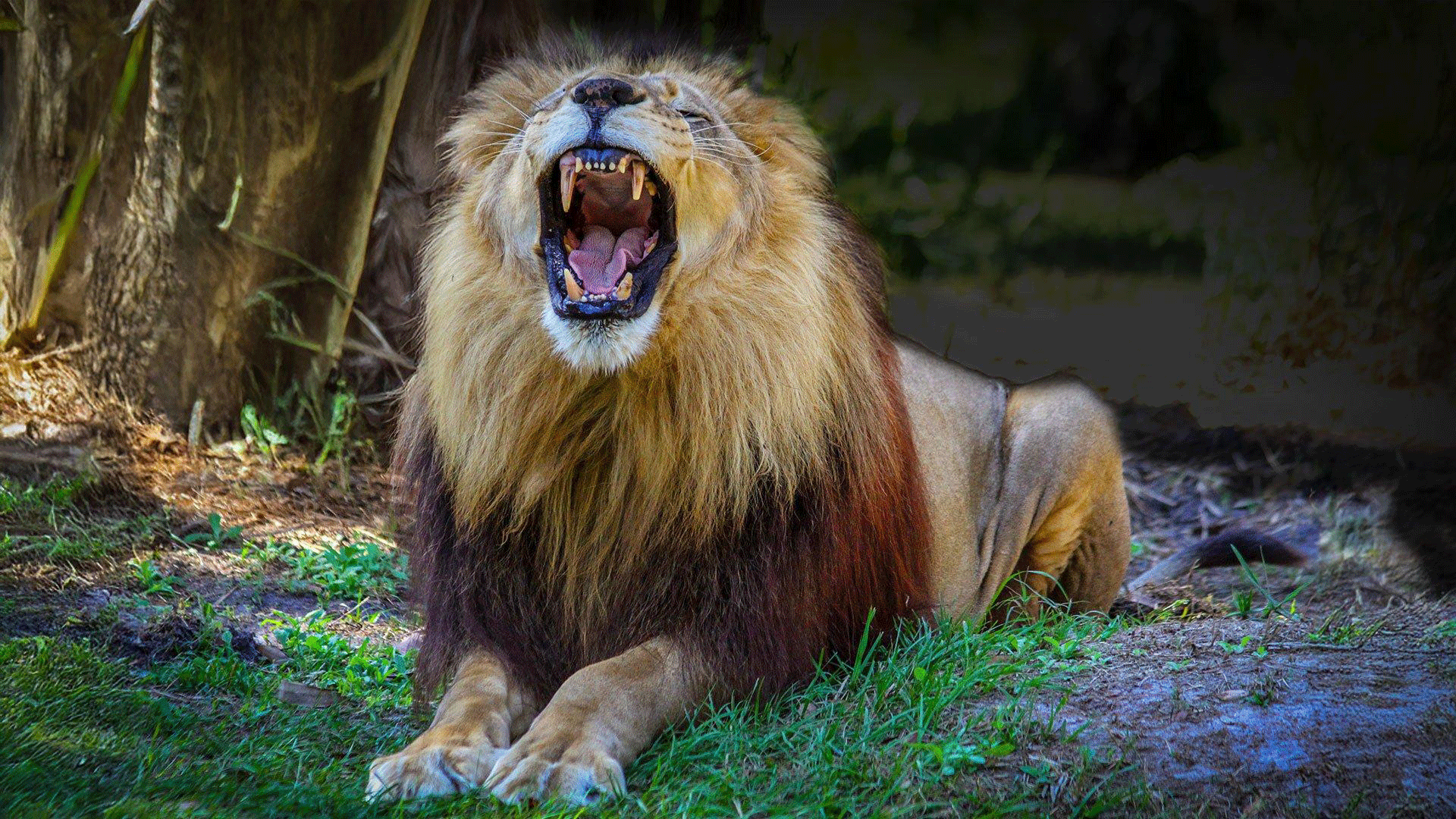
Secret 3: Roaring Helps Pride Members Stay Connected
Lions are unusual among cats because they are highly social animals. Instead of spending most of their lives alone, lions can live in family groups known as prides. These groups may contain adult females, cubs and males, although pride composition changes over time. Because members do not remain shoulder-to-shoulder every hour of the day, communication is essential.
This gives another answer to why do lions roar. A roar can help lions establish contact across distance. Imagine a pride moving through a broad savanna. One group may be resting beneath trees while another individual has moved farther away. A vocal exchange can help establish where other members are located.
Travelers sometimes hear a sequence that almost sounds like a conversation. One lion calls and another responds. Then another voice joins. Although we should avoid pretending that we know a precise human translation for every call, the exchange demonstrates that the animals are responding to sounds produced by other members of their species.
For visitors, this is one of the most beautiful things about hearing lions at dawn or after sunset. You are not merely hearing an isolated animal. You may be listening to social communication taking place across a landscape that can stretch much farther than the eye can see.
Secret 4: Lions Do Not Only Roar When They Are Angry
Movies and documentaries often use the lion’s roar as shorthand for danger, aggression and dominance. The sound is certainly intimidating, but real lion behaviour is more nuanced. A lion may roar without preparing to attack a person, another lion or anything else nearby.
This distinction is particularly important for safari travelers. If you hear a lion roar from somewhere in the darkness outside your lodge or safari vehicle, it does not automatically mean that the lion is coming toward you. The animal may be communicating with another lion several kilometres away.
Understanding this prevents one of the most common misconceptions about lion roar meaning. A roar is a communication signal, not simply an expression of anger.
Lions have a broad collection of vocal and physical signals. Growling, snarling, huffing, moaning and other sounds can occur in different social situations. Body posture, facial expression, tail movement, ear position and physical distance can also provide important information. The roar should therefore be interpreted as part of the entire behavioural picture rather than as a single emotional statement.
Secret 5: Why Do Lions Roar at Night?
One of the most frequently asked safari questions is why do lions roar at night. The answer is connected partly to the lion’s lifestyle and the conditions of the African landscape after sunset. Lions are generally more active during cooler periods and can become particularly active around evening, nighttime and early morning.
After sunset, temperatures often fall and the savanna becomes a very different environment. Many prey species become active, visibility changes and sounds can travel through the cooler, quieter landscape. For a predator that depends heavily on communication, these conditions can make vocal signals especially noticeable to human ears.
This is why a lion’s roar can become one of the defining sounds of an overnight safari experience. A guest may be lying in a tent listening to insects, distant hippos or night birds when a deep roar suddenly rolls across the wilderness. The sound can appear much closer than expected, particularly when there are few competing human noises.
The timing of roaring is not governed by a simple rule saying lions roar only after dark. Lions can vocalize during daylight too. Instead, the nighttime association reflects their behaviour and the acoustic character of the environment.
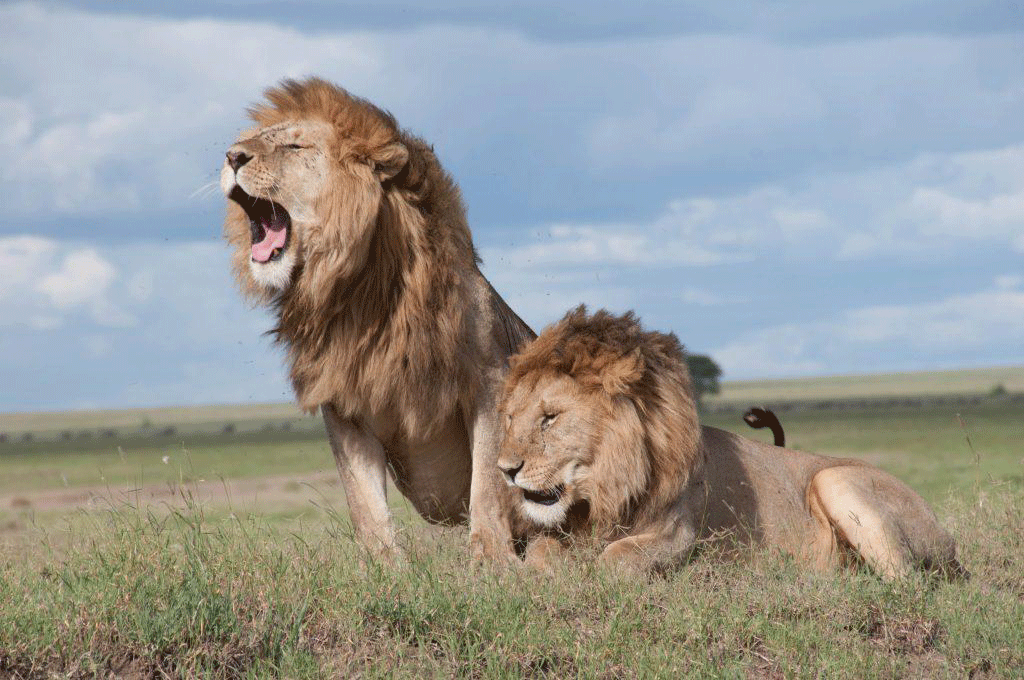
Secret 6: Both Male and Female Lions Can Roar
Another common misconception is that only male lions roar. In reality, both sexes are capable of producing the famous call. Male lions may appear especially associated with roaring because of their prominent role in territorial behaviour, but lionesses also vocalize.
This matters when interpreting a sound heard during a game drive. You should not assume that every deep call must have come from a male. Researchers and experienced guides can sometimes use differences in sound, context and behaviour to make informed observations, but identifying the sex of an unseen lion purely from a distant roar is not always straightforward.
Male lions have other obvious visual features that make them easy to identify when seen, particularly the mane. Yet roaring itself belongs to the communication system of the species rather than being an exclusive male performance.
For tourists, this is another reason to resist the temptation to assign a simple meaning to every sound. Wildlife behaviour is wonderfully complex. The more you learn, the more impressive an apparently ordinary roar becomes.
Secret 7: Other Animals Listen to Lion Roars Too
A fascinating part of the answer to why do lions roar is that lions are not the only animals paying attention. Other wildlife can hear and respond to predator vocalizations. The soundscape of the savanna is a constant flow of information, and animals have evolved to detect important signals produced by predators, prey and members of their own species.
Research on African elephants has shown that elephants can distinguish aspects of lion vocalizations, including differences associated with male and female lions. This matters because lions can pose different levels of danger depending on the situation, particularly to vulnerable young elephants.
For a safari traveler, this means that a lion roar is not simply a sound floating through empty wilderness. It can become part of a much larger ecological conversation. Prey animals may become alert. Birds may react to disturbances. Other predators may investigate or move away. A guide who understands animal behaviour may notice these reactions before guests have even located the lion.
Listen to the landscape: On safari, do not concentrate only on finding the lion. Watch how nearby animals behave after the call. Sometimes the surrounding wildlife provides clues about what is happening beyond the edge of your immediate view.
Secret 8: The Roar Is Connected to Pride Life
To understand why do lions roar, it helps to understand the social structure of lions. A pride is more than a random collection of predators. It is a social unit whose members cooperate in different ways. Females commonly hunt together and raise cubs collectively, while males can play important roles in territorial defence.
Pride life is constantly changing. Cubs grow, young males leave, new males may enter a pride and territorial relationships can shift. Roaring becomes particularly interesting in this context because it allows lions to communicate without maintaining constant visual contact.
When several lions roar together, the sound can create an impressive chorus. For someone sitting in a safari vehicle, it may feel like the entire savanna has suddenly come alive. Scientifically, however, the chorus is a reminder that lions are social cats whose survival depends partly on relationships with other lions.
The sound can also help create an acoustic impression of group presence. To another lion listening from a distance, hearing several voices can provide information that a single isolated call would not. Exactly how lions interpret every aspect of these vocal exchanges remains a subject of scientific interest, which is one reason lion communication continues to fascinate researchers.
Secret 9: Hearing a Lion Roar Is a Genuine Safari Experience
There is something special about hearing a wild lion before seeing it. A photograph gives you an image, but a roar gives you a sense of distance, direction and atmosphere. Suddenly the savanna becomes three-dimensional. You begin listening rather than simply looking.
For travelers visiting Uganda, this can happen during an evening game drive, an early morning drive or while staying at a lodge near a national park. The sound can travel through grasslands, woodland and open valleys, turning an ordinary moment into one that remains in memory long after the safari has ended.
National Geographic notes that a lion’s roar can be heard from several miles away under suitable conditions, commonly cited at up to about five miles. The exact distance naturally depends on terrain, wind, vegetation, background noise and atmospheric conditions.
That is why the question how far can a lion roar be heard does not have one fixed answer for every location. Open savanna can provide very different acoustic conditions from dense woodland or rugged terrain. Nevertheless, the roar’s ability to travel a considerable distance is one of the characteristics that makes it such an effective long-range signal.
Where Can Travelers See Lions in Uganda?
Uganda offers a remarkable range of wildlife habitats, from wetlands and open savanna to forests and mountainous landscapes. Lions are associated primarily with the country’s savanna ecosystems. According to Uganda Wildlife Authority’s 2026 State of Wildlife Resources report, lions are currently restricted in Uganda to Queen Elizabeth National Park, Kidepo Valley National Park and Murchison Falls National Park.
For travelers planning a Uganda safari, this makes these destinations particularly important for lion encounters. Queen Elizabeth National Park is famous for its Ishasha sector and its tree-climbing lions, while Murchison Falls combines broad savanna landscapes with the dramatic Nile River and waterfall. Kidepo Valley offers a more remote wilderness experience in northeastern Uganda, with expansive landscapes that feel very different from the greener western parks.
Main lion areas in Uganda: Queen Elizabeth National Park, Murchison Falls National Park and Kidepo Valley National Park.
| Uganda destination | Why it matters for lion viewing | Safari character |
|---|---|---|
| Queen Elizabeth National Park | Known for savanna wildlife and the famous tree-climbing lions of Ishasha. | Classic western Uganda safari with varied landscapes and wildlife. |
| Murchison Falls National Park | Important northern Uganda lion habitat with extensive savanna landscapes. | Wildlife viewing combined with the Nile and Murchison Falls. |
| Kidepo Valley National Park | One of Uganda’s key lion areas and a remote wilderness destination. | Remote, dramatic and exceptionally scenic savanna experience. |
Why Uganda Is a Fascinating Place to Hear Lions Roar
Uganda’s appeal is not simply that it has lions. It is the combination of wildlife, landscapes, culture and relatively varied safari environments within one country. A traveler may move from the savanna of Murchison Falls to the forests of Kibale, continue toward Queen Elizabeth and eventually reach the misty mountains of Bwindi. The experience is not built around one animal.
That variety makes a lion encounter particularly memorable. You might spend hours watching elephants, buffalo, antelope and birds before your guide suddenly slows the vehicle and points toward a distant shape. Perhaps a male lion is resting beneath a tree. Perhaps a lioness is moving through the grass. Or perhaps you hear the roar first and spend several minutes searching the horizon before the animal finally reveals itself.
For travelers who want to understand why do lions roar, listening carefully during these encounters can add a completely different dimension to the safari. Instead of simply waiting for a photograph, you begin noticing direction, repetition, distance and the response of other animals.
What Should You Do If a Lion Roars Near Your Safari Vehicle?
A close lion encounter can be exciting, but wildlife should always be treated as wild. A safari vehicle does not turn a wild animal into a tame animal. The safest approach is to remain calm and follow the instructions of your professional guide.
If a lion roars nearby, remain inside the vehicle unless your guide has specifically directed you otherwise. Do not shout at the lion, imitate its roar, throw objects, attempt to attract its attention or stand up unnecessarily for a photograph. Sudden movements and loud human behaviour can disturb wildlife and may create an unsafe situation.
Professional guides understand animal behaviour, vehicle positioning and the regulations of the protected area. Their instructions should take priority over getting the perfect photograph.
Important: Never treat a lion’s roar as an invitation to approach. Keep a respectful distance from wildlife and follow the rules of the national park and the instructions of your guide.
How Does a Lion Produce Such a Powerful Roar?
The physical structure of a lion’s vocal system plays a major role in the famous sound. Lions belong to the group of big cats capable of roaring, and their specialized laryngeal structures allow them to produce a call that is dramatically different from the sounds made by domestic cats.
The result is not simply loudness. The lion’s call has a distinctive low, rough and resonant quality that can travel across open landscapes. When experienced from close range, the sound can feel surprisingly physical. From farther away, it can seem to roll across the horizon.
This is one reason a lion’s roar has become so deeply connected with the image of the African wilderness. It is simultaneously biological communication and an extraordinary acoustic adaptation to life in a large landscape.
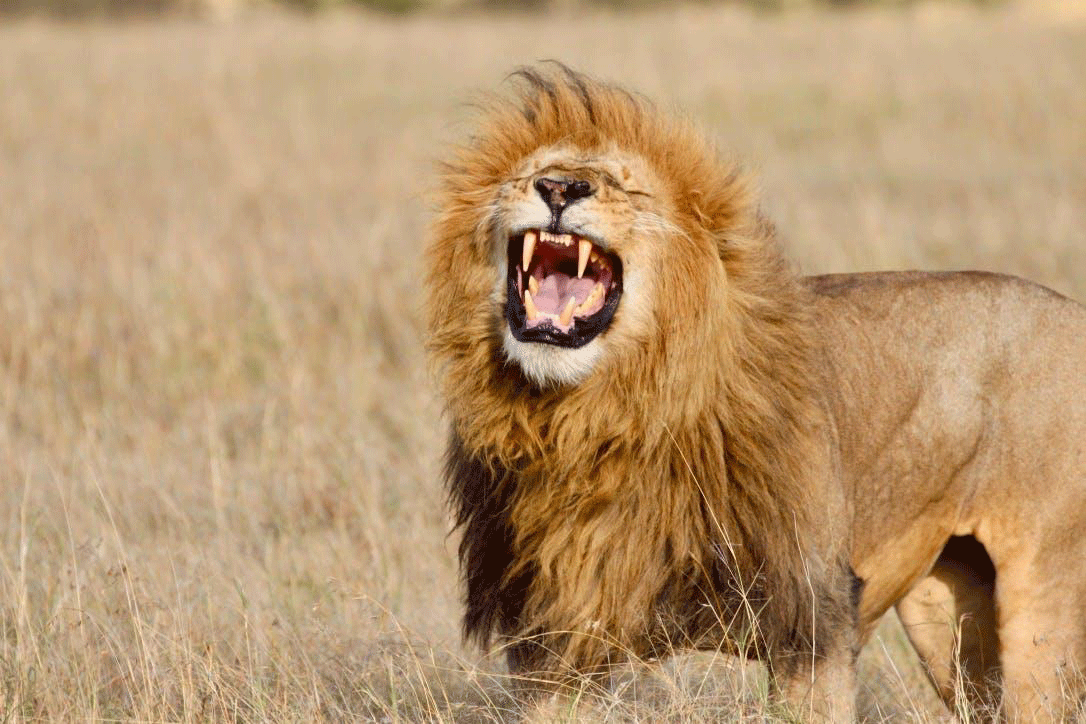
Frequently Asked Questions About Lion Roars
Why do lions roar at night?
Lions can roar at different times, but their activity and vocal communication are often particularly noticeable during evening and nighttime. Cooler conditions and quieter surroundings can make their calls especially prominent. This is why safari travelers frequently associate the lion’s roar with the African night.
Why do male lions roar?
Male lions can roar as part of communication and territorial behaviour. A roar can advertise presence and help communicate with other lions across distance. However, roaring is not exclusively a male behaviour; females can roar as well.
Can lionesses roar?
Yes. Lionesses are capable of roaring. The idea that only males roar is a common misconception.
How far can a lion roar be heard?
Under favourable conditions, a lion’s roar can travel several miles. National Geographic commonly gives an upper estimate of around five miles, or approximately eight kilometres. Actual acoustic range varies according to terrain, vegetation, wind and background noise.
Do lions roar before hunting?
A roar should not automatically be interpreted as a hunting signal. Lions have several reasons for vocalizing, including communication and territorial behaviour. A lion may roar when no hunt is taking place.
Does a lion roar mean it is angry?
Not necessarily. Roaring is a communication behaviour and can occur in different social contexts. It should not be interpreted as a simple equivalent of human anger.
Do lions roar to find each other?
Long-distance vocalization can help lions maintain contact across a large landscape. This is particularly useful for a social species whose members may become separated while moving, resting or hunting.
Can elephants hear lions?
Yes. Research has shown that African elephants can respond differently to lion vocalizations and can distinguish characteristics such as whether the sound came from a male or female lion.
Are lions dangerous when they roar near tourists?
A nearby roar does not automatically mean that a lion is approaching tourists. However, lions are wild predators and must always be treated with respect. Stay inside the safari vehicle and follow your guide’s instructions.
Where can I see lions in Uganda?
Uganda’s principal current lion areas are Queen Elizabeth National Park, Murchison Falls National Park and Kidepo Valley National Park. Queen Elizabeth is particularly famous for its tree-climbing lions in the Ishasha sector.
The Deeper Meaning Behind the Lion’s Roar
So, why do lions roar? There is no single-word answer. A roar can communicate across distance, help lions maintain contact, advertise presence, contribute to territorial behaviour and form part of the complex social life of the pride. It is not simply a sound of anger, and it should not be treated as a universal message with one fixed translation.
Perhaps the most beautiful part of the lion’s roar is that it reminds us how much is happening in the wilderness beyond what human eyes can immediately see. A lion hidden behind tall grass may be communicating with another animal kilometres away. A pride resting under trees may suddenly answer a distant call. Elephants may become alert. Antelope may lift their heads. The entire soundscape can change because one predator has announced its presence.
For safari travelers, learning the lion roar meaning makes the encounter richer. Instead of simply hearing a frightening noise in the darkness, you begin to understand that you are listening to an ancient communication system shaped by evolution and adapted to the vast African landscape.
And when that first deep roar rolls across the Ugandan savanna, there is no need to rush. Sit quietly. Listen to where it came from. Watch the reactions of nearby animals. Let your guide explain what may be happening. Sometimes the most unforgettable wildlife moment is not the one where an animal walks directly toward your vehicle. Sometimes it is the moment when you hear something in the distance and suddenly realize that a wild lion is somewhere out there, communicating across the African night.
Why Protecting Uganda’s Lions Matters
A lion encounter is exciting for visitors, but the importance of lions goes far beyond tourism. Lions are apex predators and form an important part of African ecosystems. Their presence is connected to prey populations, predator relationships and the wider health of savanna habitats.
Uganda’s current wildlife assessments show that lions remain under significant conservation pressure. The 2026 State of Wildlife Resources report classifies Uganda’s lion as Critically Endangered on the national Red List, while the global IUCN category is Vulnerable. The same report records an estimated national decline from 373 lions in 2020 to 291 in the 2022/2023 census.
This makes responsible tourism particularly meaningful. When travelers visit protected areas, employ local guides, stay at conservation-conscious lodges and support legitimate wildlife tourism, their journeys can contribute to an economic system in which living wildlife has long-term value.
A roaring lion is therefore more than a spectacular safari sound. It is also a reminder that the wilderness we enjoy is something worth protecting for future generations.
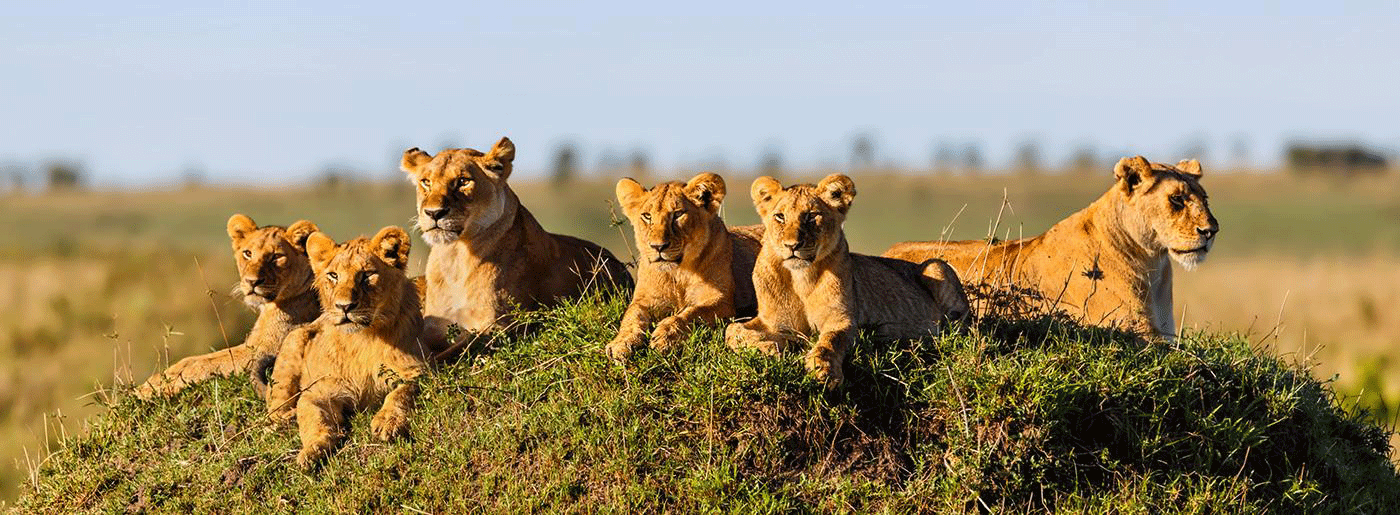
Ready to Experience Uganda’s Wild Side?
From roaring lions and elephants to chimpanzees, gorillas and breathtaking landscapes, Uganda offers an unforgettable safari experience. Explore Uganda with a knowledgeable local safari team and discover the wildlife beyond the photographs.