What Happens When a Young Mountain Gorilla Leaves Its Birth Family?
Explore the extraordinary transition from growing up in a protected gorilla family to finding independence, new companions, and sometimes a family of one’s own.
What happens when a young mountain gorilla leaves its birth family? The answer depends on whether the gorilla is male or female, its age, the structure of its original group, and the opportunities it encounters. A young female may transfer directly to another gorilla group or join a solitary male. A maturing male may leave to travel alone, later attract females and establish a new family. Others never leave: they remain with relatives and can eventually become influential adult members of their original group.
Understanding why a young mountain gorilla leaves its family reveals the remarkable social complexity of these endangered primates. Their choices shape mating opportunities, group leadership, genetic diversity and the future of mountain gorilla populations in Uganda, Rwanda and the Democratic Republic of the Congo.
What Does It Mean When a Young Mountain Gorilla Leaves Its Family?
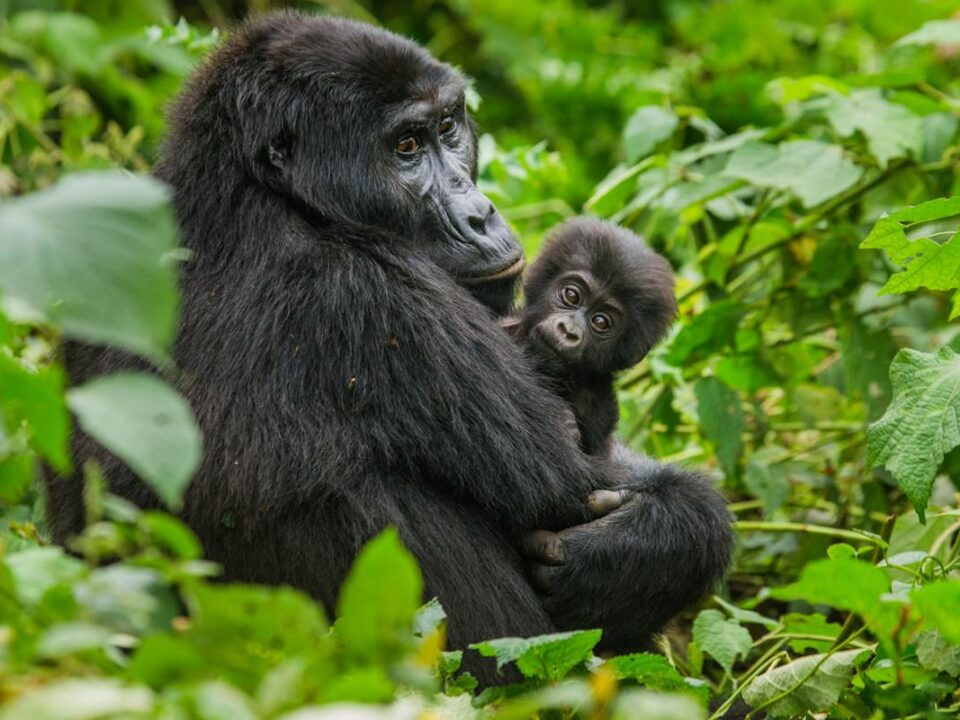
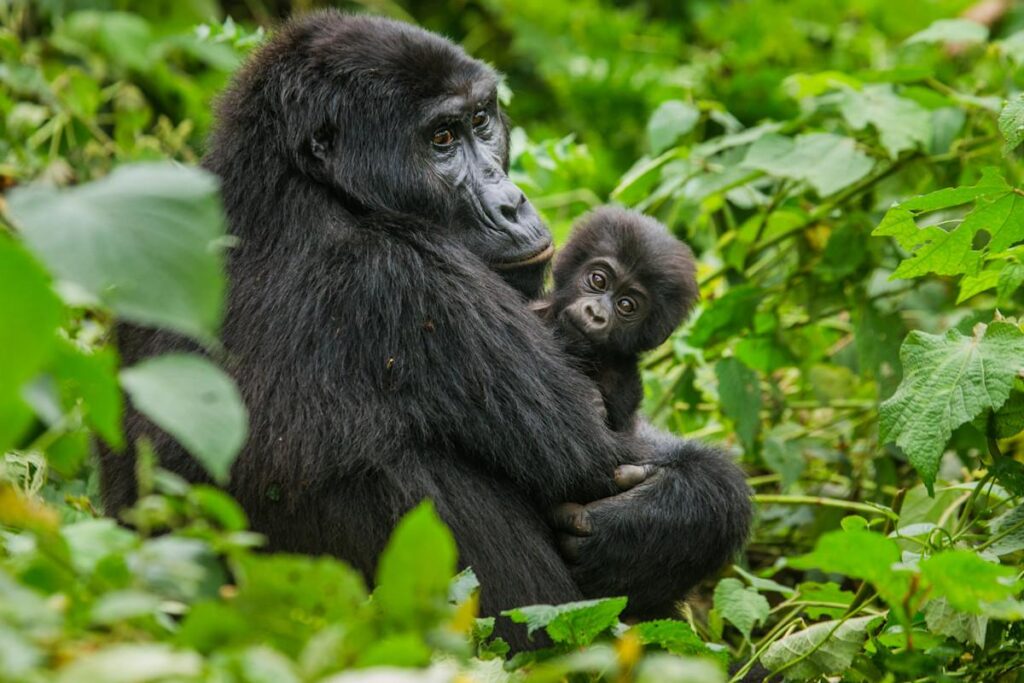
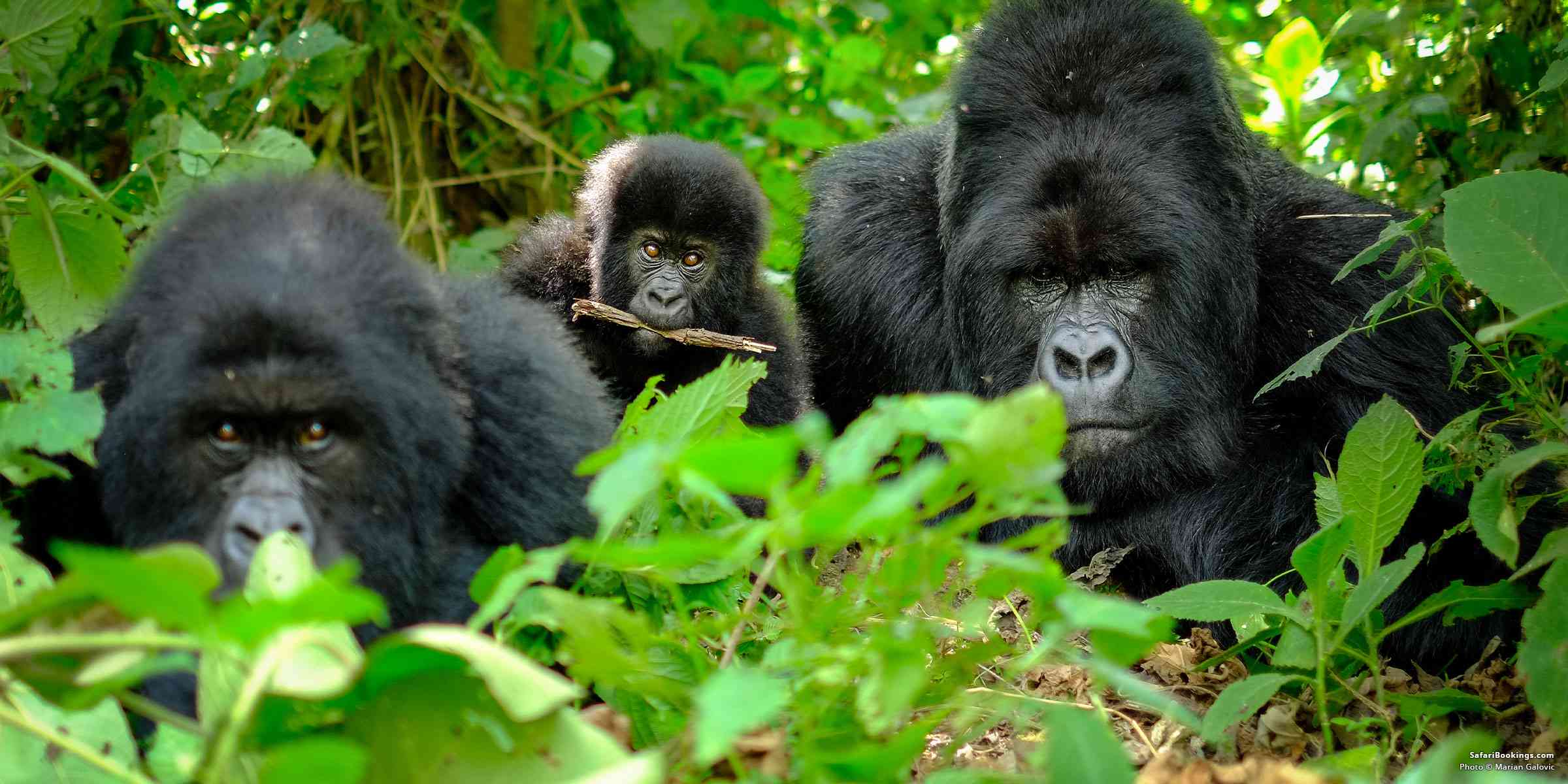
Mountain gorillas live in social groups that typically include a dominant adult male, often called a silverback, adult females, infants and younger gorillas. Some groups contain multiple adult males. Young gorillas grow up surrounded by familiar individuals, learning where to feed, how to interact, when to rest and how to respond to social signals.
When a young mountain gorilla leaves its family of birth, scientists describe this as natal dispersal. It is distinct from a female transferring again later in adulthood, known as secondary dispersal. Departure does not necessarily mean the animal was rejected or that the family has broken apart. It can be a normal part of reproduction and social development.
Visitors interested in these relationships can also read what gorillas do after tourists leave, which explores their daily routines beyond the short trekking encounter.
Why Does a Young Mountain Gorilla Leave Its Birth Family?
1. Finding reproductive opportunities
As gorillas mature, their reproductive prospects change. A male living under a dominant silverback may have limited opportunities to mate. Leaving can create the possibility of attracting females and forming a group, although that outcome is far from guaranteed. Female transfers also shape which males and social groups they reproduce with.
2. Avoiding close-relative mating
Dispersal can help reduce inbreeding, particularly for females moving away from their natal relatives. However, research shows that female mountain gorilla decisions are more complex than a simple rule to leave whenever their father is present. Some females remain in their original groups, and social circumstances can influence whether they transfer.
3. Responding to the number of adult males
A group containing several adult males may offer different social and protective conditions from a group with just one silverback. Research in the Virunga population has found that natal female dispersal is associated with group composition and possible risks to future infants.
4. Social bonds and family history
Relationships matter. A young gorilla’s mother, other adult females, siblings and silverbacks can influence its development. Studies of maternal loss show that some young males that lose their mothers are more likely to leave earlier, while the effects for females are less straightforward. There is no universal timetable.
5. Opportunities during encounters between groups
Mountain gorilla groups sometimes meet while traveling or feeding. These encounters can create opportunities for females to transfer. A female may evaluate a prospective group through social interactions rather than leaving at a fixed birthday.
What Happens When a Young Female Mountain Gorilla Leaves Its Family?
A young female reaching reproductive maturity may leave her birth group and move into another established family or associate with a solitary male. This is not the same as a young infant becoming separated from its mother. Natal dispersal generally concerns maturing animals capable of making a social transition.
Moving directly into another group
Female gorillas usually do not need to spend a long period living alone between groups. Transfers often happen during encounters with another group or male. Once in a new social setting, the female establishes relationships with unfamiliar individuals. Acceptance and the precise pattern of interaction can vary.
Choosing a solitary male
Sometimes a female joins a lone silverback. If additional females join and offspring are born, a new breeding group can develop. Such events are important for the formation and changing composition of mountain gorilla families.
Can a female stay with her birth family?
Yes. Not every female disperses before having offspring. Scientific studies have documented females reproducing in their natal groups, highlighting how flexible mountain gorilla social behavior can be. For this reason, the statement that every young mountain gorilla leaves its family is incorrect.
What Happens When a Young Male Mountain Gorilla Leaves Its Family?
For a maturing male, the transition can be particularly striking. Male gorillas gradually develop the large bodies and silver-backed hair associated with mature silverbacks. Yet becoming a silverback does not automatically mean becoming the leader of a family
Stage 1: Growing up under a silverback
Young males spend years in their original groups learning the social signals and daily routines of gorilla life. They may play with younger animals, interact with adult males, and become increasingly independent. Their relationships with dominant and subordinate silverbacks can vary considerably.
Stage 2: Remaining or dispersing
Some adult males stay with their birth group as subordinate silverbacks. Others depart, sometimes alone and sometimes with females. Research in the Virungas found that dispersal decisions were not necessarily preceded by rising aggression from the dominant male. Leaving should therefore not automatically be described as a violent expulsion.
Stage 3: Solitary life
A dispersing male may live alone for months or years. He must forage, move and respond to other gorillas without the regular company of his original family. Solitary males can encounter females transferring from other groups, but not every solitary male succeeds in founding a breeding group.
Stage 4: Building or inheriting a group
A male can eventually attract females and form a new group. Others gain dominant status by remaining in a multimale group and succeeding an older leader. Group fission, where one group divides, is another pathway. The life story of a silverback is therefore more varied than the popular image of a lone male simply fighting his way to leadership.
Female dispersal
Usually involves direct transfer to another group or solitary male, with important consequences for mating and future offspring.
Male dispersal
May involve a solitary period, eventual group formation, or alternative leadership pathways if the male remains in his natal group.
What Is Life Like After a Young Mountain Gorilla Leaves Its Family?
Life after natal dispersal depends strongly on the gorilla’s sex and destination. A transferred female may immediately have other gorillas around her, whereas a solitary male may face a very different social environment. In both cases, the animal continues to depend on access to suitable forest habitat, familiar food resources and opportunities to navigate encounters with other gorillas.
Finding food and moving through the forest
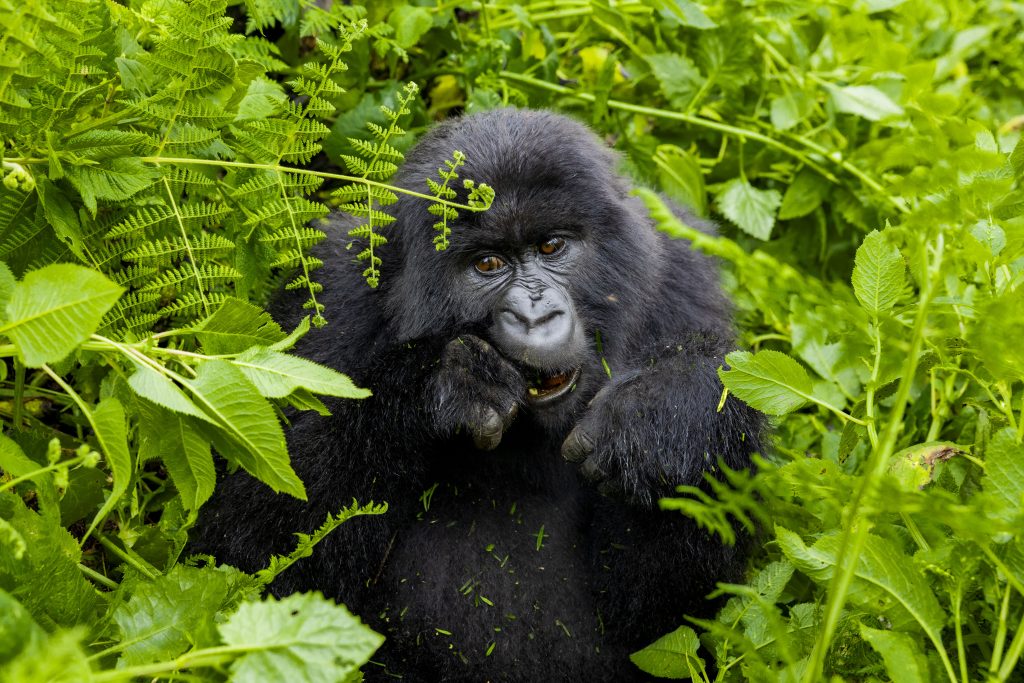
Mountain gorillas eat primarily vegetation, including leaves, stems, shoots and other plant materials. They travel between feeding and resting areas. A dispersing gorilla must continue meeting its nutritional needs while responding to changing social circumstances. Dispersal does not mean abandoning normal feeding and resting behavior.
Developing new social relationships
For females, joining a new group introduces unfamiliar companions and possible new reproductive partners. For males, solitude can be followed by new social relationships if females join. These transitions can influence the composition of groups for many years.
Can gorillas return to their birth groups?
Some males make visits to their natal groups before permanently departing. Such movements have been documented in long-term research. However, a return visit should not be confused with a permanent reunion, and scientists do not assume gorillas experience these events in exactly the same emotional way humans do.
What Challenges Does a Young Mountain Gorilla Face After Leaving?
Dispersal brings uncertainty. A solitary male may not attract females for a long time. A female’s reproductive prospects can depend on her new group’s structure. Encounters between groups may involve displays or aggression, while infant safety is an important factor in the broader evolution of gorilla social organization.
Habitat loss, disease exposure and human disturbance are additional conservation concerns for mountain gorillas as a species. Protecting connected and well-managed habitat helps ensure gorillas can continue their natural movements and social processes. Visitors should always follow ranger instructions and never approach or interfere with a dispersing gorilla.
What Does Science Tell Us About Young Gorilla Dispersal?
Decades of field research show that a young mountain gorilla leaving its family is not governed by one simple rule. A study of male gorillas in Bwindi, using records collected between 1993 and 2017, documented multiple routes to becoming a dominant male and found that at least a quarter of males dispersing to become solitary eventually formed new groups. This is a minimum estimate from that study, not a guaranteed success rate for every male.
Research on females in the Virunga Mountains found that group composition and potential infant protection influenced dispersal patterns. Other studies have examined how maternal loss and social relationships shape young gorillas’ decisions.
For readers who want the primary evidence, consult the peer-reviewed Bwindi male dispersal study, the study of female natal dispersal, and research on maternal loss and mountain gorilla social groups.
| Question | What research indicates |
|---|---|
| Do all young males leave? | No. Some remain in their natal groups, while others disperse. |
| Do females live alone after leaving? | They generally transfer directly to another group or a solitary male. |
| Are males always driven out? | No. Departure can be voluntary and does not always follow aggression. |
| Does every solitary male form a family? | No. Group formation is possible but not assured. |
| Does every female leave? | No. Some females remain and reproduce in their birth groups. |
Where Can Visitors Observe Mountain Gorilla Family Life in Uganda?
Bwindi Impenetrable National Park
Bwindi is a leading destination for seeing mountain gorillas in their natural forest environment. Trekking sectors include Buhoma, Ruhija, Rushaga and Nkuringo. Habituated groups allow carefully managed visitor encounters, but sightings of a specific behavior, such as dispersal, can never be promised. Start with the complete Bwindi gorilla trekking guide.
Mgahinga Gorilla National Park
Mgahinga protects mountain gorilla habitat in the Virunga landscape of southwestern Uganda. Travelers comparing the two parks can read Bwindi versus Mgahinga gorilla trekking.
How to observe responsibly
Join a licensed guided trek, follow the ranger’s instructions, keep the required distance, avoid flash photography, and never attempt to follow an individual gorilla away from the group. Trekking is a chance to observe natural behavior, not to stage encounters or influence animal movements.
To understand how professionals locate groups, see how gorilla trackers find mountain gorillas in Bwindi. For travelers deciding between destinations, consult Uganda versus Rwanda gorilla trekking.
Plan Your Gorilla Trekking Safari with Pride Mark Safaris
Interested in watching young gorillas play, observing silverback leadership and learning about family relationships? Pride Mark Safaris can help you explore a suitable Uganda gorilla trekking itinerary. Natural behaviors cannot be guaranteed, but every respectful encounter offers an opportunity to learn.
Frequently Asked Questions About Young Mountain Gorillas Leaving Their Families
At what age does a young mountain gorilla leave its family?
There is no universal age. Females often transfer around reproductive maturity, while male dispersal frequently happens later, around physical maturity. Timing varies between individuals and groups.
Do young male mountain gorillas always leave their birth family?
No. Some males remain in their natal groups and may later become dominant there. Others disperse and may live alone before forming a group.
Do female mountain gorillas join other families?
Yes. Females commonly transfer directly into another group or join a solitary male, although some remain in their natal groups.
Are young gorillas forced to leave by the silverback?
Not necessarily. Scientific research has documented male departures without evidence of increasing aggression by the dominant silverback beforehand.
Can a lone silverback establish a new family?
Yes. A solitary male may attract females and establish a breeding group, although some solitary males do not succeed.
Can tourists witness a young gorilla leaving its family?
It is possible to witness social encounters and family interactions, but an actual dispersal event is unpredictable and should never be promised as part of a safari.
Why is mountain gorilla dispersal important for conservation?
Dispersal affects group formation, mating opportunities and population structure. Protecting mountain gorilla habitats and reducing human disturbance helps preserve these natural processes.
Final Thoughts: A New Chapter in Mountain Gorilla Life
When a young mountain gorilla leaves its family, the outcome is not always the same. A female may enter a new group and eventually raise offspring there. A male may remain close to relatives, depart for solitary life, or one day become the leader of a new family. These varied life histories are part of what makes mountain gorilla society so fascinating.
By visiting responsibly and supporting habitat protection, travelers help make it possible for future generations of gorillas to continue these natural social journeys. Explore more through Pride Mark Safaris’ Bwindi trekking guide and Uganda safari planning resources.