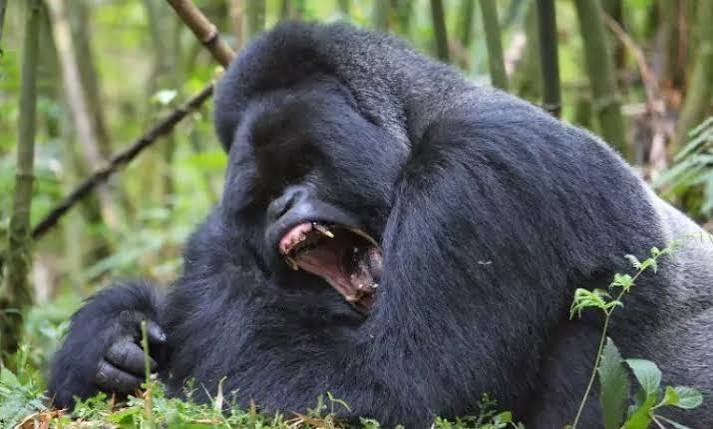
Do Mountain Gorillas Recognise Individual Humans?
7 amazing facts about gorilla memory, familiar faces, ranger relationships and what a wild gorilla may notice during your Uganda trekking experience.
Do mountain gorillas recognise individual humans? The most scientifically careful answer is that gorillas are capable of distinguishing familiar individuals, and published observations of captive great apes include recognition of particular humans. However, researchers have not conclusively demonstrated how reliably wild mountain gorillas identify specific tourists, or how long they remember each visitor. Gorillas’ familiarity with regular trackers and rangers is plausible, but should not be confused with proof that every gorilla recognises every human face.
Do Mountain Gorillas Recognise Individual Humans? What Science Actually Says
It is tempting to interpret a mountain gorilla’s long glance as personal recognition. Yet a look alone cannot establish that the animal knows who you are. Recognition is a specific cognitive claim: the gorilla must discriminate one person from others based on previously learned information. Researchers must also distinguish recognition of a familiar person from a response to clothing, movement, sound or routine.
A 2024 peer-reviewed report on great apes recognising familiar humans documented spontaneous recognition involving two individual zoo apes, including a gorilla, despite time passing and face coverings. The sample was small and the animals were not wild mountain gorillas. A separate study of visual discrimination in apes found evidence that a gorilla could use physical features to distinguish familiar from unfamiliar individuals. Together these findings support a capacity for familiarity-based discrimination, not a blanket claim that every mountain gorilla remembers tourists.

7 Amazing Facts About Mountain Gorilla Recognition and Memory
1. Familiarity matters
Repeated encounters provide more opportunities to learn a person’s distinctive appearance, movements and routine than a single brief visit.
2. Gorillas are visually attentive
Gorillas observe faces, body posture and movement. But a gorilla looking at a visitor does not necessarily mean it recognises that person.
3. Memory supports complex social life
Gorillas maintain long-term relationships within family groups. This makes individual recognition biologically plausible, although recognising fellow gorillas is not identical to recognising humans.
4. Other cues may contribute
Voices, smells, clothing and behaviour could help animals distinguish encounters. The relative importance of each cue in wild mountain gorillas is not firmly established.
5. Calmness is not proof of recognition
Habituated gorillas may continue feeding near people because they have learned that properly managed human visits are generally non-threatening.
6. One tourist visit is different
Most trekkers spend only a limited observation period with a gorilla group. There is no sound basis to promise that a gorilla will remember an individual visitor months later.
7. Wild gorillas remain wild
Even when gorillas appear relaxed, they can respond defensively to crowding, sudden movements or perceived threats. Their behaviour must always be interpreted by trained rangers.
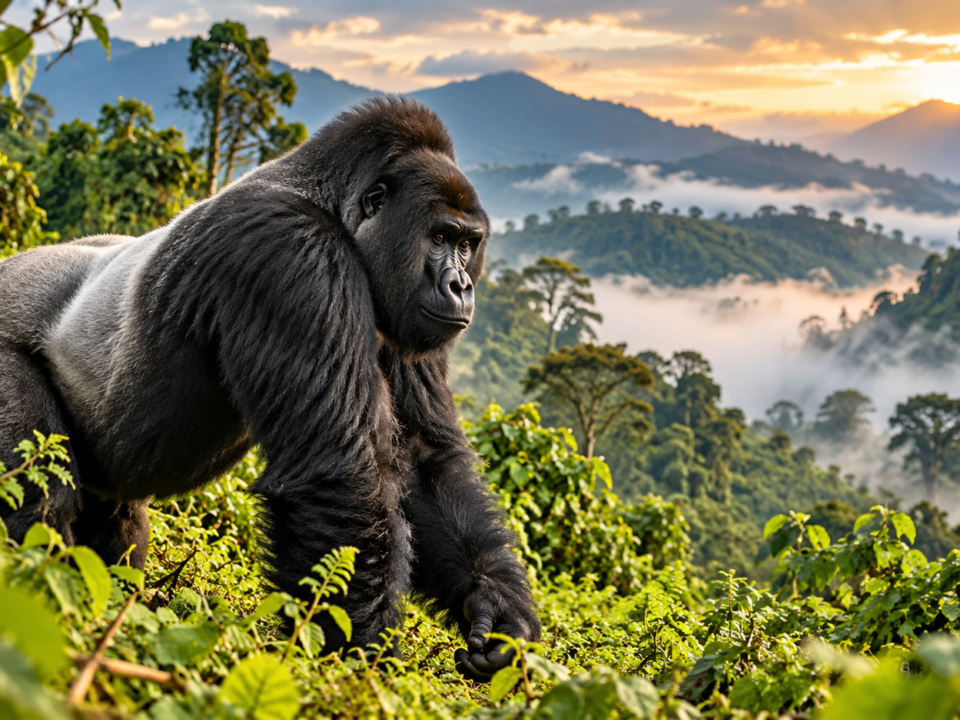
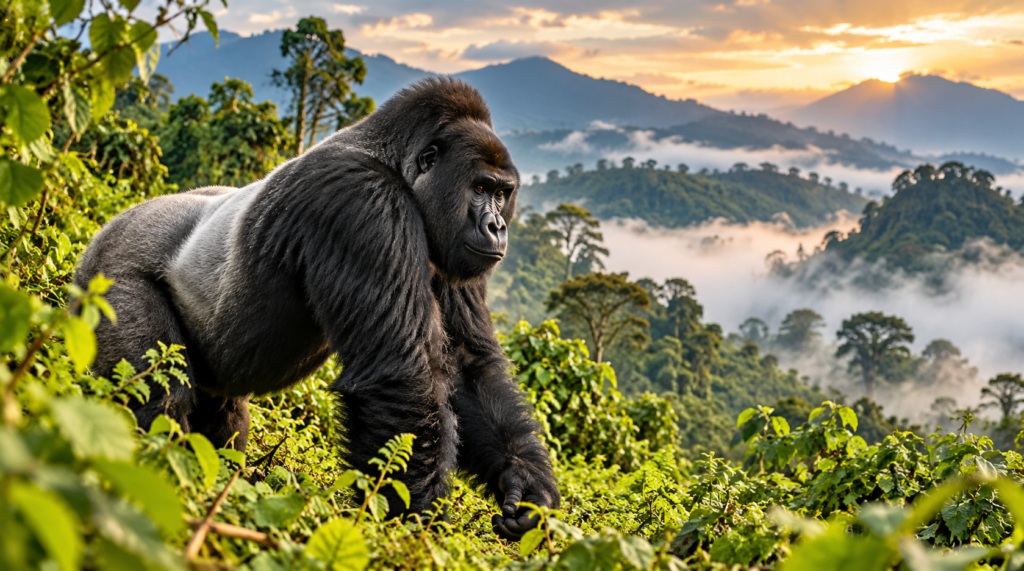
See Mountain Gorillas in Their Natural Habitat
Explore Uganda’s rainforest with experienced local safari planning and authorised park rangers.
Do Mountain Gorillas Recognise Individual Rangers and Trackers?
One of the most interesting versions of the question “Do mountain gorillas recognise individual humans?” concerns the people who work in gorilla habitat regularly. Trackers and rangers may encounter the same habituated families over long periods, creating repeated exposure. It is reasonable to hypothesise that gorillas learn cues associated with familiar staff. Nevertheless, claims that a named gorilla definitely remembers a named ranger should be backed by systematic evidence rather than an anecdote.
Rangers locate gorillas by reading nests, feeding traces and other forest signs. Read PrideMark Safaris’ detailed explanation of how gorilla tracking in Bwindi works. A successful tracking encounter should never be presented as evidence that the gorillas were waiting for, or recognised, the people arriving.
Can Mountain Gorillas Tell Different Tourists Apart?
Possibly, but a tourist’s experience offers no reliable test. A mountain gorilla may turn towards a visitor, pause, resume eating or move away for many reasons. These include the visitor’s position, sound, proximity and the gorilla’s own immediate activity. Visitors should avoid interpreting eye contact as an invitation to approach.
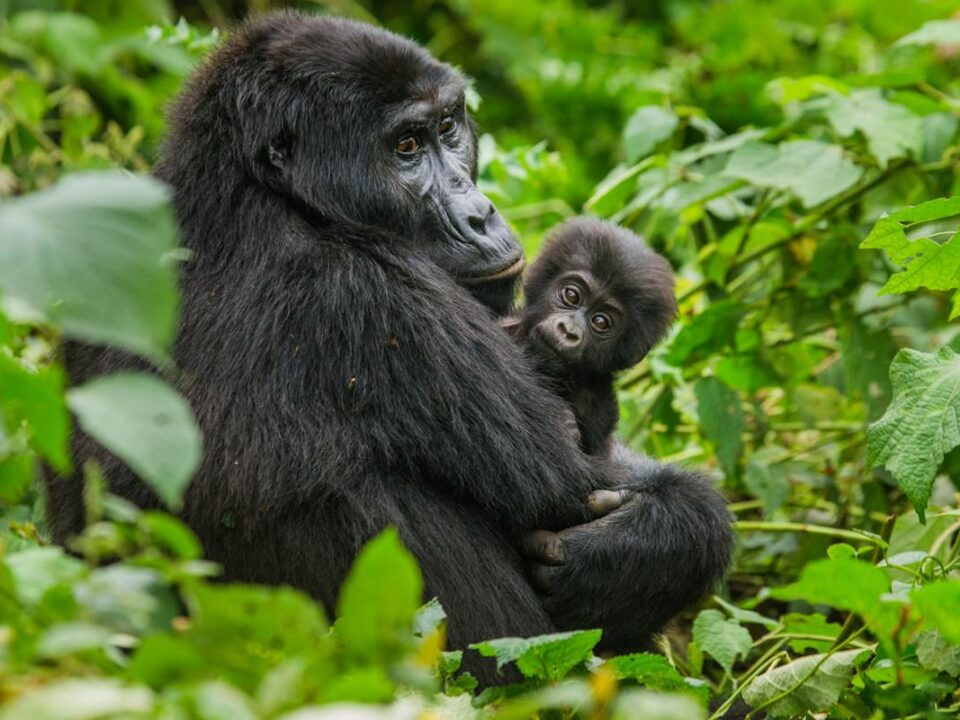
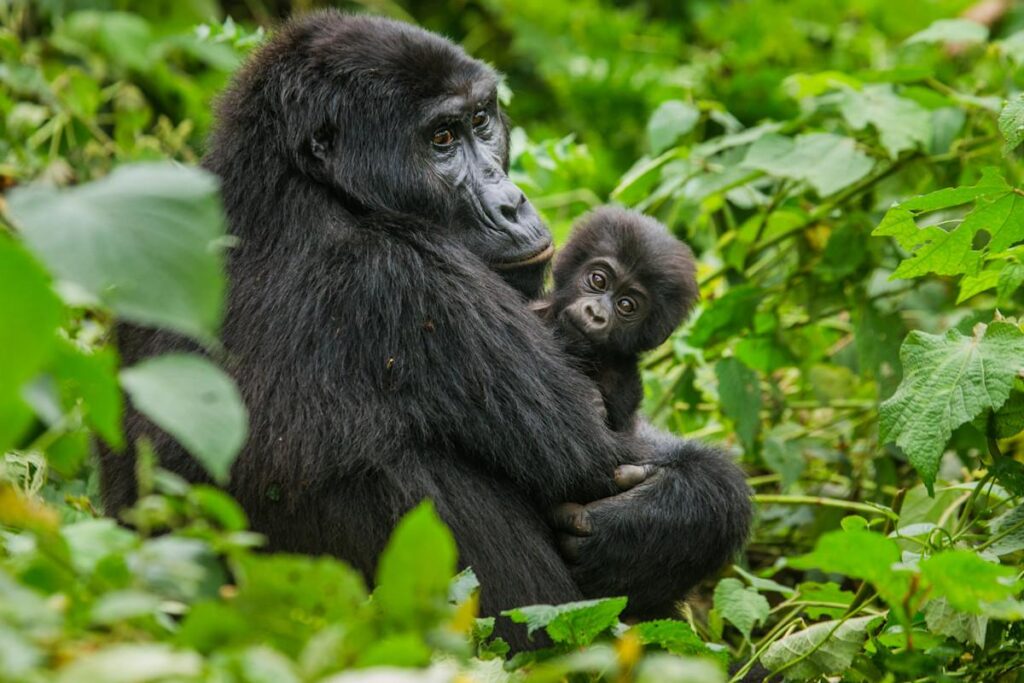
For travellers wondering whether mountain gorillas recognise individual humans, the most rewarding approach is to watch natural behaviours: feeding, grooming, resting, interactions between mothers and infants, and the quiet leadership of a silverback. Our article about what gorillas do after tourists leave explains why a short visit is only one moment in a gorilla family’s day.

Gorilla Habituation Is Not the Same as Human Friendship
Habituation is the gradual process through which wild gorillas become accustomed to the presence of carefully managed human observers. The aim is to reduce disturbance during conservation monitoring and regulated visits, not to tame gorillas or make them dependent on people. Habituation does not mean the animals are pets, want physical contact or can safely be approached without ranger instructions.
Uganda offers both standard gorilla trekking and a specialised habituation experience under different arrangements. Compare the options in gorilla trekking versus gorilla habituation. For destination planning, our Bwindi versus Mgahinga guide helps visitors choose between Uganda’s two mountain gorilla trekking parks.
How to Behave Around Mountain Gorillas
Whether or not mountain gorillas recognise individual humans, visitors have a responsibility to protect them. Follow your ranger’s briefing and the current instructions of the Uganda Wildlife Authority. Maintain the park-required distance, avoid touching gorillas, remain quiet, do not use flash photography and never visit when you are ill with a potentially transmissible infection. If a gorilla approaches, follow the ranger’s direction rather than attempting to touch or retreat abruptly.
Human respiratory infections are an important conservation concern for great apes. Respectful distance and strict health rules matter far more than attempting to attract an animal’s attention. Read why touching gorillas is not allowed before planning your trek.
Where Can You Observe Mountain Gorillas in Uganda?
Bwindi Impenetrable National Park offers several trekking sectors and a range of lodge choices. Mgahinga Gorilla National Park offers a volcanic landscape in the Virunga region. Both provide opportunities to observe habituated wild gorilla groups with authorised guides. Start with our complete Bwindi gorilla trekking planning guide or compare Uganda and Rwanda gorilla trekking.
Short Gorilla Adventure
Focus on a gorilla trek and the spectacular landscapes of southwestern Uganda.
Gorillas & Wildlife Safari
Combine Bwindi with savannah wildlife, scenic drives and Uganda’s other remarkable experiences.
Frequently Asked Questions: Do Mountain Gorillas Recognise Individual Humans?
Do mountain gorillas recognise individual humans?
Gorillas can distinguish familiar individuals, and some captive great apes have shown recognition of specific people. Direct evidence about reliable recognition of individual humans by wild mountain gorillas is still limited.
Can gorillas remember a ranger they see regularly?
It is plausible because repeated encounters allow learning, but the strength and duration of individual recognition in wild mountain gorillas require further research.
Will a mountain gorilla remember me if I return next year?
There is no reliable scientific basis for promising that a particular wild mountain gorilla will recognise a tourist after a year.
Do mountain gorillas recognise human faces?
Studies of captive gorillas and other apes indicate abilities relevant to facial and familiarity discrimination. These findings should not be automatically generalised to all wild mountain gorillas.
Do gorillas make friends with tourists?
No. Habituation is tolerance of managed human presence, not a friendship or invitation to interact.
Can I make eye contact with a silverback?
Follow the ranger’s instructions. Do not stare challengingly, approach or attempt to provoke a reaction.
Is gorilla trekking safe?
Authorised treks are carefully managed, but gorillas are powerful wild animals. Safety depends on following park regulations, guide instructions and appropriate health precautions.
Final Answer: Do Mountain Gorillas Recognise Individual Humans?
Do mountain gorillas recognise individual humans? Their cognitive abilities make it possible, and research with other gorillas and great apes offers intriguing supporting evidence. What remains uncertain is precisely how wild mountain gorillas identify familiar humans, and whether they remember individual tourists after a single encounter. The best way to appreciate these animals is not to seek their recognition, but to observe their natural lives respectfully.
Plan a Meaningful Uganda Gorilla Safari
PrideMark Safaris can help you explore Bwindi, compare trekking routes and organise a private journey that respects mountain gorilla conservation.