For travelers considering gorilla trekking with a hip replacement, the central issue is not simply whether the implant has healed. Balance, muscle strength, confidence, endurance, other health conditions, and the ability to descend safely all matter. The route is guided by the gorillas’ location, which can change. No tour operator can guarantee a short or easy walk, even when mobility needs have been discussed in advance.
Working with PrideMark Safaris can help you compare the practical differences between 3-day Uganda gorilla trekking safari, 3-day Uganda gorilla flying luxury safari, and longer itineraries. Your orthopedic surgeon or rehabilitation clinician should assess your personal medical readiness. The aim is to bring those two kinds of expertise together: clinical advice about your joint and honest local planning about the safari experience.
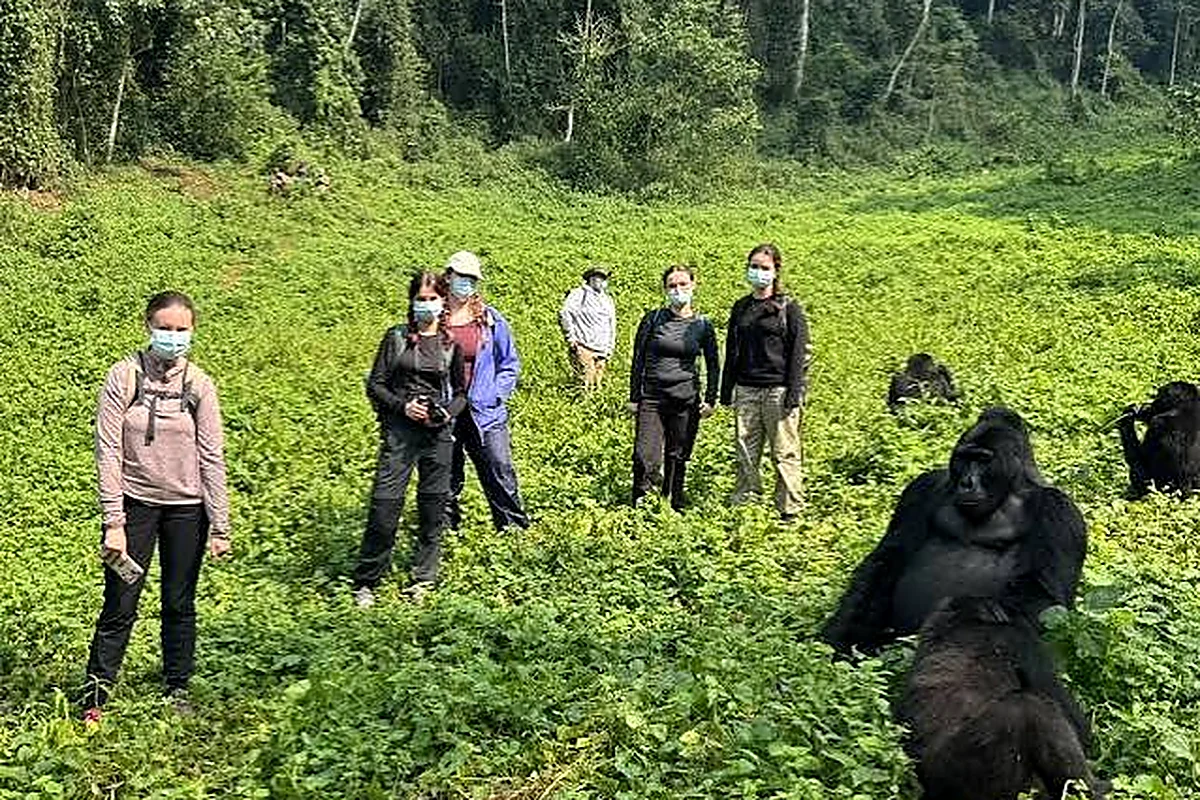
Visitors wearing face masks observe mountain gorillas resting in a lush green forest clearing.
Can you go gorilla trekking with a hip replacement?
Eligibility is individual
A previous hip replacement does not automatically rule out a mountain gorilla encounter. The important questions concern your current walking capacity, stability, pain, recovery, other medical conditions, and the unpredictable nature of the route. Some people regain excellent function after surgery, while others still struggle with slopes or uneven surfaces. A successful daily walk on pavement is useful evidence, but it is not a substitute for testing your balance on natural terrain. This is why gorilla trekking with a hip replacement calls for realistic expectations rather than a fixed promise.
What the activity involves
Gorilla tracking is a guided wildlife activity rather than a fixed-distance nature walk. Rangers follow the location of a habituated gorilla group, so the route and duration can change on the day. Visitors may cross muddy paths, roots, vegetation, or slopes before reaching the animals. Even when the group is relatively close, the return walk can be tiring. Gorilla trekking with a hip replacement therefore calls for a flexible plan, not an assumption of a short outing.
The decision belongs to your care team
Discuss the proposed activity with the surgeon or clinician who understands your operation and rehabilitation. Ask about your individual precautions, current strength, fall risk, and whether you should avoid particular movements. A medical opinion is not a guarantee that the forest will be manageable. It helps identify limitations and practical steps so that you can decide whether to book, postpone, or choose a different safari experience. During gorilla trekking with a hip replacement, small practical choices can affect comfort and safety.
Communicate before paying
Tell your safari planner about the replacement, walking limitations, preferred pace, and any aids you normally use. You need not disclose more medical detail than is necessary to plan support. Ask what the operator can arrange, what remains subject to ranger decisions, and which payments are refundable. When contacting PrideMark Safaris, request written explanations of transport, lodge access, porter options, and permit conditions rather than accepting a vague promise of an easy trek.
Set an honest success measure
The goal should be a safe, meaningful visit, not pushing through pain to reach a photograph. Being willing to stop or turn back is a sensible part of the plan. Some travelers may decide that a scenic Uganda safari without trekking is the better choice. Others can participate after recovery and careful preparation. Both outcomes deserve respect because joint health and long-term mobility matter beyond a single holiday. This is why gorilla trekking with a hip replacement calls for realistic expectations rather than a fixed promise.
Why preparation matters
Gorilla trekking with a hip replacement involves several separate demands: getting to the park, sleeping comfortably, reaching the briefing point, walking to the gorillas, and returning afterward. A problem with any one stage can affect the whole trip. Planning should therefore consider vehicle transfers, rest days, footwear, accessible accommodation, and emergency contacts alongside the trek itself. The most useful itinerary leaves room for uncertainty.
Ask targeted questions
Instead of asking whether trekking is safe in general, ask whether you can negotiate a muddy incline, step over roots, descend without rushing, and maintain balance when fatigued. Describe what happens when you walk for several hours or stand on one leg. These concrete examples help clinicians and safari planners understand the challenge. They also reveal where conditioning or support could make a meaningful difference. During gorilla trekking with a hip replacement, small practical choices can affect comfort and safety.
How hip replacement surgery affects trekking ability
Strength and balance
A replaced hip may function very well, but the muscles around it can remain weak or poorly conditioned. Hip abductors help stabilize the pelvis when you stand on one leg, as happens with every step. Weakness can make sideways slopes and slippery descents more difficult. A physiotherapist can evaluate gait, strength, and balance, then suggest exercises that match your recovery stage rather than generic high-intensity training. For gorilla trekking with a hip replacement, discuss this point before committing to a permit.
Uneven ground
Forest walking requires constant small adjustments. Roots, rocks, soft soil, and hidden holes can demand quick reactions that are less obvious on a paved path. Trekking poles may help some visitors, but they do not remove the risk of slipping. Gorilla trekking with a hip replacement is especially demanding when fatigue reduces concentration. Practice on safe, supervised uneven surfaces can show where you need more preparation.
Range of motion
Certain movements may be uncomfortable or restricted depending on your operation and surgeon’s advice. Stepping over a fallen branch, bending under vegetation, or sitting on a low surface can involve deep hip flexion and rotation. Do not assume that standard precautions apply equally to everyone or forever. Ask your orthopedic team which movements matter for you and how to adapt them during travel. Think about how gorilla trekking with a hip replacement fits your current mobility, not just your travel ambitions.
Pain is useful information
Persistent pain, new limping, swelling, or instability should prompt assessment rather than a plan to push through. Ordinary muscle tiredness is different from sharp joint pain or a sensation that the hip might give way. Medication can sometimes mask symptoms without correcting the cause. A practical trekking plan includes an agreed threshold for stopping and a way to communicate promptly with the ranger and porter.
Other joints matter
Hip replacement travelers may also have knee arthritis, lower-back discomfort, or reduced ankle mobility. Those conditions can become the limiting factor even if the replaced joint feels strong. A realistic assessment considers the whole walking system, including footwear and balance. For this reason, gorilla trekking with a hip replacement should not be evaluated solely by how well the surgical incision healed. For gorilla trekking with a hip replacement, discuss this point before committing to a permit.
Confidence after surgery
Fear of falling can alter your stride and make challenging terrain feel harder. This does not mean the fear is irrational: a fall in a remote forest has consequences. Practice with a qualified rehabilitation professional can help rebuild confidence and identify safe ways to negotiate steps. During the trek, allow enough time to place each foot deliberately rather than feeling pressured to match faster walkers.
Transport can aggravate stiffness
Long drives and repeated vehicle entry can create discomfort before the hike begins. Ask about legroom, planned stops, vehicle step height, and the route to your lodge room. A flying safari may shorten road transfers, but it does not make the forest itself easier. Consider 3-day Uganda gorilla flying luxury safari as a transport option to discuss with PrideMark Safaris rather than a medical solution. Think about how gorilla trekking with a hip replacement fits your current mobility, not just your travel ambitions.
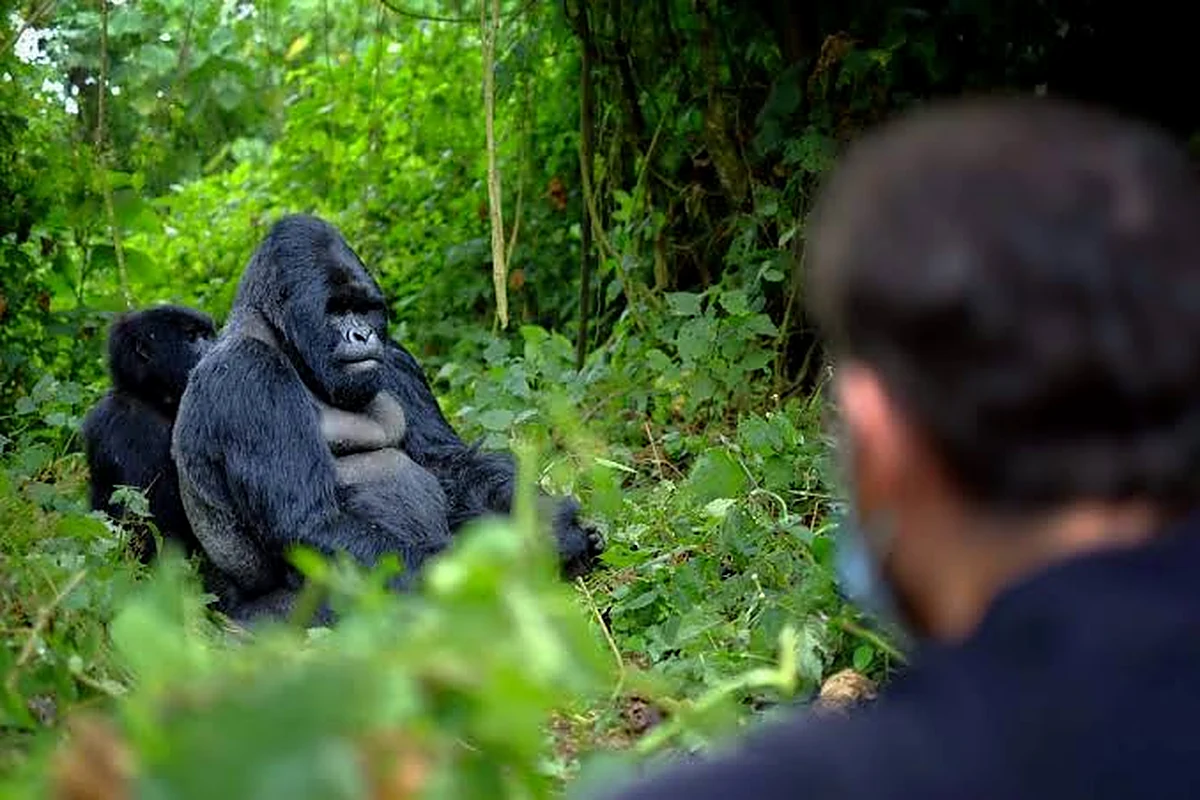
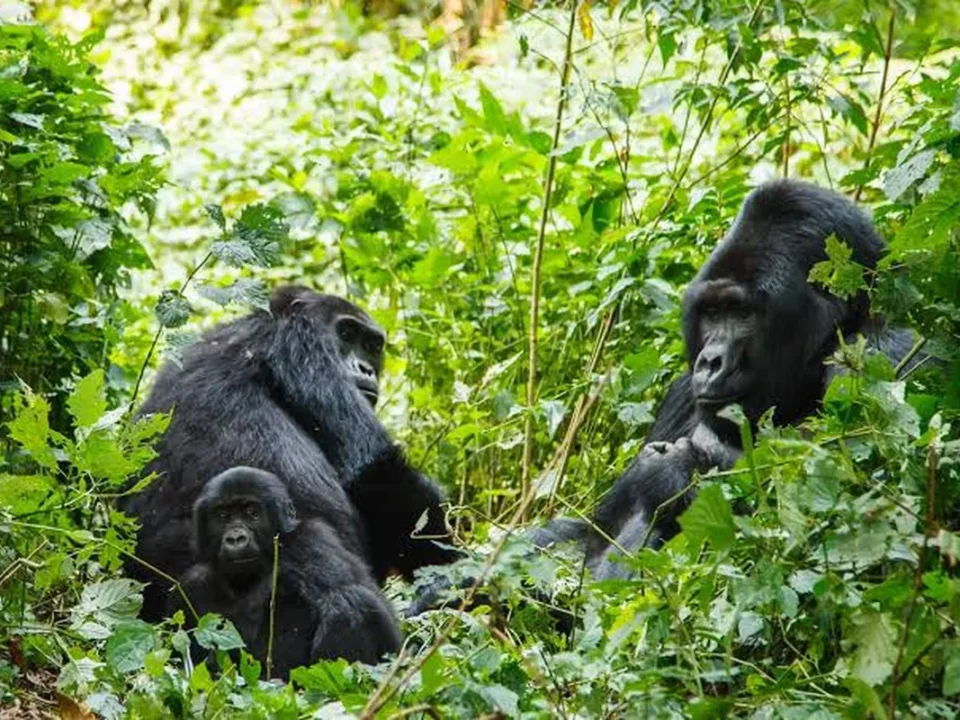
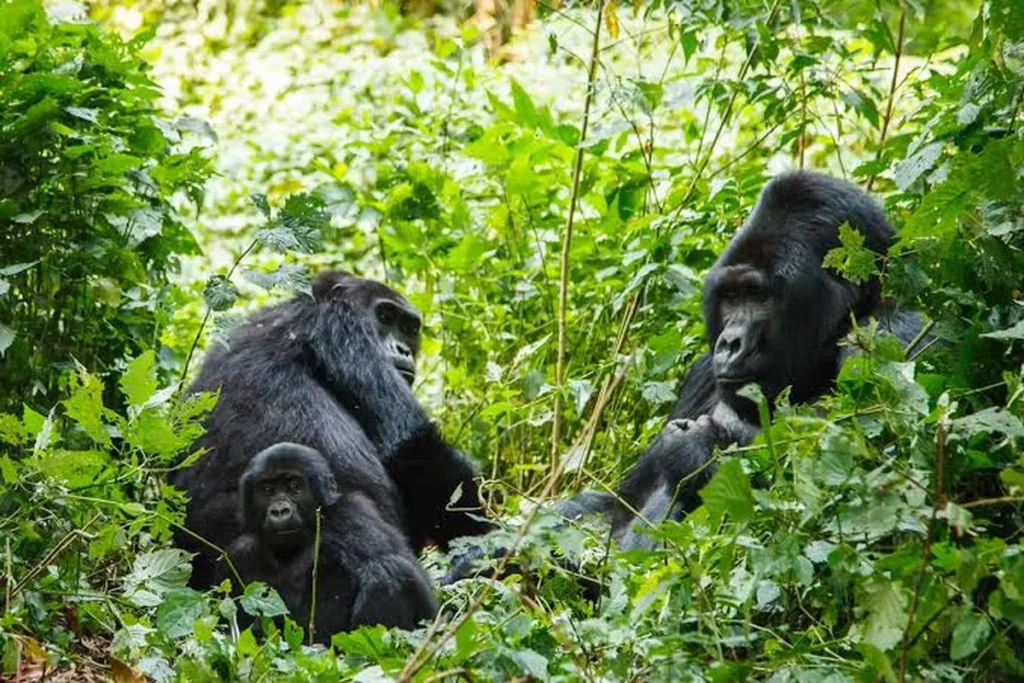
A visitor observes a silverback mountain gorilla resting with other gorillas in dense green forest vegetation.
How long after hip replacement should you consider trekking?
No universal waiting period
There is no single number of weeks or months that makes gorilla trekking appropriate for every person after hip replacement. Recovery depends on the procedure, complications, rehabilitation progress, overall health, and your surgeon’s instructions. A calendar milestone alone cannot establish readiness for steep forest terrain. Seek individualized guidance, especially if the operation was recent or your recovery has not followed the expected course. During gorilla trekking with a hip replacement, small practical choices can affect comfort and safety.
Functional milestones
A more useful discussion considers whether you can walk confidently for sustained periods, manage stairs, balance on uneven ground, and recover without significant pain. Your care team may recommend a staged return to activity, with strength and endurance goals. Those milestones should be achieved before you rely on them in a remote setting. Gorilla trekking with a hip replacement is not the place to test an unproven recovery.
Rehabilitation consistency
Structured rehabilitation often includes walking, progressive strengthening, and balance work tailored to the individual. Skipping that process because you feel comfortable during ordinary daily activities can leave weaknesses that appear on steep trails. Follow your physiotherapist’s plan rather than adding aggressive hikes suddenly. Progress should be gradual, with symptoms and fatigue informing the next step. This is why gorilla trekking with a hip replacement calls for realistic expectations rather than a fixed promise.
Travel timing
Think beyond the trekking day when choosing departure dates. Long flights, airport walking, road transfers, and unfamiliar beds may be tiring. Some travelers also need specific advice about clot prevention during long journeys, especially soon after surgery. Ask your clinician whether any travel restrictions apply to you and what precautions are appropriate. Do not change prescribed medication without professional advice.
If recovery is incomplete
Postponement can protect your longer-term mobility and improve your eventual experience. A gorilla permit is valuable, but it should not override unresolved instability, wound concerns, or persistent pain. Discuss permit terms and alternative dates before committing to a booking. PrideMark Safaris can help explain itinerary options, but only your clinical team can assess medical readiness. During gorilla trekking with a hip replacement, small practical choices can affect comfort and safety.
A practical rehearsal
Before travel, try a supervised or familiar outdoor walk with moderate slopes and uneven surfaces, if your clinician approves. Notice how you cope with descending, stopping, and restarting. Record the duration, pain response, and recovery time rather than simply whether you finished. This information is more informative than a gym step count alone and can guide final planning conversations.
Avoid comparing surgery stories
Online accounts can be encouraging, but they are not a substitute for individualized medical advice. Someone who trekked soon after surgery may have had different strength, terrain, support, and luck. A more cautious timeline may be appropriate for you. Gorilla trekking with a hip replacement is a personal decision shaped by evidence about your own recovery. This is why gorilla trekking with a hip replacement calls for realistic expectations rather than a fixed promise.
| Recovery factor | What to check | Planning response |
|---|---|---|
| Walking tolerance | Sustained outdoor walking | Build endurance gradually |
| Balance | Stairs and uneven surfaces | Ask for a gait assessment |
| Symptoms | Pain or instability | Reassess before booking |
Understanding Bwindi and Mgahinga forest trails
Bwindi terrain
Bwindi Impenetrable National Park is famous for dense vegetation and hilly forest landscapes. Trekking conditions vary by sector, gorilla location, rainfall, and the path taken on the day. Some approaches are shorter than others, but no sector can promise a flat, predictable route. Gorilla trekking with a hip replacement requires preparation for both uphill effort and controlled downhill movement. Think about how gorilla trekking with a hip replacement fits your current mobility, not just your travel ambitions.
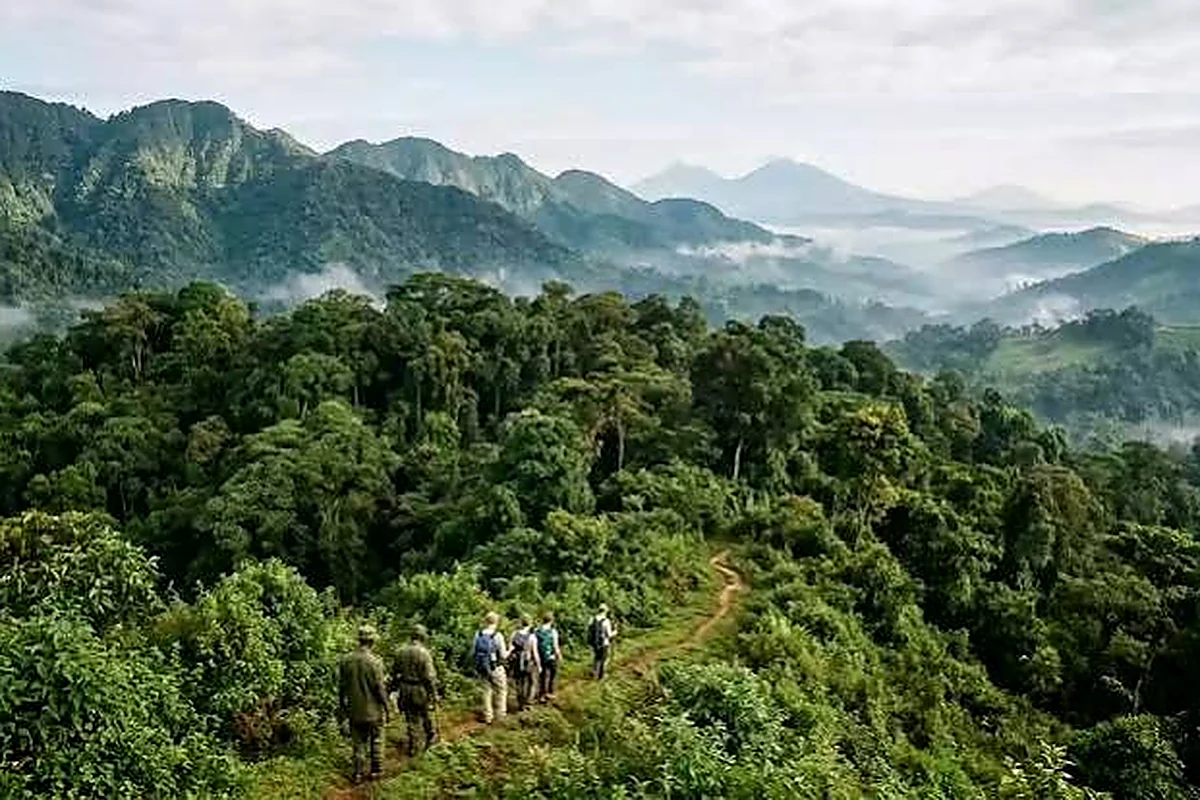
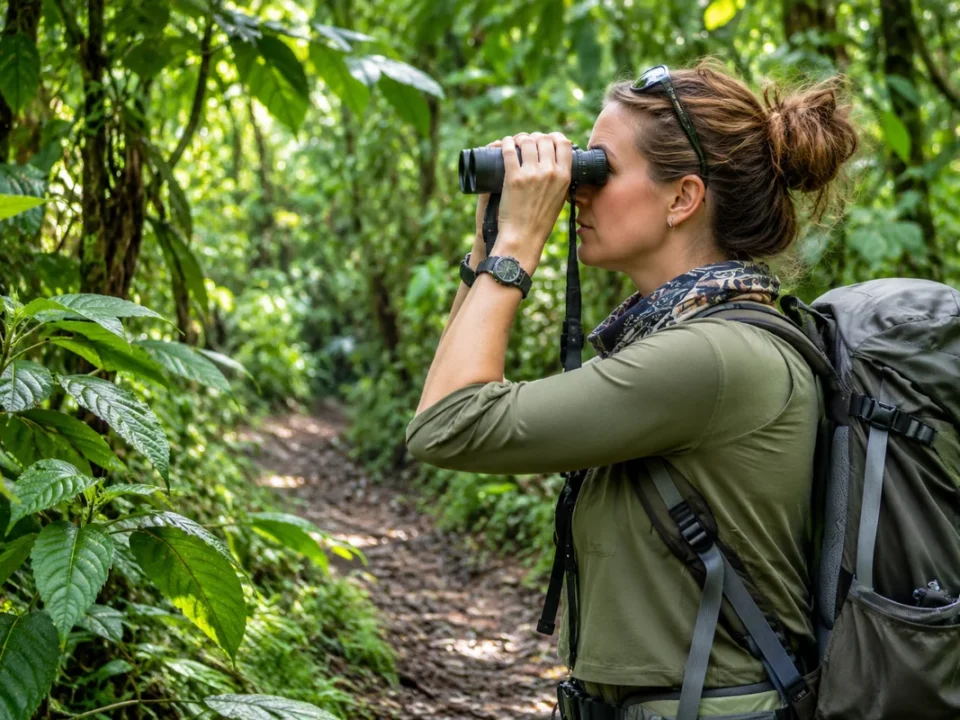
Hikers follow a scenic mountain trail surrounded by lush rainforest and mist-covered valleys.
Mgahinga terrain
Mgahinga Gorilla National Park offers a different volcanic landscape, with slopes, vegetation, and changing footing. It should not automatically be described as easier than Bwindi. The day’s route depends on where the gorilla group is found, and weather can change conditions. Ask your safari planner to explain the practical differences without presenting either park as medically suitable for everyone.
Downhill sections
Descending can be particularly difficult when the hip stabilizers, knees, or ankles are fatigued. Short, deliberate steps and well-fitted footwear can help, but there is no technique that removes all fall risk. Discuss safe pole use with a rehabilitation professional. On the trek, tell the ranger if you need a slower pace or assistance before a descent becomes overwhelming. For gorilla trekking with a hip replacement, discuss this point before committing to a permit.
Mud and rain
Rain can make roots and soil slippery, even during months often described as drier. A route that felt manageable on arrival may be harder after a shower. Waterproof footwear with reliable traction is helpful, provided you have worn it enough to know it fits. Avoid brand-new boots on trekking day. Gorilla trekking with a hip replacement calls for a margin of safety when the ground changes.
Altitude and fatigue
The parks are at elevation, and exertion may feel harder than it does at home. Altitude tolerance depends on the person and the route, and a replaced hip does not itself predict altitude illness. Other health conditions may matter. If you have cardiovascular or respiratory concerns, discuss travel and exertion with your clinician and report concerning symptoms promptly. Think about how gorilla trekking with a hip replacement fits your current mobility, not just your travel ambitions.
Park choice is not a guarantee
You may ask your operator to communicate mobility limitations during planning and at the park briefing, but ranger assignments and gorilla locations cannot be guaranteed. Avoid marketing claims of a universally easy family or route. When reviewing 4-day Mgahinga gorilla and golden monkey safari, treat it as a chance to compare itinerary logistics, not proof that Mgahinga is a low-effort alternative.
A clear itinerary comparison
A shorter road transfer, a lodge near the briefing point, and a rest day can reduce fatigue around the trek. These logistical improvements are worthwhile even though they cannot control forest conditions. Compare 3-day Uganda gorilla trekking safari with 3-day Uganda gorilla flying luxury safari on travel time, vehicle access, accommodation, and flexibility. PrideMark Safaris should explain the trade-offs clearly before you choose. For gorilla trekking with a hip replacement, discuss this point before committing to a permit.
Preparing strength, balance and mobility before travel
Start with assessment
A physiotherapist can help identify the activities most likely to challenge you: sustained walking, descending steps, standing on uneven ground, and carrying a daypack. Use that assessment to build a gradual training plan appropriate to your stage of recovery. Gorilla trekking with a hip replacement should be approached as an endurance-and-balance task, not simply a test of whether the joint is pain-free. This is why gorilla trekking with a hip replacement calls for realistic expectations rather than a fixed promise.
Walking progression
Increase walking time progressively on surfaces you can manage safely. Once approved, introduce modest slopes and varied terrain instead of jumping directly to a difficult hike. Track how you feel the next day. A sensible program values consistent movement and recovery over a single impressive distance. If pain or limping increases, consult your rehabilitation professional before progressing.
Strength around the hip
Hip and leg strength help with climbing, balance, and controlled lowering on descents. Your therapist may use exercises for the gluteal muscles, quadriceps, calves, and trunk, selected to suit your operation. Do not copy strenuous routines from travel videos. Good technique and steady progression matter more than the number of repetitions, especially if you have other joint problems. During gorilla trekking with a hip replacement, small practical choices can affect comfort and safety.
Balance practice
Forest trails can require momentary single-leg support, side steps, and changes in direction. Practice balance only at a level your clinician considers safe, ideally near stable support or under supervision. Confidence should grow alongside ability. Gorilla trekking with a hip replacement becomes less daunting when your body has already practiced controlled movement in realistic but lower-risk settings.
Test your footwear
Choose supportive footwear with good grip and a secure fit. Break it in on training walks, including slopes if appropriate. Socks that manage moisture and prevent rubbing can improve comfort during long hours. Trekking boots are not a medical device; they cannot compensate for significant instability. The objective is dependable footing rather than the heaviest or most expensive equipment. This is why gorilla trekking with a hip replacement calls for realistic expectations rather than a fixed promise.
Pack light
A heavy backpack can change your balance and increase fatigue. Carry only essentials, and consider hiring a porter for permitted items. Keep medication, drinking water, rain protection, and any personal supplies accessible. Ask how loads are handled and whether your porter can assist at difficult points. PrideMark Safaris can discuss porter arrangements while you compare 5-day gorilla and game safari adventure with shorter itineraries.
Practice rest breaks
Learn how to stop and restart comfortably without stiffening or losing balance. On a long forest outing, the ability to pace yourself is as important as your maximum walking speed. Short, regular pauses may work better than pushing to exhaustion. Communicate your needs early and avoid waiting until you are in significant pain before asking for a break. During gorilla trekking with a hip replacement, small practical choices can affect comfort and safety.
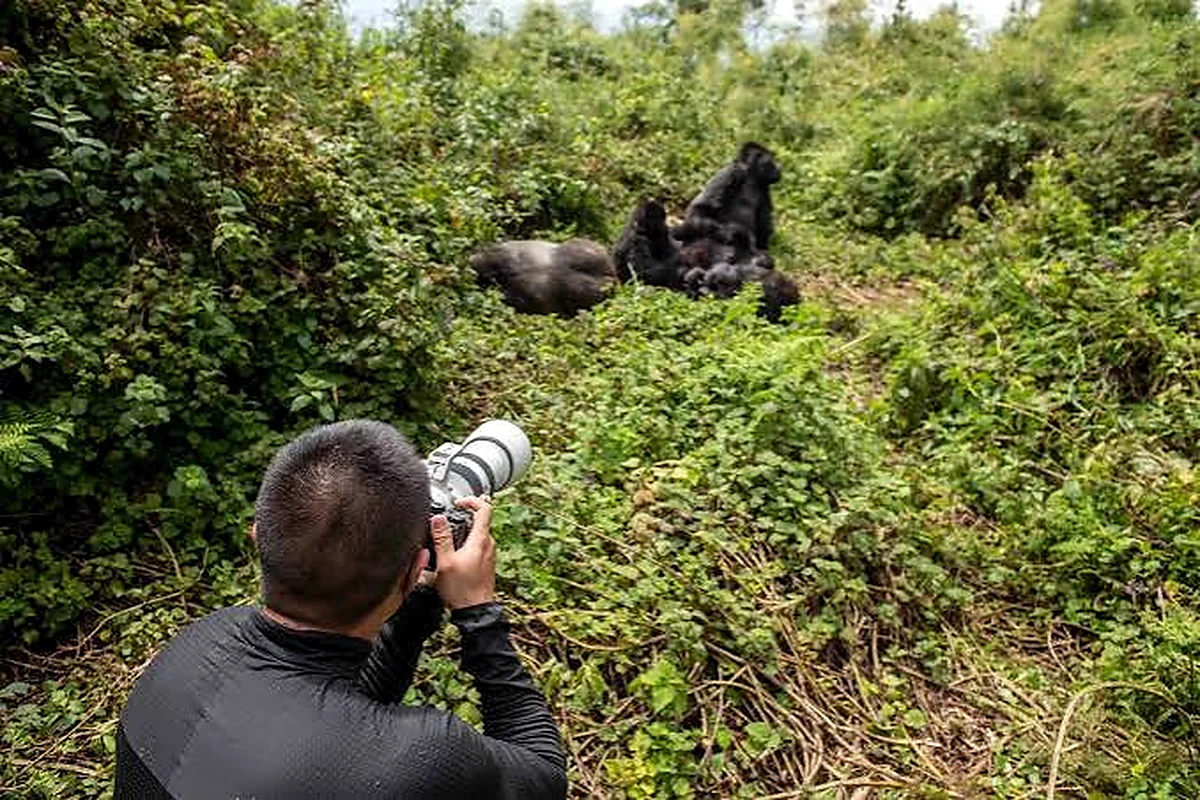
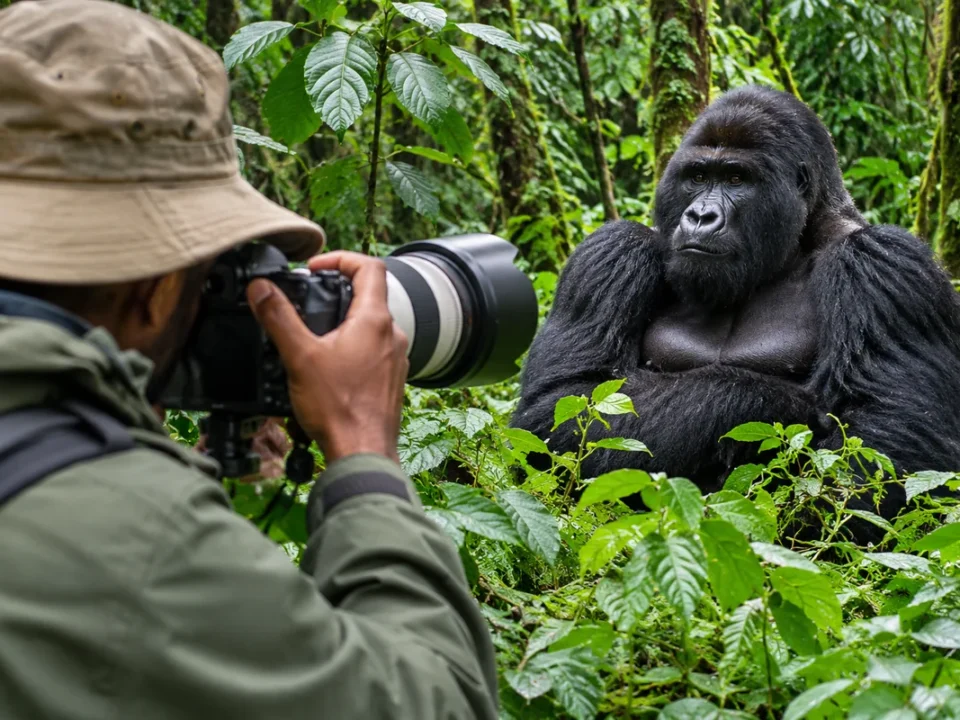
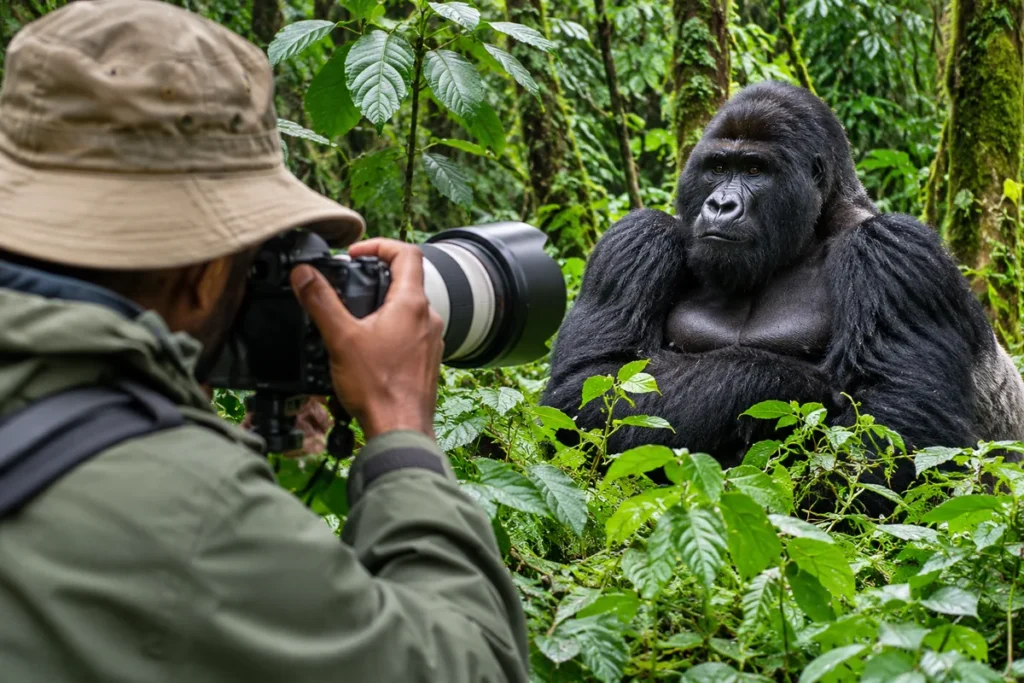
A wildlife photographer captures a family of mountain gorillas resting together in lush forest vegetation.
Porters, walking sticks and trekking assistance
What porters can do
Local porters can carry a daypack and may provide a steadying hand at appropriate points, subject to local arrangements and safety. This can reduce the load you carry and support careful movement. Porters are not clinicians, and their assistance does not make a dangerous trail safe. Ask in advance how support is arranged, paid for, and coordinated with rangers. For gorilla trekking with a hip replacement, discuss this point before committing to a permit.
Walking sticks and poles
A walking stick or trekking pole may help with balance, especially on descents, but it must be used correctly. The ideal setup varies with strength, hand comfort, and your usual walking aid. Ask your physiotherapist whether one or two poles suit you. Practice before traveling, since unfamiliar poles can become a distraction on slippery ground.
Chair-carrying arrangements
Some gorilla trekking locations may have locally organized carrying services, sometimes called sedan-chair assistance, but availability, cost, route suitability, and arrangements must be confirmed directly. Such services are not a universal guarantee of access or safety. Gorilla trekking with a hip replacement should never be sold as effortless because carrying assistance might exist. Ask the operator for current details and limitations. Think about how gorilla trekking with a hip replacement fits your current mobility, not just your travel ambitions.
Communicating at briefing
At the park briefing, tell the ranger about your walking limitations and any assistance you have arranged. Explain specific concerns such as descending, balance, or needing frequent rests. You can ask whether your circumstances can be considered during allocation, but gorilla group location and route cannot be promised. Clear communication improves planning without replacing your responsibility to assess your own limits.
Help with photographs
Do not feel obliged to kneel, squat, or twist into a painful position to capture a photograph. Ask a companion to take pictures if necessary, and follow ranger directions about where to stand. A stable viewing position is more valuable than a dramatic angle. The encounter can be memorable even if you take fewer photographs or remain standing throughout. For gorilla trekking with a hip replacement, discuss this point before committing to a permit.
The cost of assistance
Budget separately for porters and any specialized carrying service rather than assuming they are included in a permit or package. Confirm payment arrangements and tipping expectations with the operator. When requesting a quote from PrideMark Safaris, ask for itemized costs and a written description of what each service actually provides.
What assistance cannot solve
No amount of support removes the possibility of sudden rain, a long return route, or fatigue. A porter cannot make a recently operated joint ready for trekking. If you cannot walk safely under expected conditions, consider postponing or choosing other wildlife experiences. Gorilla trekking with a hip replacement is most rewarding when support supplements adequate readiness rather than replacing it. Think about how gorilla trekking with a hip replacement fits your current mobility, not just your travel ambitions.
| Support option | Potential benefit | Important limit |
|---|---|---|
| Porter | Carries belongings | Cannot remove fall risk |
| Walking poles | May aid balance | Practice is essential |
| Carrying assistance | May be locally available | Confirm suitability and price |
Managing pain, fatigue and fall risk
Know your baseline
Before travel, understand what normal postoperative stiffness feels like for you and what symptoms require assessment. A change in gait, sharp pain, or a feeling that the joint is unstable deserves attention. Do not normalize new symptoms because you have already paid for the trip. Gorilla trekking with a hip replacement is optional; protecting the joint and avoiding injury are not. During gorilla trekking with a hip replacement, small practical choices can affect comfort and safety.
Medication planning
Bring enough prescribed medication for the journey, keep it in original labeled packaging where practical, and check entry requirements for any controlled medicine. Carry essential doses in hand luggage and discuss timing with your clinician. Avoid starting unfamiliar painkillers solely for trekking day. Some medicines have side effects or interactions that can affect balance, hydration, or alertness.
Hydration and nutrition
Drink regularly and bring suitable snacks, taking account of any medical restrictions. Dehydration and low energy can worsen fatigue and reduce attention on difficult terrain. Plan food and water access for a potentially lengthy outing rather than a short stroll. Your operator can advise on practical packing, but individual medical restrictions should come from your clinician. This is why gorilla trekking with a hip replacement calls for realistic expectations rather than a fixed promise.
Avoid the fatigue spiral
When tired, people often shorten their stride, look down less carefully, or hurry to finish. That is precisely when uneven terrain becomes more hazardous. Tell the ranger early if you need a break. A slower, steady pace may preserve energy, but there is no obligation to continue if you feel unsafe. The return journey deserves as much attention as the approach.
Falls and urgent symptoms
A fall with significant hip pain, inability to bear weight, visible deformity, or suspected dislocation requires urgent medical assessment. Do not attempt to force the joint back into position or walk through severe symptoms. Seek ranger assistance and follow the local emergency plan. Sudden chest pain, fainting, or severe breathlessness also calls for urgent help rather than continued trekking. During gorilla trekking with a hip replacement, small practical choices can affect comfort and safety.
Weather preparation
Carry rain protection and dress in layers so you can adjust without excessive cooling or overheating. Wet clothing can make rest breaks uncomfortable, while rushing to escape rain can increase slip risk. Pack gloves if they help with vegetation and pole grip. The most useful equipment is familiar, practical, and light enough not to undermine your balance.
Recovery day
Schedule downtime after the trek rather than immediately transferring to another strenuous activity. Gentle movement, rest, and the rehabilitation guidance you already follow may help with ordinary post-exertion stiffness. Seek professional advice for symptoms that are new, severe, or persistent. 5-day gorilla and game safari adventure may suit travelers who want varied wildlife experiences, provided its overall travel pace is appropriate. This is why gorilla trekking with a hip replacement calls for realistic expectations rather than a fixed promise.
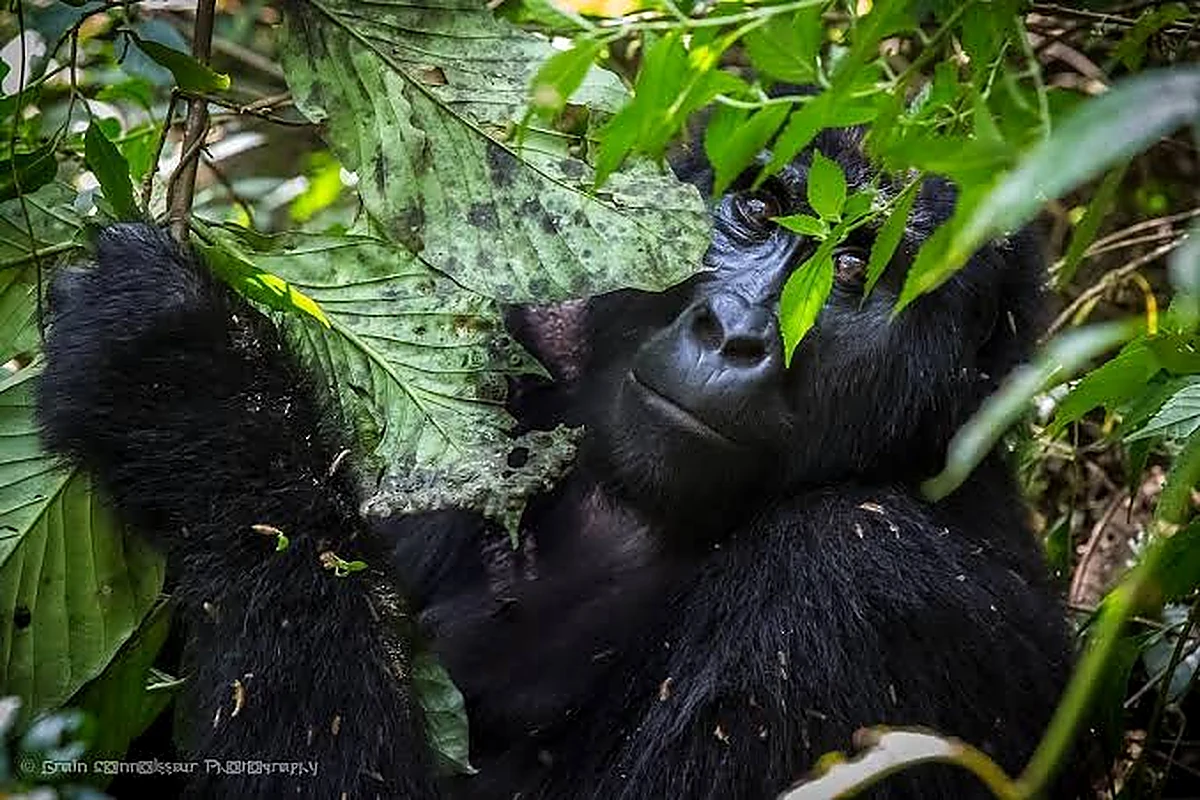
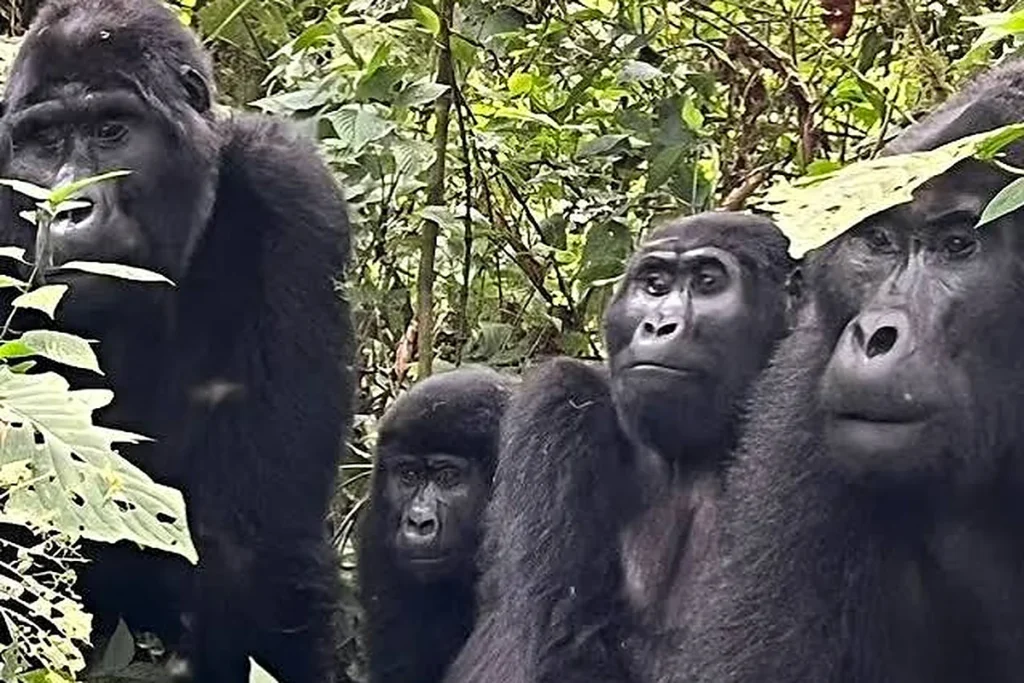
A mountain gorilla peers through lush green leaves while resting in its natural forest habitat.
Choosing the right safari itinerary and accommodation
Think door to door
The best itinerary is not simply the one with the fewest days. Consider the entire journey from airport to lodge to park briefing and back. Long drives, repeated vehicle steps, and poor sleep can leave you fatigued before the trek. Ask for realistic travel times and breaks. Gorilla trekking with a hip replacement benefits from an itinerary designed around energy conservation. Think about how gorilla trekking with a hip replacement fits your current mobility, not just your travel ambitions.
Flying versus driving
A domestic flight may reduce road time, though airport transfers, baggage handling, and local drives remain. Compare the logistics of 3-day Uganda gorilla flying luxury safari with 3-day Uganda gorilla trekking safari and ask about aircraft arrangements and ground access. A flying safari is a transport preference, not a promise of easier gorilla tracking. PrideMark Safaris can explain what each option includes.
Lodge access
Ask whether the lodge has steps, steep paths, uneven walkways, low beds, or bathrooms that may be difficult to use. A beautiful hillside property can be inconvenient if every meal requires a climb. Request room placement details and photographs when possible. Reliable access to a comfortable bathroom and a manageable sleeping arrangement may matter more than decorative luxury. For gorilla trekking with a hip replacement, discuss this point before committing to a permit.
Include a rest day
A buffer day can help you recover from travel and adapt to the local routine. It also creates space to review how you feel before the trekking morning. Not every itinerary can accommodate extra time, but it is worth considering. Ask PrideMark Safaris whether a longer, slower-paced plan would better suit your mobility than a tightly scheduled short trip.
Mix wildlife activities
Some visitors prefer to combine one carefully planned trek with wildlife viewing that involves less walking, such as game drives. The 5-day gorilla and game safari adventure is a starting point for discussing this combination. Remember that game drives still involve vehicle entry, sitting, and transfers. Choose activities based on your actual comfort rather than assuming that anything done from a vehicle is effortless. Think about how gorilla trekking with a hip replacement fits your current mobility, not just your travel ambitions.
Consider Mgahinga options
If you are interested in Mgahinga, review 4-day Mgahinga gorilla and golden monkey safari and ask for a realistic description of its travel logistics and trekking uncertainties. Do not book on the assumption that a smaller park means a shorter or flatter trek. A clear conversation about your mobility, pace, and preferences is more useful than a generic difficulty label.
Permits and insurance
Gorilla permits have specific terms, and travel insurance policies may exclude certain pre-existing conditions or recent procedures. Verify both before committing to nonrefundable expenses. Ask whether medical evacuation is covered and what documentation is required. Keep written confirmation of relevant policy terms. Gorilla trekking with a hip replacement calls for financial preparation as well as physical preparation. For gorilla trekking with a hip replacement, discuss this point before committing to a permit.
Choose honest communication
A trustworthy safari operator will explain limitations, disclose uncertainty, and avoid promising a particular gorilla group or easy route. When writing to PrideMark Safaris, describe your walking tolerance, stairs, aids, preferred accommodation, and any rest-day requirements. Ask for an itemized proposal with the links and package details that matter to you, then discuss the final plan with your medical team.
| Booking detail | Question to ask | Why it matters |
|---|---|---|
| Transfer | Drive or domestic flight? | Travel fatigue |
| Lodge | Steps and path surfaces? | Daily accessibility |
| Permit | What are change terms? | Financial flexibility |
| Insurance | Are relevant conditions covered? | Unexpected costs |
A practical booking and trekking checklist
Before booking
Obtain individualized advice about travel and hiking from your treating team. Check your walking capacity, balance, and ability to manage slopes. Confirm that your insurance covers the relevant circumstances. Then discuss the timing, permit terms, porter support, and lodge access with PrideMark Safaris. Gorilla trekking with a hip replacement works best when these questions are answered before deposits are paid. This is why gorilla trekking with a hip replacement calls for realistic expectations rather than a fixed promise.
Six to eight weeks before departure
If your clinician approves, continue a progressive walking and strengthening plan with appropriate rest. Test boots and any trekking poles on familiar terrain. Review medication supplies and ask about long-distance travel precautions. Check whether you need assistance in airports or vehicles. This stage is about removing avoidable surprises, not trying to achieve a dramatic fitness transformation.
During final itinerary review
Compare the road-based 3-day Uganda gorilla trekking safari with the 3-day Uganda gorilla flying luxury safari and discuss whether the 5-day gorilla and game safari adventure provides a comfortable balance of activities. If Mgahinga appeals to you, consider 4-day Mgahinga gorilla and golden monkey safari as well. The best package is the one whose travel pace, lodging, and contingencies match your needs, not necessarily the most expensive or shortest. During gorilla trekking with a hip replacement, small practical choices can affect comfort and safety.
The evening before
Organize medication, water, snacks, rainwear, documents, and familiar footwear. Avoid a late night or unnecessary strenuous activity. Confirm briefing time and transport details with the guide. Tell your companions how to recognize when you need a rest. Check that your walking aid is secure and comfortable. Keep your daypack light enough to maintain balance.
At the park briefing
Listen to all ranger instructions and explain your mobility concerns clearly. Ask about porter arrangements and any practical accommodations that may be possible, while recognizing that routes and group assignments are uncertain. Gorilla trekking with a hip replacement requires cooperation with the ranger team and an honest assessment of conditions on the day. This is why gorilla trekking with a hip replacement calls for realistic expectations rather than a fixed promise.
During the forest walk
Use deliberate steps, avoid rushing downhill, and request breaks before exhaustion sets in. Stay with the ranger-led group and follow all wildlife rules. If pain, dizziness, instability, or significant fatigue develops, report it immediately. A photograph is never worth a fall. Focus on a safe, respectful encounter rather than keeping up with a faster companion.
After the encounter
Allow time to return carefully and recover. Do not assume that reaching the gorillas means the hardest part is over. Monitor how you feel afterward and seek medical advice if concerning symptoms arise. Share constructive feedback with your guide about pacing and assistance. The experience should be judged by safety and enjoyment, not only by whether the trek was completed. During gorilla trekking with a hip replacement, small practical choices can affect comfort and safety.
Final perspective
Gorilla trekking with a hip replacement can be possible for some well-recovered travelers, but it is not universally suitable. Preparation, realistic expectations, park rules, and honest communication all matter. PrideMark Safaris can help compare safari logistics and support options, while your orthopedic or rehabilitation team assesses your personal readiness. A flexible plan gives you the best chance of enjoying Uganda responsibly.
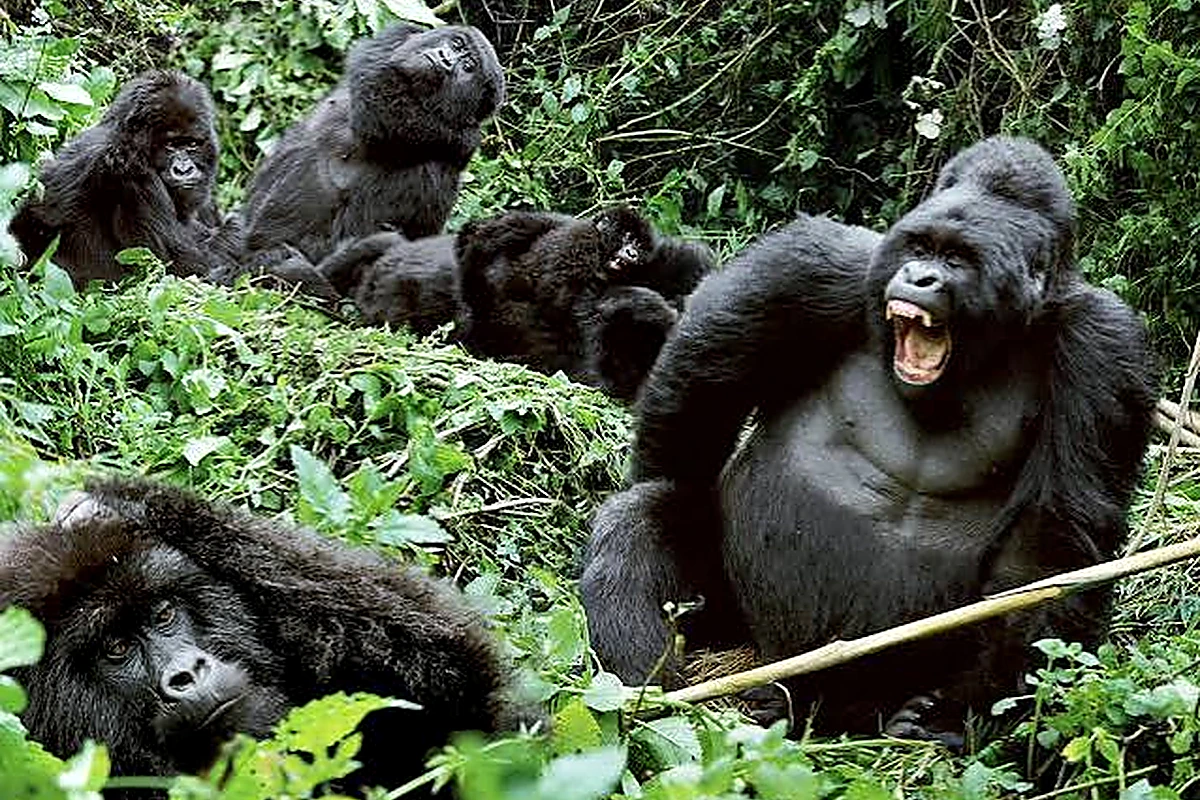
A silverback gorilla opens his mouth while other mountain gorillas rest together in lush rainforest vegetation.
Frequently Asked Questions
Can I trek after a total hip replacement?
Possibly, if you have recovered sufficiently and your treating clinician considers the activity appropriate. The forest route can involve steep, muddy, and uneven ground, so ordinary walking ability alone is not enough. Discuss balance, endurance, pain, and fall risk before booking. Gorilla trekking with a hip replacement should be planned around current function rather than the operation date alone.
Is there a minimum waiting time after surgery?
There is no universally safe waiting period for this specific activity. Your surgeon and physiotherapist should advise based on healing, strength, complications, and rehabilitation progress. A recent operation may also affect travel advice. Do not use another traveler’s timeline as your benchmark, and avoid booking a demanding trek before your recovery is established.
Is Bwindi easier than Mgahinga for a replaced hip?
Neither park guarantees an easier trek. Gorilla locations, slopes, weather, and terrain vary by day. Bwindi has dense forest and hilly routes; Mgahinga has volcanic terrain. Ask PrideMark Safaris to compare transport and accommodation, but do not treat a park name as proof of a medically suitable route.
Can I ask for a shorter gorilla trek?
You can explain your limitations at booking and during the ranger briefing, and ask whether they can be considered. However, gorilla locations and group allocations cannot be guaranteed. Gorilla trekking with a hip replacement requires readiness for uncertainty, including the possibility of stopping or not participating if conditions are unsuitable.
Should I use a walking stick?
A stick or poles may improve stability for some people, but the correct choice depends on your strength, gait, and usual mobility aids. Ask a physiotherapist and practice before travel. A walking stick cannot eliminate slipping risk on wet roots or steep slopes, and unfamiliar equipment may create additional difficulties.
Can a porter help me during the trek?
Porters may carry belongings and provide appropriate practical support, depending on local arrangements. Confirm services and costs in advance. They are not medical professionals and cannot make a route safe for someone who is not ready to walk it. The ranger team remains responsible for directing the group.
Are carrying chairs available?
Some areas may arrange carrying assistance, sometimes described as sedan-chair services. Availability, suitability, price, and routes must be checked for your specific departure. Do not assume a service is guaranteed or that it eliminates all medical and safety risks. Ask PrideMark Safaris to verify current arrangements before relying on them.
What if my hip starts hurting in the forest?
Tell the ranger immediately and stop to assess the problem. Do not push through sharp pain, instability, or a significant limp. Follow your pre-agreed plan and seek medical assessment when indicated. Severe pain after a fall or inability to bear weight requires urgent help. Gorilla trekking with a hip replacement should never depend on ignoring warning symptoms.
Will a flying safari make the trek easier?
Flying can reduce time spent on long road transfers, which may help manage fatigue or stiffness. It does not shorten the forest route or control where gorillas are located. Compare 3-day Uganda gorilla flying luxury safari with a road itinerary based on total travel comfort, cost, and schedule rather than assuming the trekking itself becomes easier.
Can I take pain medicine before trekking?
Take prescribed medicines only as directed by your clinician. Do not begin unfamiliar medication or increase doses just to mask discomfort during the hike. Some medicines affect balance, alertness, or hydration. Discuss pain management and any relevant travel precautions with your medical team before departure.
What should I tell my safari company?
Explain your current walking tolerance, difficulty with slopes or stairs, usual mobility aids, preferred pace, and accommodation requirements. Ask about porter costs, vehicle access, permit terms, and realistic contingencies. PrideMark Safaris can use this information to discuss package logistics without promising medical suitability or an easy route.
What is the safest way to decide whether to go?
Combine individualized orthopedic advice with a realistic functional assessment and detailed safari planning. Test appropriate walking conditions before departure, understand the possibility of rain or a long trek, and arrange support where available. Gorilla trekking with a hip replacement may be achievable, but postponing is sensible if your mobility or recovery remains uncertain.
Official guidance and next steps
For park rules and current gorilla trekking information, consult Uganda Wildlife Authority. For general information on hip replacement recovery and activity, consult the American Academy of Orthopaedic Surgeons. These resources support informed questions but do not replace advice from your own clinician. Gorilla trekking with a hip replacement deserves a plan tailored to your recovery, the route, and the available assistance.
To compare a 3-day Uganda gorilla trekking safari, 3-day Uganda gorilla flying luxury safari, 5-day gorilla and game safari adventure, or 4-day Mgahinga gorilla and golden monkey safari, contact PrideMark Safaris with your travel dates and mobility requirements. Ask for accurate information on transfers, lodge access, porters, and permit conditions. A well-planned safari respects both the privilege of seeing wild mountain gorillas and the importance of protecting your long-term health.